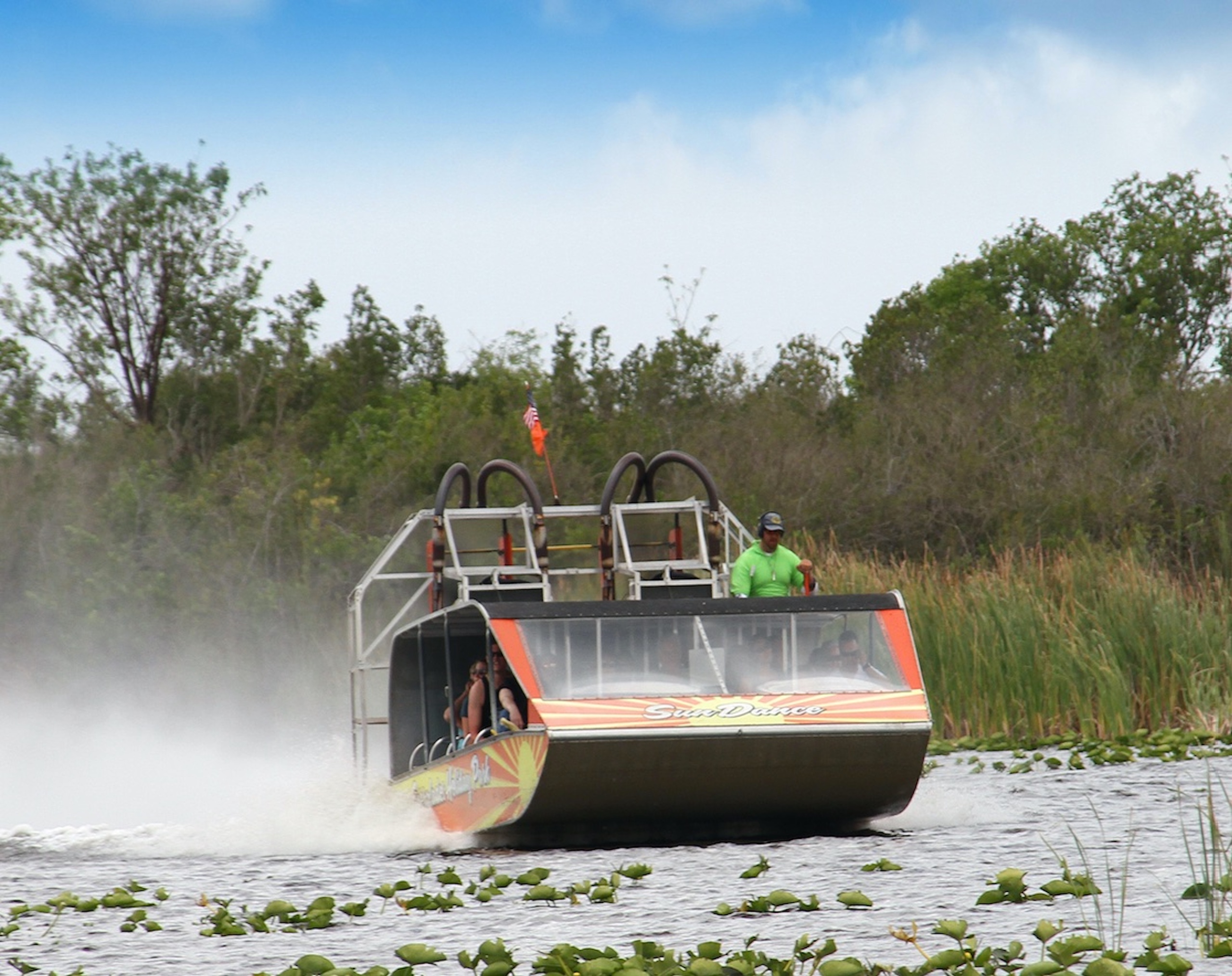
Why Airboating near Coral Gables Is a Signature South Florida Adventure
Airboating is a language of motion—an improvised conversation between a high-rev fan, a shallow hull and a wide, flat horizon of marsh and sky. Within a short drive of Coral Gables the Everglades opens into an elemental landscape where speed and stillness live side by side: one minute you’re blasting across a glittering pan of water, the next you’re idling through a narrow mangrove throat, the engine’s thrum replaced by the whisper of wind and the cry of a great blue heron. For travelers, the appeal is immediate and physical. You feel present. You see scale—the broad sweep of sawgrass, the latticework of water channels, the startling presence of alligators basking like dark driftwood. You also see the fragile, connected systems that make South Florida unique.
Beyond the sensory hit, airboat tours offer concentrated access to flora and fauna that would take days to approach on foot. Guides who grew up in the region read the landscape the way a mountaineer reads a rock face: currents and high-water channels, seasonal feeding grounds for wading birds, and subtle cues of rising tides or incoming rain. Many operators blend natural history, local lore and conservation context into tours, so an outing becomes a primer on hydrology and the human history that shaped the modern Everglades—from indigenous stewardship to 20th-century drainage projects and today’s restoration efforts. That cultural thread is as important as the wildlife: understanding the reasons the landscape looks the way it does gives deeper meaning to the route a captain chooses and the species you’ll likely see.
Practical appeal is no accident. Airboats run in shallow and often vegetation-choked water where other craft can’t go, making them efficient for short trips and longer backcountry expeditions alike. That flexibility creates a range of experiences—family-friendly sprint tours that thrill without overwhelming, photography-oriented slow runs timed for golden hour, and multi-hour excursions that pair flat-water speed with guided walks through accessible boardwalks or swamp edges. For travelers based in Coral Gables, an airboat trip can be a half-day morning escape or the central act of a day that includes coastal boat rides, botanical gardens, and Cuban cafés back in town.
Environmental considerations thread through every itinerary; responsible operators emphasize low-impact routing, invasive-species checks, and respectful viewing distances for wildlife. Choosing a guide who prioritizes conservation education turns what could be a simple thrill ride into a meaningful encounter—one that leaves passengers with clearer ideas about how water management, development and climate pressures shape the Everglades’ future. In short, an airboat trip near Coral Gables is equal parts adrenaline, classroom and nature theater—compact, accessible, and unforgettable when planned with awareness of season, weather, and local regulations.
Airboats excel in shallow, grassy marshes and narrow mangrove channels where conventional boats can’t operate—this makes them ideal for both fast scenic runs and slow, wildlife-focused excursions.
Local guides usually combine natural history, Seminole and Miccosukee cultural context, and practical safety briefing—look for operators who emphasize conservation and leave-no-trace practices.
Airboat trips pair well with shore-based activities: birding walks, short kayak tours, and visits to nearby cultural sites and botanical gardens make for balanced day plans.