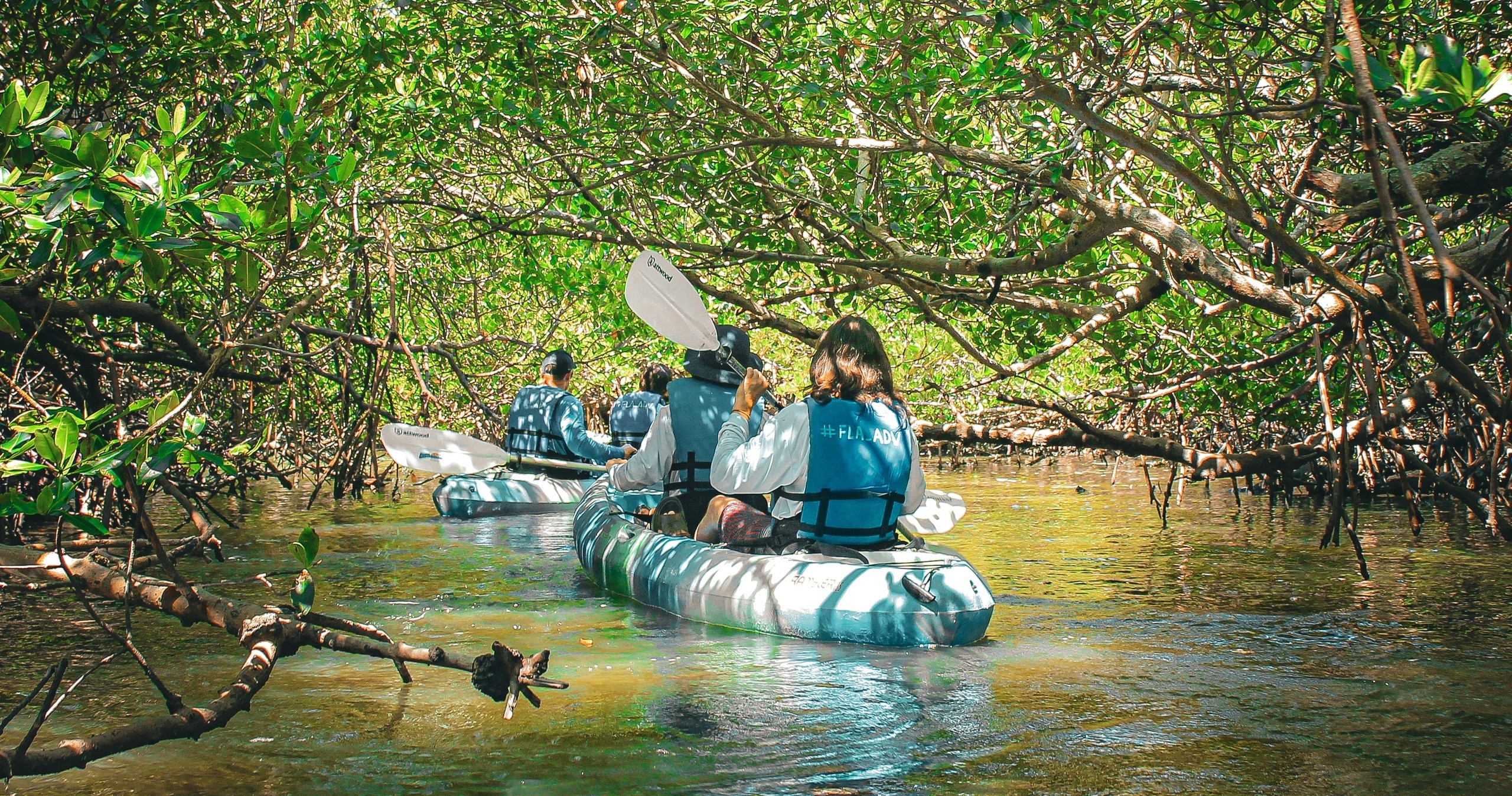
There’s a particular hush that settles over a Goodland morning: a low tide exposes fingerlike oyster bars, mangrove roots, and racks of pale shells; the Gulf beyond is a mirror until the breeze wakes. For paddlers, Goodland is less about a single marquee bay and more about a topology of thresholds—the point where sheltered estuary becomes open water, where braided mangrove channels funnel fish and birds, where tidal exchange sculpts navigable shortcuts and hidden shallows. The town itself is compact and modest, with an old-Florida, fisherfolk character that makes launching feel like stepping into a local ritual rather than a commercial operation.
From a practical vantage, Goodland’s strength is variety packed into short distances. A novice can set off on a protected paddle across Goodland Bay and remain within sight of shore, watching herons and oystercatchers forage along the roots. An intermediate paddler can thread the labyrinthine mangrove tunnels that hem the bay, learning to read tide lines and shallow passes. Advanced paddlers can plan longer circuits into the Ten Thousand Islands—an archipelago of mangrove keys and oyster flats that extend like a green lacework into the Gulf—where routing becomes navigation, weather and tidal timing matter, and trip logistics (shuttles, weather windows, and emergency contingency) are essential.
Ecology and choreography converge here. Mangroves are not just scenery; they are the coastline’s engine—nurseries for snook, permit, trout and juvenile fish, and haunts for manatees and bottlenose dolphins. Bird life—elegant egrets, glossy ibis and the occasional raptor—threads the skies. Because tidal range is modest but consequential, paddlers can experience the same place in different ways over a single day: mudflats and exposed shell at lower tides; wide, reflective channels at high. That shifting character makes Goodland particularly rewarding for repeat visitors who want to understand the coastline’s rhythms rather than tick off a single postcard image.
Practical details shape the experience: wind and sea-breeze patterns dominate afternoons in warm months; summer brings quick, often heavy thunderstorms and higher humidity; hurricane season (June–November) can close routes and make planning more conservative. Conversely, the cooler, drier months—late fall through early spring—offer calmer seas, lower bugs, and the busiest visitor season. Goodland’s relative remoteness also means self-sufficiency; while there are outfitters and guides in the region, paddlers should plan launches, tides and reentry points ahead of time and treat each excursion as a small expedition, especially when venturing toward the Ten Thousand Islands or the Everglades fringe.
Accessible variety: sheltered bay paddles, mangrove labyrinths, offshore flats, and multi-day backcountry possibilities are all reachable from Goodland.
Wildlife-rich: manatees, dolphins, wading birds and shorebirds are frequent sights; the mangrove roots host complex marine life visible at low tide.
The harbor is the gateway, and the Pacific becomes the classroom.
Tide & wind matter: short distances can become long detours if tides or onshore winds shift—planning is part of the sport.
Cultural context: Goodland’s fishing and boat-building roots create an unpolished, authentic coastal atmosphere.
Choose by purpose
Whale watching, snorkeling, sunset sailing, cultural canoeing, harbor sightseeing, or private chartering.
Start near the city
Waikiki and Honolulu Harbor are primary hubs, with some trips launching near Hanauma Bay.
Confirm the vessel
Gangways, shaded seating, and boarding requirements vary according to vessel size and operator.