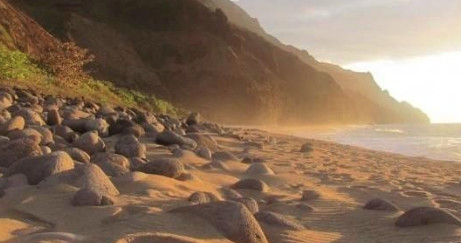
Hanalei sits at the intersection of some of Kauai's most dramatic landscapes: an open bay that collects winter surf, a valley thick with taro loʻi and heritage farms, and a northwest coast that dissolves into the towering cliffs of the Na Pali. Hikes here range from tranquil shoreline ambles and river-edge loops to sudden, steep climbs that throw you onto ridgelines with jaw-dropping drop-offs. The terrain is compact but wildly varied—muddy rainforest singletrack, grassy ridgelines, shaded valley floors threaded by streams, and coastal headlands scarred by sea and wind. Because Kauai is one of the wettest places on earth, microclimates dominate. You can begin a morning under a blue sky in Hanalei town and cross into a cloud-shrouded rainforest by noon; conversely, summer droughts can leave some trails surprisingly dry and dusty.
Beyond scenery, hiking around Hanalei is an exercise in cultural awareness. Many trails pass through or alongside wahi pana—places of deep cultural memory and active stewardship. Gardens, ahupuaʻa boundaries, and traditional taro farms form the backdrop for numerous short walks and interpretive trails. On longer coastal approaches and the famed Kalalau corridor, hikers traverse land shaped by centuries of ocean access and native place-names. Respecting signage, staying on established trails, and observing closures are part of the practice. Practical planning also matters: parking at coastal trailheads, stream crossings after heavy rain, and the specter of flash storms all factor into route choices. Because hiking in Hanalei often pairs naturally with other island pursuits, you can stitch a day hike into a morning surf lesson at Hanalei Bay, an afternoon boat trip along the Na Pali cliffs, or a visit to Limahuli Garden to ground the walk in botany and history. For travelers, the payoff is immediate—intimate encounters with native flora, sudden vistas of the Pacific, and a sense of being at the edge of something larger than the trail itself—if you move with patience, preparedness, and an eye for changing conditions.
The variety is compressed: short estuary boardwalks and valley loops sit within easy reach of strenuous ridge climbs and the multi-day Kalalau coastal route. That density means hikers can choose experience length and exposure without long drives, but it also means popular trailheads fill early on weekends and holidays.
Weather is the single organizing factor: winter storms bring swelling streams and theatrical waterfalls, while summer offers more predictable conditions for exposed ridge hikes and coastal traverses. Because trails cross fragile ecosystems and private parcels in places, many of the best routes are managed with conservation-minded access—expect interpretive signage and limited parking at key trailheads.
Choose by purpose
Whale watching, snorkeling, sunset sailing, cultural canoeing, harbor sightseeing, or private chartering.
Start near the city
Waikiki and Honolulu Harbor are primary hubs, with some trips launching near Hanauma Bay.
Confirm the vessel
Gangways, shaded seating, and boarding requirements vary according to vessel size and operator.