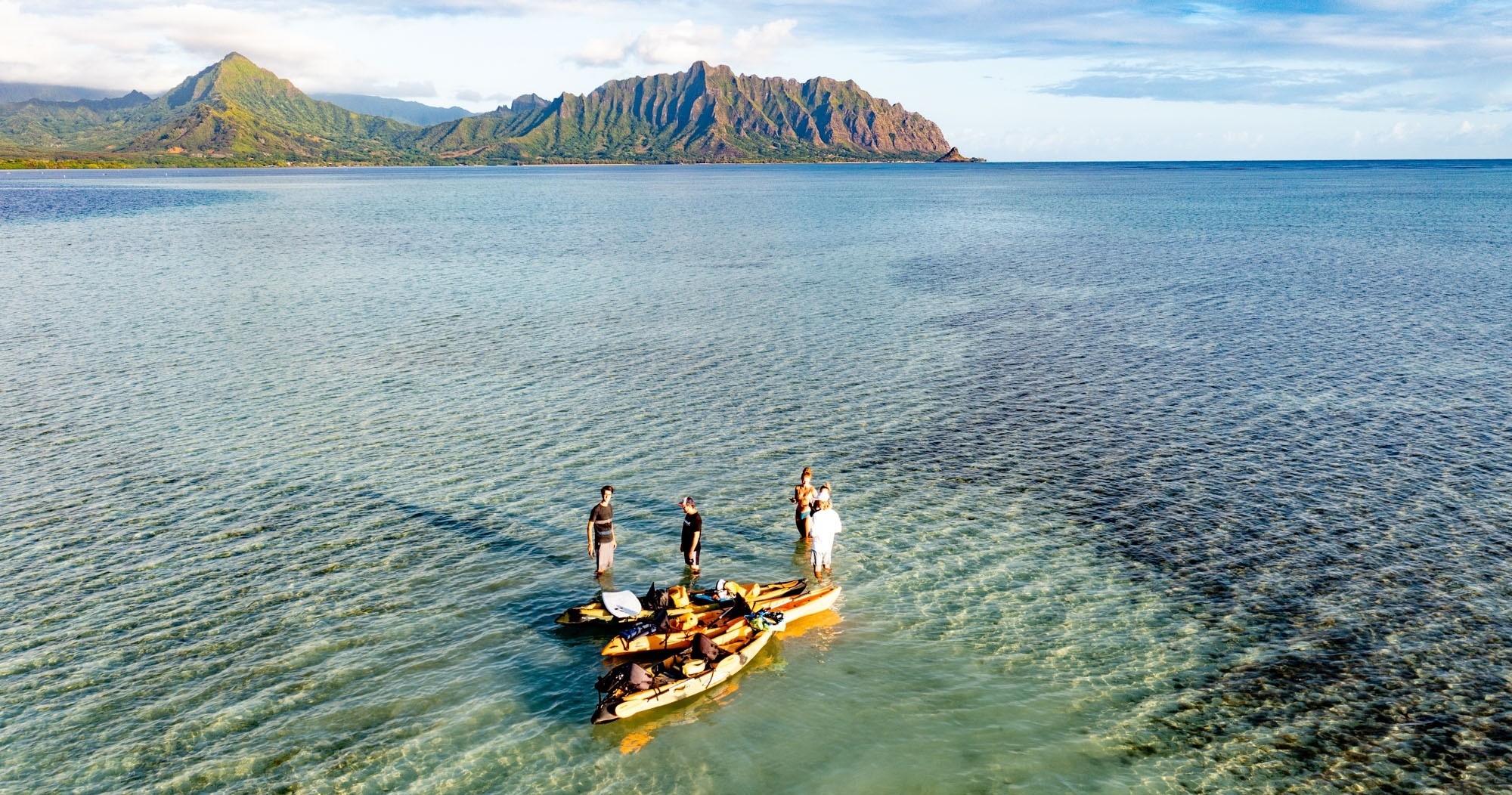
Kaneohe is a place where the sea feels intentionally gentle. Sheltered by a broad fringing reef, Kaneohe Bay offers long stretches of shallow turquoise water that dissolve into deeper aquamarine channels, a spectrum that invites exploration at every skill level. From the shoreline, the bay looks almost domesticated—calm glassy mornings, a scattering of small craft, and a soft, sandbar glow that melts into sunset. But move a little deeper and the bay reveals its intricacies: ribbon reefs etched with coral gardens, bends where currents gather schools of reef fish, and pockets of native limu (seaweed) that remind you this is a living coastal system with fragile rules.
The town itself is quietly connected to these water rhythms. Local outfitters, family-run charters, and community paddling groups have long treated the bay as both playground and pantry—places to float and places to feed. That duality shapes how people use the water here: afternoons on the sandbar alongside picnics and ukulele players, dawn paddle sessions that slip beneath cliffs dusted in trade-wind mist, and boat excursions that point out cultural sites and fishponds along the shore. For travelers, Kaneohe offers a return to essentials—the simple physics of buoyancy, the meditative rhythm of a paddle stroke, and the immediate reward of snorkeling a healthy reef without the surf of Oahu’s exposed shores.
From a planning perspective, Kaneohe’s water activities strike a useful balance between accessible and adventurous. Beginners find forgiving conditions: shallow launch points, predictable wind corridors early in the day, and ample options for guided snorkeling or SUP lessons. Intermediate paddlers and snorkelers can stitch together longer routes—sandbar to reef edge, bay channel to sheltered inlets—while more experienced divers and boaters will appreciate the variety of microhabitats and nearby drop-offs reachable by short runs. Seasonality matters in degree more than kind: winter brings larger swell to exposed coasts and occasional southerly swell into the bay’s southern reaches, but most days remain suitable for in-bay pursuits. Practical considerations—tide timing for the sandbar, reef-safe sunscreen, and basic reef etiquette—can transform a good day on the water into a responsible one. Kaneohe rewards curiosity and care: venture with respect, and the bay will return the favor with crystal visibility, abundant sea life, and afternoons that feel deliberately slow in the best way.
The sandbar is the social heart of the bay—ideal for families, casual snorkelers, and paddlers. It’s tide-dependent and at its best in mid to low tides when flats emerge cleanly.
Guided snorkeling and glass-bottom boat tours provide context: local guides share reef conservation rules, fishing histories, and cultural landmarks that elevate the experience beyond sightseeing.
The harbor is the gateway, and the Pacific becomes the classroom.
Morning sessions tend to be calmer and clearer. Trade winds typically pick up in the afternoon, which can bring chop to open-water exits and affect smaller craft.
Choose by purpose
Whale watching, snorkeling, sunset sailing, cultural canoeing, harbor sightseeing, or private chartering.
Start near the city
Waikiki and Honolulu Harbor are primary hubs, with some trips launching near Hanauma Bay.
Confirm the vessel
Gangways, shaded seating, and boarding requirements vary according to vessel size and operator.