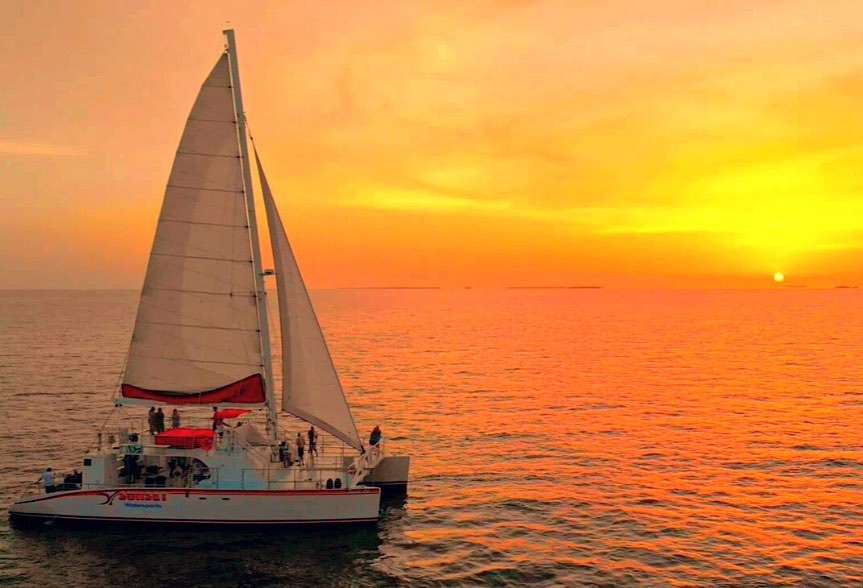
Why Catamarans Are the Best Way to Experience Key West
On a catamaran in Key West the ocean feels as if it has been rearranged for comfort. Wide beams and twin hulls translate into extraordinary stability—fewer sideways rolls, more room to stretch out, and a lower risk of queasy stomachs than on a monohull. That stability is practical: it means easier snorkeling entries and exits, a steadier platform for casting a line, and comfortable lounging during long, languid sails between reefs. Catamarans allow operators to bring larger groups without compressing the deck experience; families, multi-generational groups, and anglers can coexist without everyone bumping elbows.
Beyond comfort, catamarans are the most democratic way to access Key West’s maritime playground. They draw close to shallow patch reefs and sandbars where single-hull vessels might heel uncomfortably or sit up on waves. Because many operators purposefully choose shallow-draft catamarans, these boats can anchor above bright coral gardens that teem with parrotfish, snapper, and rays—places where glass-bottom views quickly become glass-clear snorkeling. For photographers and naturalists, the catamaran’s low profile and broad foredeck offer unobstructed sightlines for birds, dolphins, and the occasional sea turtle that surfaces in the channel.
There is history here too. Sailing out of Key West Harbor feels like joining a centuries-old coastal tradition that ranges from Cuban trading sloops to Florida’s reef‑runners and modern eco-tourism fleets. Today’s catamaran trips blend that history with contemporary priorities: reef stewardship, reef‑safe sunscreen requirements, and interpretive naturalists who point out coral life cycles and the fragile relationships between mangroves, seagrass beds, and offshore reef health. That educational slant pairs especially well with snorkeling and dive-focused charters where operators emphasize no-touch rules and explain how visitors can help preserve these ecosystems.
Finally, the catamaran experience in Key West is flexible. Mornings can mean fast, windy sailing on the Atlantic side and productive fishing; mid-day is prime for snorkeling at Looe Key or shallow reef patches; afternoons bring calmer flatwater perfect for paddleboarding around sandbars or chasing the “green flash” at sunset. The format—shared morning sails, private day charters, or dusky cocktail cruises—lets travelers choose intensity and intimacy. In short: catamarans in Key West democratize access to warm water, spectacular reefs, and effortless sailing. They make the sea approachable, educational, and—when conditions cooperate—unforgettably beautiful.
Catamarans offer low draft and stability, ideal for accessing shallow reefs and sandbars safely and comfortably.
Many Key West operators combine sailing with snorkeling, paddleboarding, light fishing, and sunset viewing for a full-day marine itinerary.
Conservation-minded practices—like reef‑safe sunscreen, no-touch rules, and regulated reef access—are common on reputable charters.
The region’s trade winds and generally calm winter seas make sailing pleasant from November through May; summer brings hot water, afternoon storms, and hurricane season considerations.