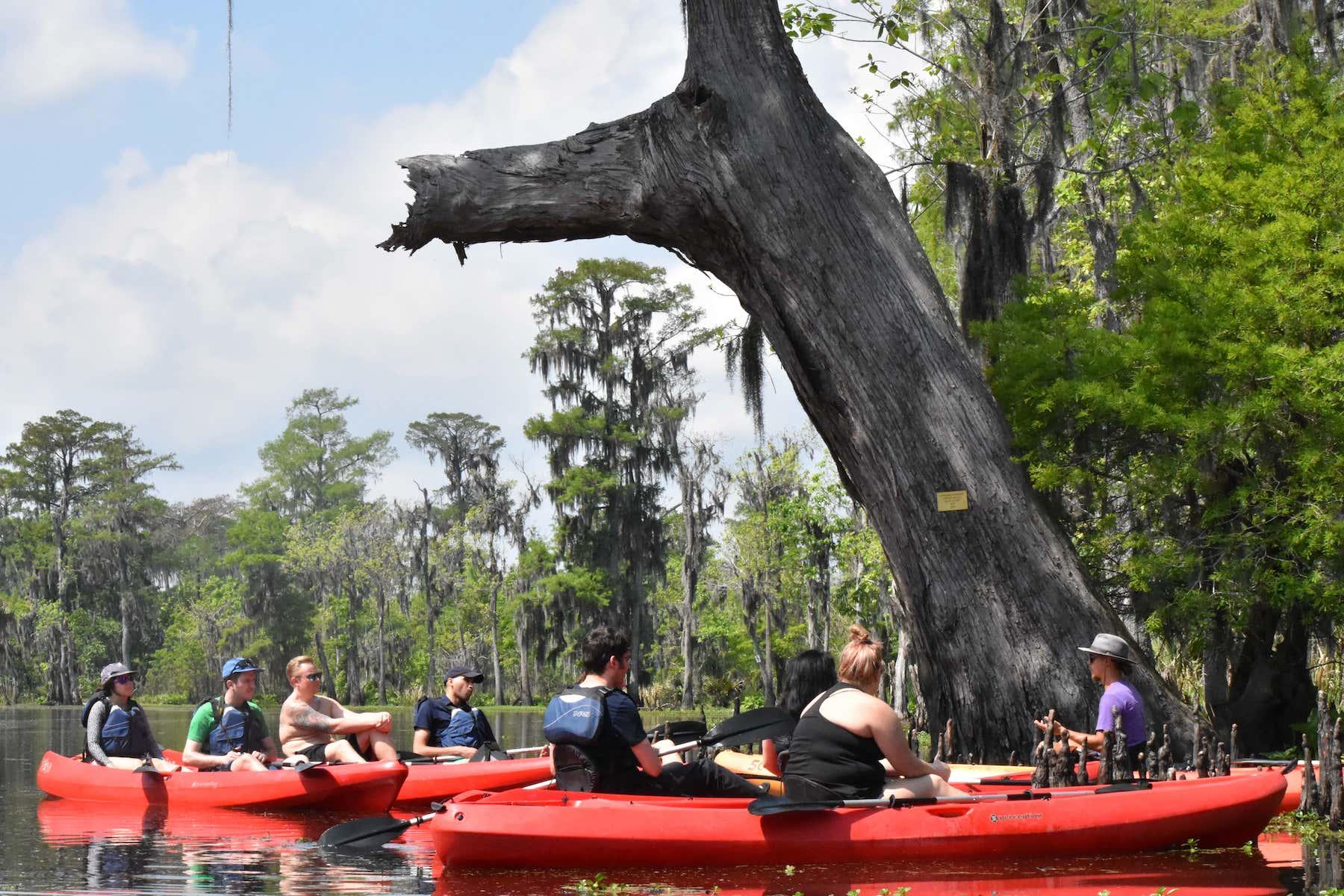
Why Maurepas Is a Standout Kayaking Destination
There are places where paddling feels like travel in miniature: every bend reveals a new vignette, every channel opens to an ecosystem with its own rhythm. Maurepas is one of them. Nestled on the western edge of the Pontchartrain Basin, Lake Maurepas and the adjacent marshes offer a habitat-rich, low-angle landscape that makes kayaking less about speed and more about presence. The water here is shallow and wide in places, braided with narrower bayous lined in cypress and tupelo—trees whose trunks tell centuries of changing water. For paddlers, that means a day can contain small, concentrated moments: a marsh wren darting through grass, the fluorescent flash of a kingfisher, a distant heron settling into a snag, and the slow slide of an alligator beneath lily pads.
Beyond wildlife, the human story is woven through the paddling routes. Small fishing camps, decaying piers, and the occasional coastal community speak to generations who have made a living off these waters. Guided kayak trips here often blend natural history with local lore: how the estuary formed, the importance of wetlands to fisheries, and the modern pressures—subsidence, coastal erosion, storm surge—that have reshaped the shoreline. That context changes a paddle from recreation into a deeper form of travel, where each tidal swing feels like a lesson in how landscape and culture compass each other.
Practically speaking, Maurepas is forgiving to paddlers who respect its conditions. Unlike fast coastal surf, the lake and most connected bayous are driven by wind and tidal pulses rather than breaking waves. That makes them accessible to beginners in calm weather and to intermediates seeking long, exploratory days. Yet the low relief hides hazards: sudden wind chop crossing the broad lake, shallow mudflats that can ground rudders and skegs, and the ever-present insects during warm months. Seasonality matters—the spring and fall migrations are prime for birding and milder temps, summer produces abundant life and intense heat (plus higher mosquito activity), and the late hurricane season demands attention to forecasts and cancellation policies.
For travelers, the best trips mix paddling with other low-impact pursuits: early-morning birdwatching from a stable sit-on-top, late-afternoon photo runs across glassy water, or a half-day cast for speckled trout from a kayak designed for fishing. Local outfitters provide a practical bridge—short guided loops for novices, equipment and shuttle logistics for self-guided paddlers, and the local knowledge about tides and launch spots that turns a good day into a safe one. The reward in Maurepas is subtle but abiding: a landscape that moves at water time, where the most memorable moments are small and human-scale, and where a paddle is a way to slow down and measure a coastal place by current, wingbeat, and light.
Maurepas’s flat, wetland-dominated terrain creates calm, contemplative paddling routes ideal for wildlife viewing and photography.
Local guides and outfitters can adapt trips for birding, fishing, or family-friendly exploration; always check wind and tide forecasts before launching.