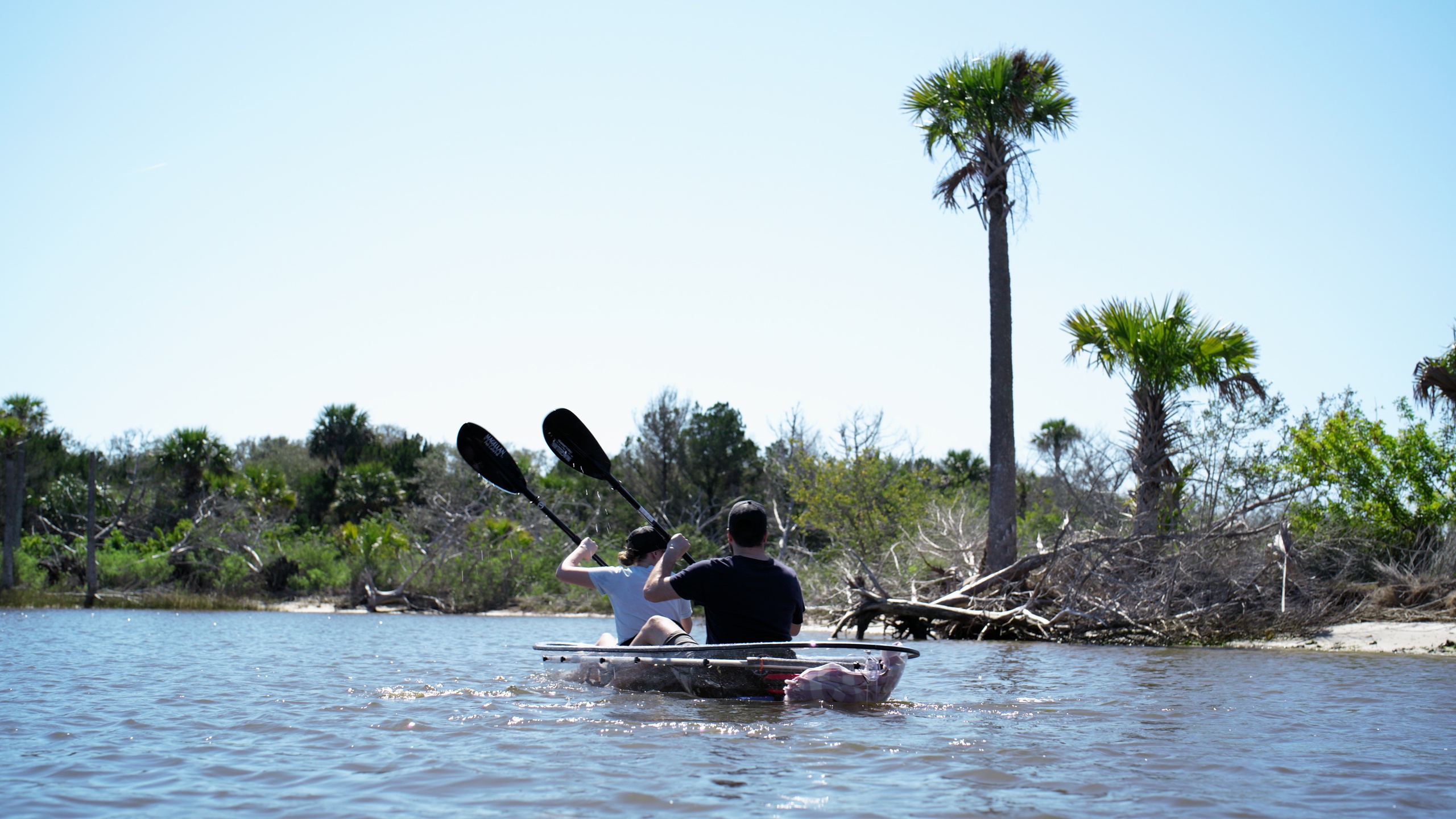
Why Kayaking Palm Coast Feels Like a Secret Coastline
The first time you push off from a sandy spit in Palm Coast you notice how the world rearranges itself—sound softens, horizons expand, and a small universe of marsh grass and oyster bars appears to orbit your kayak. Palm Coast's waterways are not dramatic in the alpine sense; they are quietly generous. Tides sculpt channels through cordgrass and mangrove roots, and over the course of an hour-long paddle you’ll move from the open comfort of the Matanzas River into narrow creeks where herons stand like sentries and fiddler crabs pop from the mud. That intimacy is the place’s gift: the ability to see, in close detail, how saltwater and freshwater meet and make a living shoreline.
Geology and human history hum under the surface. Barrier islands front the Atlantic and protect a back bay network whose shallow flats warm quickly in summer and stay mild through winter. Indigenous communities and later Spanish settlers navigated these same channels for food and trade—today a paddler might pass the mute outline of a historic fort or the shadow of a live oak whose roots have held fast for centuries. The waterways are both classroom and theater: expect sea turtles grazing on seagrass, ospreys cartwheeling with fish, and migratory shorebirds thick on the flats in spring and fall. For photographers and naturalists the diversity is a magnet; for families and exploratory kayakers the gentle gradients and many put-ins make Palm Coast especially accessible.
Paddling options are refreshingly varied. Flatwater touring along the Matanzas River makes for long, relaxed days with easy exit points at parks and estuarine boat ramps. Creeks such as Pellicer and Bulow reward a more inquisitive approach—narrow channels, beaver-influenced backwaters, and the occasional salt marsh labyrinth that feels like a private discovery. For coastal paddlers there's a short, manageable ocean launch at Flagler Beach where early mornings offer glassy conditions and a chance to ride small swell or explore nearshore reefs. Outfitters in the area lean toward guided eco-tours and beginner instruction, underscoring that this is a place to learn skills and leave with stories rather than to test limits. The region also lends itself to blended itineraries: kayak-and-bike days along coastal trails, paddle-then-fish afternoons, or sunset paddles that segue to a seaside dinner in Flagler Beach.
Practically, Palm Coast is forgiving: many launches are within a short drive of town, parking is generally straightforward, and late-season subtropical weather means a long paddle season. But the forgiveness is selective—tides, wind, and shallow sandbars demand local knowledge. Plan around tides for creek access, time ocean stretches for slack water, and pack for sun and sudden rain. With a few simple preparations, kayaking here becomes less about conquering nature and more about noticing it—minute by deliberate minute.
The Matanzas River estuary is the main artery: calm, wildlife-rich, and dotted with easy put-ins. It's ideal for guided eco-tours and multi-hour excursions.
Pellicer and Bulow creeks offer narrower channels and more shade—better for birding, quiet photography, and sheltered paddling on breezy days.
Flagler Beach and nearby Atlantic launches let paddlers taste coastal ocean conditions with short crossings and reef-side exploration suitable for intermediate sea kayakers.