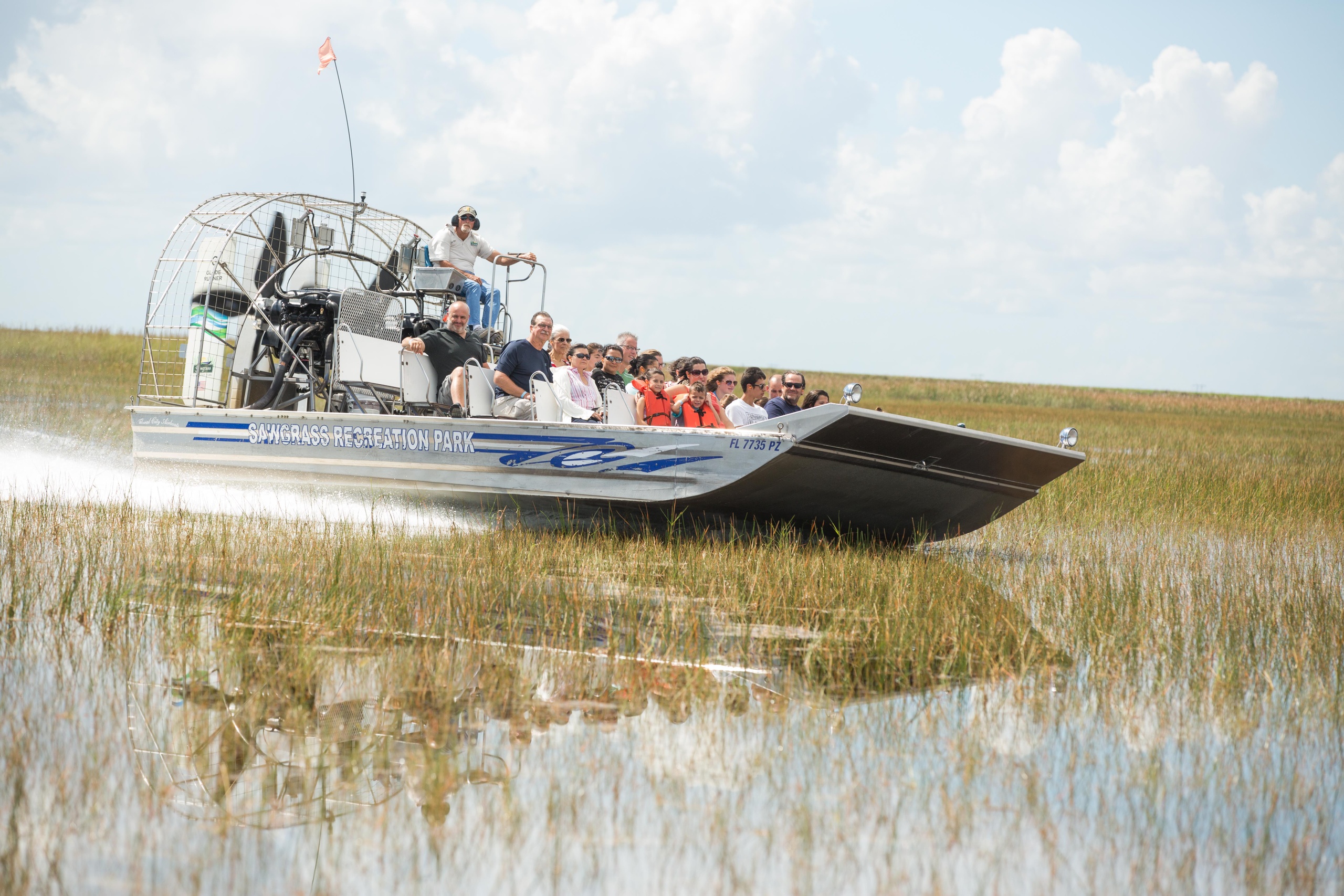
Why Weston Is a Compelling Base for Airboat Tours
Weston sits on the suburban edge of one of North America’s most singular wetlands — the freshwater Everglades that fringe Broward County. The geography here is not dramatic in the alpine sense; it’s spatial. Vast, horizontal, and alive, the sawgrass prairies and shallow marshes stretch toward low, luminous horizons. Airboats let you experience that horizontality at speed: the hull skims the surface, the prop wakes make the grass inhale and exhale, and the breeze carries birdcalls and the faint metallic echo of the motor. That close combination of intimacy and momentum is the essence of the airboat trip — you see small-scale behaviors (a heron striking, a turtle surfacing) in the context of colossal wetlands.
What sets Weston apart as an airboat gateway is accessibility without spectacle. Unlike deep-park staging areas that require long drives, outings from the Weston corridor can fit into a half-day with quick access to open marsh and backchannel sloughs. Tours range from short, high-octane wildlife runs to interpretive ecology trips that slow the pace, anchoring to marsh edges to scan for alligators, marsh rabbits, and migratory shorebirds. The region’s freshwater Everglades is biologically distinct from the coastal mangrove fringes and salt marshes farther south; it’s a place of sawgrass, cattail channels, and shallow basins that respond dramatically to seasonal rainfall. That seasonality governs what you’ll see and how you’ll plan: the dry season concentrates wildlife into predictable channels; the wet season exchanges dusty flats for a shallow, reflective sea that draws wading birds and floods the landscape with life.
Airboating in Weston is as much about timing and expectation as it is about the ride. Operators often pair fast runs with quieter interpretive stops, and many visitors combine airboat time with birding walks, kayak trips along calmer waterways, or visits to local nature centers that contextualize what you’re seeing. For photographers and naturalists, airboats offer fleeting vantage points that are hard to replicate on foot — a glinting gator silhouette in a cattail throat, a line of ibis marching through ankle-deep water, the incandescent geometry of a marsh sunrise. For families and casual visitors, short rides deliver thrills and close encounters without technical skill or equipment. For responsible travelers, the best airboat experiences are those that foreground habitat sensitivity: keeping distance from nesting areas, minimizing engine idling, and learning the seasonal rhythms that shape wildlife visibility.
The appeal is practical as much as poetic: airboats access places that are otherwise impassable by conventional boat. Their shallow draft and fan-driven propulsion mean operators can cross mudflats, glide over submerged vegetation, and reach quiet sloughs where wildlife concentrates. That mobility makes half-day itineraries possible and expands options for photographers and naturalists seeking morning or evening light.
Seasonality deeply affects the character of trips. November through April generally offers cooler temperatures, fewer insects, and higher concentrations of visible wildlife as animals congregate along shrinking water channels. The wet season — roughly May through October — brings higher water levels, dramatic seasonal vegetation growth, and the peak of nesting season for many waterbirds, but it also means higher humidity, afternoon thunderstorms, and more mosquitoes. Choosing the right window depends on whether you prioritize comfort, spectacle, or specific species encounters.