You step off Fifth Avenue and the city noise thins as if someone has drawn a curtain. The doorway of the Neue Galerie—housed in a Gilded Age mansion—feels like a small portal to another time: wood-paneled rooms, low light that flatters gilt frames, and a hush that makes every footstep count. Here, the clink of cups at Café Sabarsky mixes with the soft shuffle of visitors moving from Klimt to Schiele; the museum’s collection reads like a compact, exacting love letter to German and Austrian art of the early 20th century.
The Neue Galerie is not a monument to scale but to intimacy: galleries arranged like parlors, paintings displayed with the kind of care that encourages close looking instead of rushed selfies. The museum was founded in 2001 by collector and philanthropist Ronald S. Lauder to spotlight a period that reshaped modern art—Viennese Secessionists, Expressionists, and the design worlds that surrounded them. That historical thread runs visibly through everything in the house: ceramics and textiles that suggest domestic life; portraits that trap the light of an era on faces; graphic designs that whisper the modern world’s arrival.
Walking the Upper East Side to reach the museum feels like part of the experience. Fifth Avenue here still holds fragments of the Gilded Age that shaped New York: stoops and facades that once belonged to families who commissioned European-inspired palaces. Guided walks—like the Gilded Age Mansions Tour recommended by Condé Nast Traveler—or the self-guided Upper East Side scavenger hunts map the neighborhood’s past and present, linking stories of wealth and art patronage to places you can see today. A 2.4-mile self-guided route will take you from the Metropolitan Museum down to Central Park's reservoir, pausing at 38 locations and offering an accessible, playful way to orient yourself on the avenue.
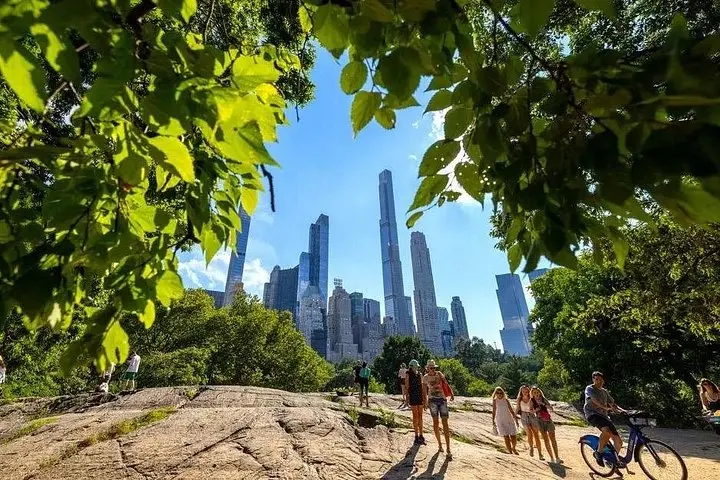
Geology and landscape are quieter here than in mountain or coastal pieces—this is urban geology, the bedrock of the city hidden under layers of pavement and parkland. Central Park, a designed landscape by Olmsted and Vaux, frames the museum with a long reach of greenspace where city birds audaciously claim airspace and the reservoir glints like an inland sea. The building itself—one of the handsome mansions that line Fifth Avenue—anchors the art historically and architecturally; it is a domestic scale for international treasures, which makes the museum feel personal and approachable.
There’s an element of theater to visiting: the rooms are small enough that a single painting can hold you for a long time. That’s where the Neue Galerie excels—it encourages slow looking. It’s also where the café matters. Café Sabarsky, with its Viennese menu and long wooden tables, turns museum coffee into a cultural statement: apple strudel that resists the tourist cliché and a Viennese coffee that does not try to be anything but perfectly, insistently Austrian.
Practicalities are part of the pleasure. A standard museum visit is compact; plan on 60–90 minutes to see the main galleries, longer if you linger in the decorative arts or read every label. Weekday mornings are best for quiet; weekends, especially during tourist season or special exhibitions, draw crowds. If you’re combining the museum with a walking tour of Fifth Avenue mansions, allow 2–3 hours more—walking between the Plaza and around 92nd Street is a pleasant way to layer context onto the art.
Packing and preparation are simple: good walking shoes for the Upper East Side’s sidewalks, a light layer for the museum’s cool, climate-controlled rooms, and a phone with a charged battery for museum audio guides or a self-guided scavenger hunt. Photography policies vary—expect no flash and hands-off from textiles and certain paintings. Accessibility is straightforward: the Neue Galerie has elevators and is wheelchair accessible, but the house-like layout means some routes require planning; check the museum site if mobility is a concern.
For travelers who want to broaden their visit, pairing the museum with nearby institutions makes for a culturally dense day. The Metropolitan Museum is a few blocks away for a contrastingly vast collection; the Frick Collection is a short walk south for another intimate mansion-museum experience. If you’re taking a guided Gilded Age mansions tour, you’ll hear the stories of scandal and extravagance that animated the avenue’s turn-of-the-century elite—useful context for understanding why a private collector would recreate a Viennese salon in Manhattan.
Mindfulness in a place like the Neue Galerie is also environmental stewardship: artworks are preserved in strict climate conditions and require low-light viewing; keep conversations soft and minimize flash photography to help conserve the collection. And travel lightly—public transit is the most sustainable and convenient way to reach the museum; buses and subways serve the Upper East Side and spare you the stress of parking.
In short, the Neue Galerie is a compact, potent experience. It’s for travelers who want art with context: intimate galleries that reward slow looking; a café that’s an extension of the museum’s cultural mission; and neighborhood walks that stitch the art to a very specific New York past. It is not about ticking off a checklist of masterpieces; it’s about stepping into rooms that feel curated with personality and purpose—and leaving with the distinct sense that you’ve had an afternoon with Austria in the city.