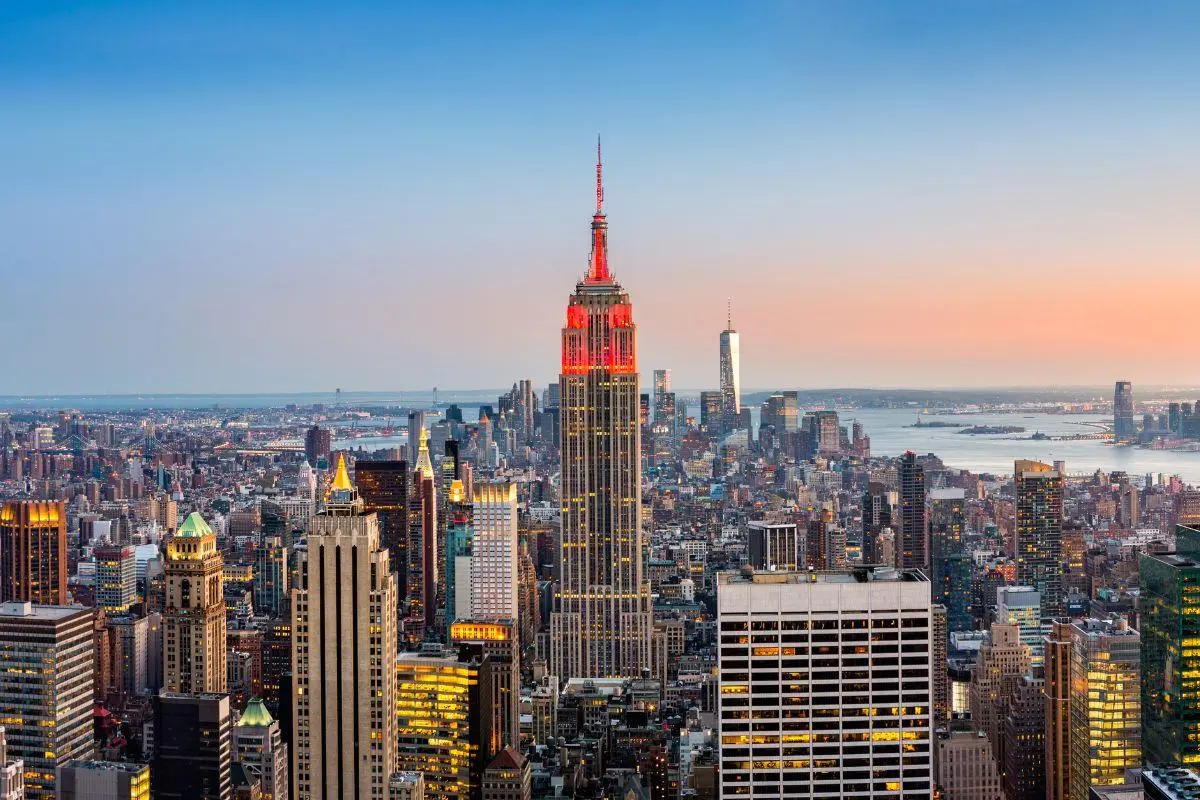
The morning on 42nd Street arrives like a film set: steam from subway grates, taxi horns keeping time, and a tide of commuters folding themselves into crosswalks. Stand at the corner where Grand Central drains into Lexington Avenue and the terminal's cavernous clockface seems to measure more than minutes—it measures momentum. Across the avenue, the line of midtown facades reads like an architectural shorthand for the American 20th century: Beaux-Arts, Art Deco, corporate modernism, and the odd little holdout building where a stubborn owner refused to sell.
A walk along 42nd Street is an urban hike through infrastructure and ambition. It’s where a terminal shaped by rail — Grand Central Terminal, completed in 1913 — meets the world of live theater at Times Square and the commerce of the Diamond District. The street is less a single destination than a spine that links transportation, entertainment, finance, and civic life, and the best way to understand it is under your own two feet with a guide who knows the stories hidden in the stone.
History and geology here are brief and utilitarian. Manhattan’s bedrock—Manhattan schist—allowed for the skyscraper experiments that defined this strip. More importantly, the arrival of the subway and the 42nd Street Shuttle rewired the island. Where once canals, ferry slips, and horse traffic set the city rhythm, steel rails, and an electrified underground delivered a daily migration that made Midtown the economic engine it is today.
That same transportation logic birthed architectural oddities: the holdouts that forced developers to carve notches into towers or design awkward entrances. A two-and-a-half-hour “Holdouts” walking tour translates those civic bargaining chips into human stories—the elderly tenant who never left, the restaurateur whose long-term lease became corporate folklore, the landlord who bluffed and lost. These micro-histories linger in brickwork and awkward setbacks, and they give the facades on 42nd a moral dimension: land use and personhood, yanked into public view.
Grand Central, of course, is its own ecosystem. Visit with a guide to find the whispering gallery, the hidden tennis court-turned-event-space, and the brass clock that marks more meetings than time. Nearby, the official “Grand Central Secrets & Hidden Gems” tours pull open the curtain on former private clubs, secret staircases, and the terminal’s subterranean soul. Or focus on transit as civic sculpture: take a guided ride on the historic 42nd Street Shuttle and you’ll see how mobility literally reshaped Midtown—helping skyscrapers cluster and theaters align along Broadway.
For travelers who want a private, curated experience, the “Private Guided 42nd Street Architecture Tour” and private Midtown architecture walks offer slow, context-rich passage through facades that too often get photographed but not read. Guides trained in architectural history point out structural innovations, civic ambitions, and the social forces—immigration, entertainment, commerce—that left their marks in steel and stone.
Practicalities are refreshingly simple. The walking is flat and hard-surfaced: asphalt, wide sidewalks, and the occasional plaza. Much of the experience is ambient; you will stop at few but significant interiors (Grand Central, New York Public Library, Rockefeller Center nearby), so wear shoes that handle city pavement and a jacket you can peel on and off. Crowds are the primary “terrain” challenge—midday and evening theater rushes are busiest—so plan for morning tours if you prefer quieter steps. The tours range from roughly two to three hours, with plenty of time to pause at a coffee cart or duck into the library for its Rose Main Reading Room.
Timing matters: spring and fall provide amiable temperatures and fewer oppressive crowds. Summer brings tourists in force and the pavement heat of midday; winter dresses the street in lights and sometimes slickness. Independent riders can use the subway to hop between stops; if you plan to ride the 42nd Street Shuttle, understand it’s a quick hop but a memorable one—a poem in public transit.
Prepare with the basics: bring a MetroCard or contactless payment, a water bottle (many tours include short breaks), and your camera. If you’re photographing facades, aim for the blue hours around sunrise or sunset for softer light that sculpts relief and gilds ornamentation. Bring a small notebook; many guides reveal little-known names and dates you’ll want to jot down.
Why do it? Because 42nd Street compresses the story of New York into a walkable line: public transit meets private ambition, theatrical spectacle meets corporate headquarters, and old lawsuits leave a patchwork of architectural eccentricities. Whether you join a group tour that foregrounds the subway’s role in building Midtown, a Grand Central deep-dive into the terminal’s secret architecture, or a private architecture walk that lingers on façades and holdouts, 42nd Street rewards curiosity with stories you can see and read.
For anyone aiming to know the city beyond Instagram, a guided walk along 42nd Street is the kind of urban field trip that returns value long after you’ve left—lessons in infrastructure, preservation, and the human decisions that shape skylines. The street asks one practical thing of you: slow down. Watch the details, listen to the narratives, and you’ll find the city revealing itself in the margins—stubborn little buildings, brass clocks, and whispering galleries all waiting to make you look twice.