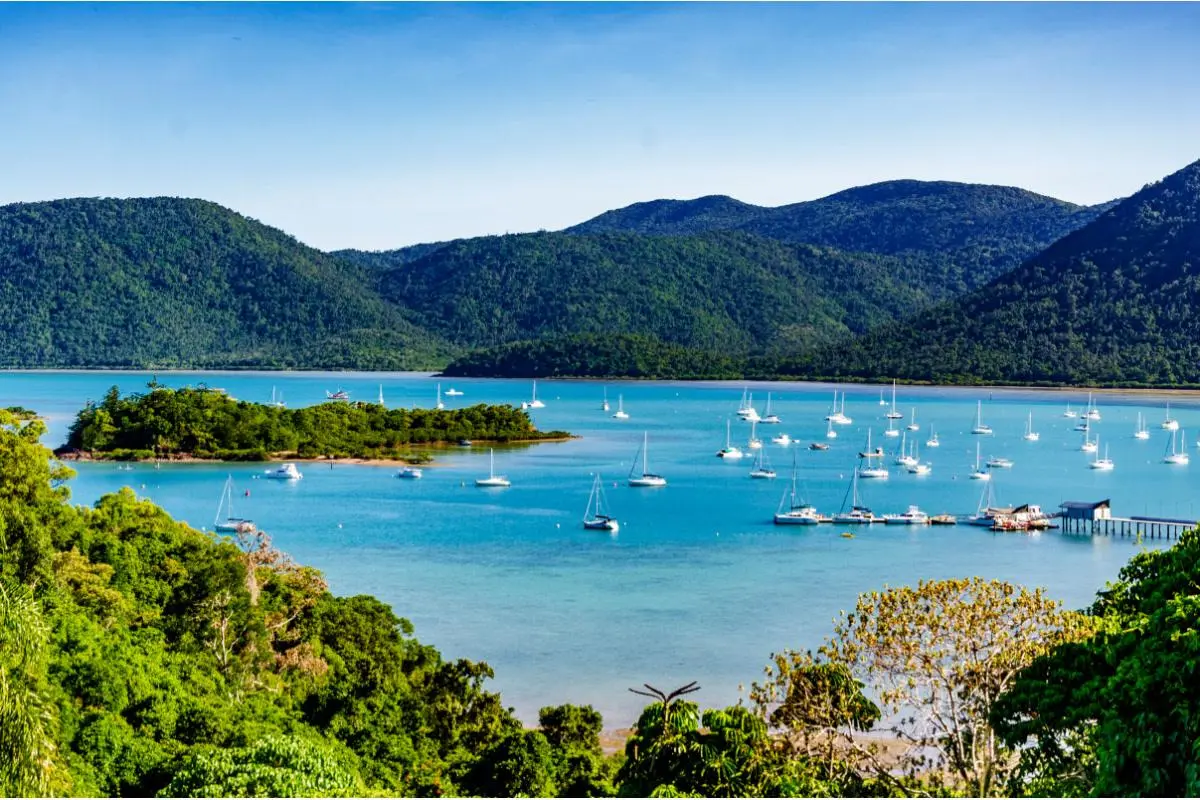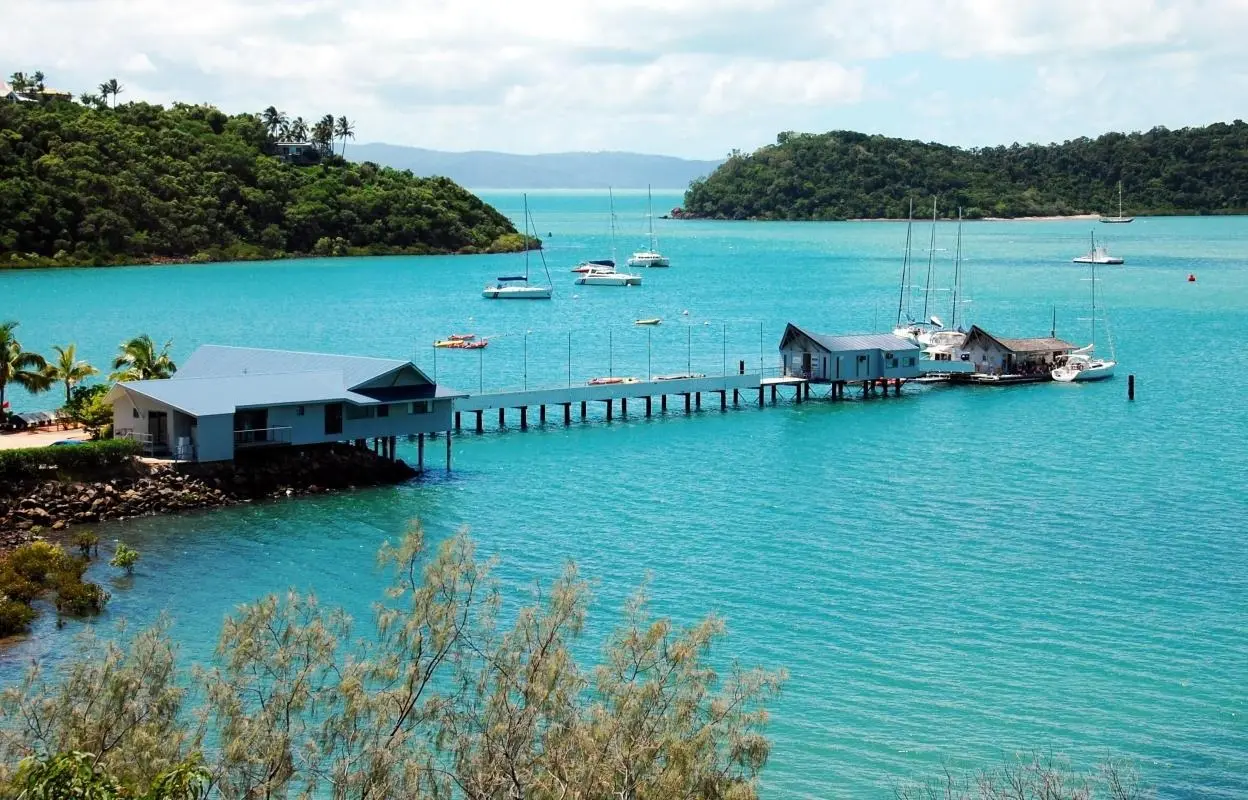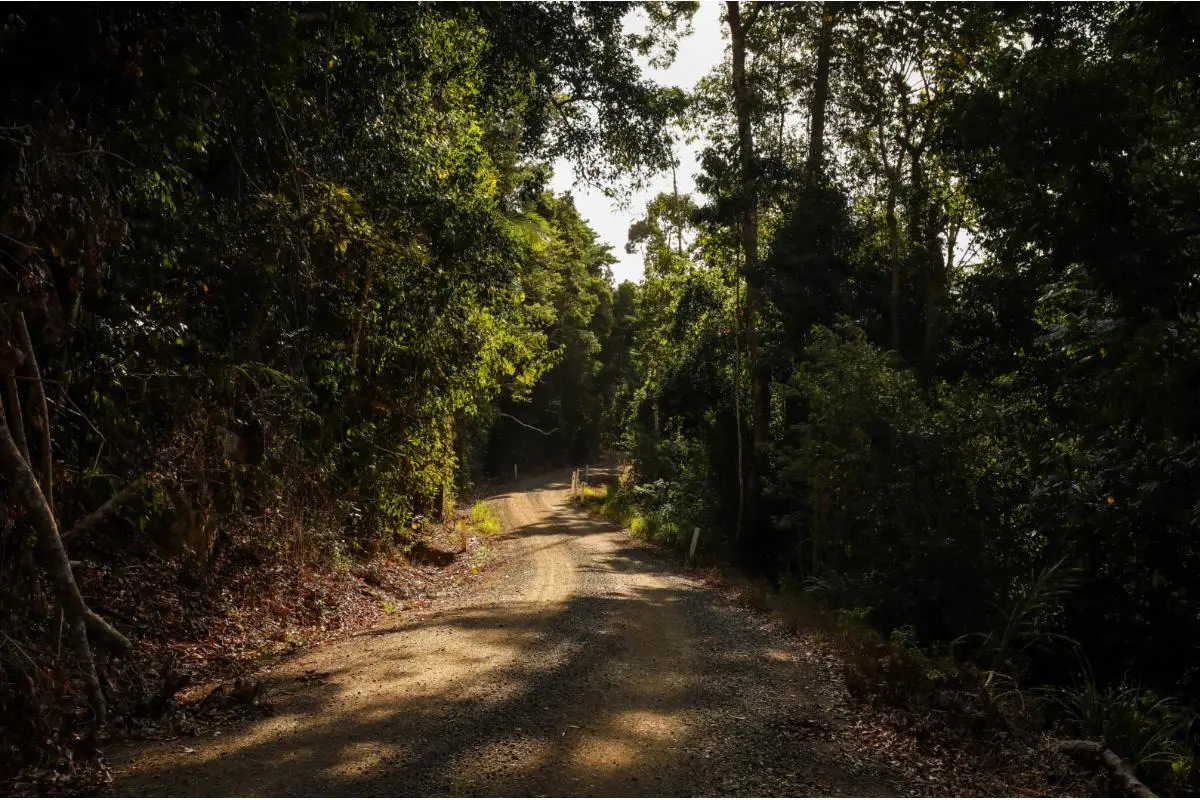
The track begins with a single sharp breath of salt and green. You step off the low-slung red gravel and into a pocket of rainforest whose humidity settles like a promise — fronds that brush your forearms, trunks mottled with lichen, and a canopy that muffles the distant clatter of the Coral Sea. For most travelers Airlie Beach is the gateway to island time and reef day trips, but a short drive east and you can wander a different Whitsunday story: the Conway Circuit of the Whitsunday Great Walk, a stitch of coastline, ridgelines and rainforest that hands you a continuous sequence of viewpoints toward the islands offshore.
Conway is the kind of walk that keeps alternating moods: a low, intimate rainforest in the gullies, then a hard, wind-swept headland that opens onto a stage of islands and sea. There are ancient rocks underfoot — folded sedimentary and volcanic outcrops that, over millions of years, have been coaxed into the ridgelines you now follow. The views are the reward for the climbs: uninterrupted panoramas of white sand and reef-stippled water, a reminder that the Whitsundays are not just islands but a meeting of land and sea shaped by tectonics and tides.
This section of the Whitsunday Great Walk is steeped in layered histories. Long before European navigators charted these waters, the Ngaro people — often referred to as the “island people” — traversed these coasts, collecting shellfish, carving middens and passing songlines through the landscape. In 1770 Captain James Cook named the islands “the Whitsundays” after sighting them on Whit Sunday. Today the trail folds those histories into its signage and interpretive stops while the surrounding park is managed to protect both cultural sites and the fragile coastal ecosystems.
On the ground, the Conway Circuit is variable: a mix of narrow, root-laced singletrack, short boardwalks through mangroves, and rougher, rocky sections on exposed headlands. Expect repeated ups and downs rather than a long continuous ascent; the total distance for a typical loop or return route runs into the mid-teens of kilometers depending on the variant you choose, with cumulative elevation change that pushes your heart rate on the ridge sections. The terrain rewards hikers with wildflower glades in spring and seabird colonies riding the thermals in winter.
If you’d like to see the rainforest without the sweat, there’s a local contradiction that makes perfect sense: the Whitsunday Segway Rainforest Discovery Tour. For about 3.5 hours you glide under the canopy, delivered and collected from Airlie Beach, with an informed guide pointing out plant species, birdlife and small cultural notes. It’s an unusual way to experience a full rainforest pocket inside Conway National Park — and the only Segway tour operating in a full rainforest national park in Australia. Whether you’re there on foot or two wheels, the place rewards you with intimacy: rare understory orchids, the curious pause of a wallaby at dusk, and those wide, bracing coastal lookouts.
Practical edge: plan for heat, sun and birdsong. Carry reliable water, wear sturdy shoes for the rocky headlands and rooty gullies, and allow time for slower sections where the trail narrows. Mobile reception can be hit-or-miss in the park; download maps and let someone know your plan. In the wetter months short, sharp storms can make exposed ridgelines dusty then slick — a light waterproof and a solid grip on footwear go a long way.
For Airlie Beach-based travelers the Conway Circuit makes an excellent alternative (or complement) to reef days: you get land-based biodiversity, coastal geology and cultural context — and the Segway tour offers an accessible rainforest option for those who can’t or don’t want to hike long distances. Respect the rhythm of the place: stay on marked tracks to protect fragile vegetation, leave no trace, and if you’re taking photographs, keep a respectful distance from wildlife and cultural sites.
Why go? Because the Conway Circuit offers a layered Whitsundays experience: coastal panoramas that rival better-known viewpoints, rainforest gullies denser than you’d expect so close to the coast, and a quieter, more terrestrial counterpoint to the postcard reef images that define the region. For hikers it’s satisfying and varied; for family groups or travelers looking for an easier immersion, the Segway tour opens the same environment from a different vantage. Either way you leave with a stronger sense of the larger picture — the islands, the sea lanes and the mainland landscapes that cradle them.
If you’re packing for Conway, think in layers and intention: the trail meters your effort in rises and views, but the forest and shore demand respect. Do the work to get there, and the reward is not just a single vista but a whole sequence of landscapes that unfold over the length of a day.