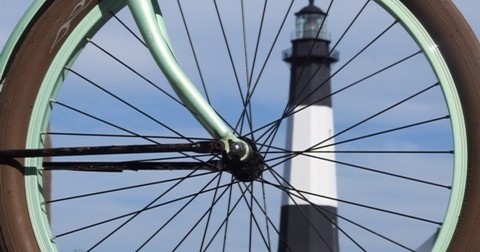
The wind off the Atlantic carries a salt-and-sand candor you don’t get in landlocked cities—an insistence that tugs at your collar and clears the small confined thoughts in your head. You feel it before you see the lighthouse: gulls arguing over a baited scrap, the long white line of surf punctuating the horizon, and then that familiar cone of brick and iron rising from the low marsh like a patient sentinel. Tybee Island Light Station and Museum sits where the river meets the ocean and where histories of navigation, war, and local life overlap in weathered paint and iron staircases.
Step through the museum doorway and the air tightens with stories. Old lens hardware is stacked like relics of an industrial cathedral; faded black-and-white photographs show Coast Guardsmen in long coats, boxed crates labelled for faraway ports, and a string of ships that trusted this light. That trust has a long pedigree: the first Tybee beacon dates to the 18th century—records show a light here as early as 1736—and the current Victorian-era tower that visitors climb was completed in the late 19th century. Its presence speaks to a coastline shaped by shifting sandbars and maritime commerce, and to the island’s role as both refuge and waypoint for sailors.
Geology and maritime necessity shaped this place. Tybee Island is a low-lying barrier island of sand and salt-marsh, created by longshore currents and the slow accretion of shell and sediment. For centuries, channels carved and recarved approaches to Savannah’s port, and safe navigation demanded a dependable guide. The lighthouse wasn’t an ornament; it was an operational answer to the ocean’s appetite for mischief. Walk the base of the tower and you’ll notice how the island’s flatness amplifies the light’s authority—there is nothing taller for miles.
But Tybee is not simply a museum plank of old things. The island’s culture is full-bodied and welcoming. Locals still head to the Crab Shack to eat with sand between their toes, a bare-foot, low-formality icon mentioned on bus and trolley itineraries that ferry visitors from nearby Savannah. Summer evenings are for shrimp boils and small bars where live bands play behind open windows. Artisans sell shell jewelry at weekly markets; surf instructors and fly-fishers trade tide charts over cold beer. And the people who run tours—bike guides, scavenger-hunt hosts, and dolphin-cruise captains—see the Island as a living place, a patchwork of salt marsh, public beaches, and layered histories.
If you’re planning your visit, the lighthouse is a compact, kinetic experience. The climb is brief but vertical: the spiral stairs give a workout and a sense of ascent that’s both literal and emotional—the Atlantic expands in a 360-degree reveal when you reach the gallery. That view is the payoff: a swath of ocean, the distant sparkle of Savannah’s skyline, the low wrinkled marshes that feed the barrier island’s life. Guides emphasize restraint—don’t linger on the rail for too long during busy hours—but for a clean half-hour at the top, you can watch dolphins arch in tandem with the tide and kitesurfers slicing the wind.
The site connects directly to several ways to explore the island. A short trolley or bus ride from Savannah often pairs a lighthouse stop with a Dolphin Cruise; remember that many tour packages include the cruise but not lighthouse admission. The sea routes are where the coastline’s storytelling shifts into motion: dolphin tours work the tidal creeks and river mouths, following pods where shrimp boats and the current offer a free breakfast. Closer to shore, a Tybee Island Bike Tour is the most convivial way to see the village core—North Beach’s parking and vending conveniences make it easy to join in—while a city-hosted scavenger hunt turns the island into a map of small discoveries, from WWII bunkers discreetly set into dunes to the hidden murals behind cafes.
Practical guidance: time your climb for the soft light of morning or late afternoon when heat and crowds fall away. Wear grippy shoes and a light layer—the tower can be windier than shore-level temps suggest. Expect to spend 60–90 minutes at the site if you plan to tour the museum, climb, and take photos; allow a half day if you’ll combine a bike tour or a dolphin cruise. If your itinerary includes the popular Savannah-to-Tybee dolphin boat, note that the lighthouse admission is often not included, so book tickets in advance during summer weekends.
For travelers with a practical streak, a few on-the-ground tips will keep the trip smooth: hydrate and carry a refillable bottle (the island’s humidity can be deceptively draining), pack sun protection even on cloudy days, and consider a guided bike tour to cover more ground—guides double as local concierges who can steer you to the best breakfast and hidden photo spots. If you want to watch wildlife, book a dolphin cruise operating in the tidal creeks—captains who know the rhythms will put you closest without crowding the animals. And if you’re seeking a quieter experience, visit outside high summer: fall and spring are when bird migrations and pleasant weather coincide.
Tybee Island Light Station is both a single landmark and a portal. It’s a place where salt, stone, and human endeavor intersect. The climb gives you scale and the museum supplies context; the island’s small businesses provide the human warmth that softens the administrative edges of preservation. Whether you come for the history, the birds, or the simple choreography of a dolphin cresting the tide, Tybee rewards attendance. Bring sturdy shoes and curiosity—the lighthouse still has a way of aligning your compass, whether you came for the photo or the perspective.