Beneath the Shenandoah: A Private Day Trip to Luray Caverns from Washington

Beneath the Shenandoah: A Private Day Trip to Luray Caverns from Washington

8 Hours • All Ages Up To 13 people — Luxury transport, cave tour, rope course and museums

Continue Reading

You leave the clamor of Washington behind—traffic thinning, glass-and-steel replaced by hedgerows and fields—until the road eases into the foothills of the Shenandoah. The air changes first: cooler, drier, the kind that sharpens senses. In the back of your luxury vehicle, water chilled and the itinerary flexible, there is a loose expectation of spectacle. What you get is something older and quieter than spectacle: geology rehearsing itself in slow motion.

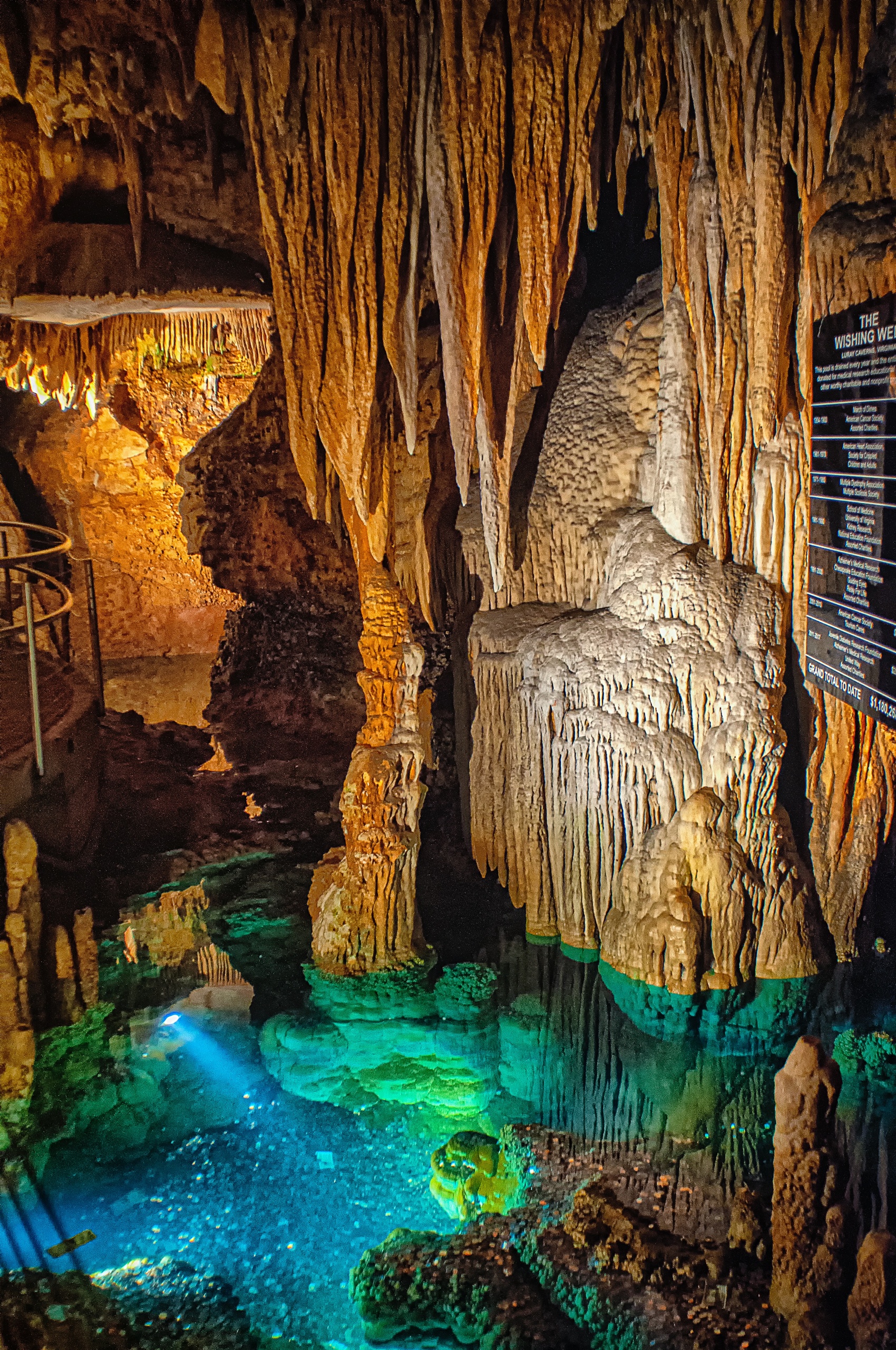
By the time you reach Luray, the limestone has been speaking for hundreds of thousands of years. The entrance to the caverns is a modest stone façade, and then the world turns inward. The guided tour that follows is part theater, part natural history lecture—Vaulted rooms, shimmering draperies, pillars so large they read as architecture. You stand near the Double Column, a joined stalactite and stalagmite that climbs 47 feet and seems to hold the cavern's ceiling like a blunt, earthen pillar. In another chamber, the Great Stalacpipe Organ hums—an instrument that uses tuned stalactites to play music by vibrating the rock itself. The place feels alive and deliberate; the stone seems to watch you as much as you watch it.

This isn't a whimsy of a one-off attraction. The caverns were discovered in 1878 and quickly opened to the public, and the site that grew around them tells a layered story: the Car and Carriage Caravan Museum recalls rural life and transportation, while the Luray Valley Museum threads local history into the larger Shenandoah narrative. Outside, the Rope Adventure Park dares you to climb and balance among the trees, and the Gem Sluice hands you a bucket and a beat-down of geology you can take home.

The practical architecture of the day—luxury transfer from Washington, bottled water, a flexible schedule—lets the curious do what they do best: take their time. Build your morning into a slow drive that looks at farmsteads, stop at viewpoints to watch fog settle into the valley, and arrive ready for that hour-long guided walk through the caverns. After the tour, you should plan for about three hours of free time to pick and choose: the ropes course, the museum, lunch at the property, or a quiet seat by a reflective pool where tiny calcite ripples catch light like coinage.

What makes this particular trip travelable is the combination of comfort and access. A private round-trip transfer means you can be decisive—start early to beat crowds, linger for lunch, or chase golden-hour light on the way back—without juggling rental cars or uncertain logistics. It is also forgiving for groups: families, multigenerational parties, or small corporate outings fit neatly, with room for strollers and short legs.

A trip like this is also an excellent primer in reading the land. Luray Caverns are not isolated curiosities; they are part of a broader karst landscape where water has been the sculptor for eons. Above ground, that means sinkholes, springs, and a valley economy built on orchards, farmstands, and small towns. Below, it means delicate formations that take centuries to grow a single inch. Walk gently.

If you want to book the full logistical lift—a private vehicle, bottled water, and a customizable schedule—consider looking into the Luray Caverns Private Round Trip Transfer. The booking ties together the travel and the experience so you can focus on what matters: hours of good conversation, a few crisp photos, and the rare silence of an underground hall.

Quick tips for timing and pacing: arrive early to avoid midday bus groups; if you like photography, use a fast prime and be patient—the caverns are dim and slow to reveal their best angles. For families, the ropes course is a reward for small feet and big nerves; for geology buffs, ask your guide about flowstone vs drapery and the local hydrology that feeds crystal-clear pools.

This is a day that reads as two halves: an inward, cool, tactile hour among stone and quiet; and an outward, sunny handful of hours exploring the Shenandoah foothills and small-town museums. Both sides of the day reward slow observation and a readiness to be surprised by scale—how small you feel under a 47-foot column, how much history is contained in a single valley.

A private transfer frames it as a relaxed, well-curated adventure. You can treat the day as a geology primer, a family-friendly outing, or a scenic detour from the city. Either way, it’s an accessible way to step out of the urban routine and witness a process of nature that moves on a timetable far longer than our own.

Duration8 hours (round trip including 1-hr guided cavern tour)
Plan your visit

Trail Wisdom

Book early morning slots

Early tours reduce crowds and give you softer light for photos on the drive back

Wear stable shoes

Cavern floors can be wet and uneven—trail runners or approach shoes are ideal

Bring cash or card for admission

Luxury transfer includes transport and water but not cavern admission

Charge your camera

Low-light photography requires higher ISO and more battery life

Local Knowledge

Hidden Gems

  • Shenandoah Heritage Village for hands-on local history
  • Car & Carriage Caravan Museum for an unexpected collection of historic vehicles

Wildlife

White-tailed deer, Eastern box turtle

Conservation Note

The caverns are sensitive karst features; visitors are asked to avoid touching formations and to follow marked paths to protect fragile calcite deposits.

Luray Caverns were discovered and opened to the public in 1878, quickly becoming a major attraction in the Shenandoah Valley.

Seasonal Guide

spring

Best for:Wildflower drives, Cool cave temps
Challenges:Unpredictable showers, Mud on forest trails

Spring brings fresh green on the Shenandoah slopes and comfortable cave temperatures, but be prepared for wet roads and muddy access points.

summer

Best for:Family trips, Rope course activities
Challenges:Higher visitor numbers, Hotter above-ground temperatures

Summer is peak season for family outings and the ropes course; expect warmer days above ground and more crowds at midday.

fall

Best for:Fall foliage drives, Photography
Challenges:Weekend crowds during peak foliage, Cooler mornings

Fall is optimal for colorful valley vistas and comfortable cave visits—book ahead for prime weekend dates.

winter

Best for:Quiet tours, Off-season rates
Challenges:Shorter daylight hours, Potential for icy roads

Winter offers fewer visitors and a quiet cavern experience, but plan for winter driving conditions and limited daylight.

Photographer's Notes

Use a fast prime lens and high ISO for cavern interiors; steady your camera on rock ledges or use a lightweight tripod where permitted. For the drive, shoot early or late light across the valley for the most dramatic colors.

What to Bring

Sturdy walking shoes

Essential

Provides traction on wet, uneven cavern floors and outdoor paths

Light daypack

Essential

Carries water, layers, snacks, and camera safely during excursions

○

Headlamp or small flashlight

Useful for low-light areas and for reading interpretive signs outside the main cavern lighting

Weather layer

Essential

A light jacket or fleece is handy for cool cave temperatures and variable surface weather

Common Questions

Is transportation included in the booking price?

Yes, luxury round-trip transportation and bottled water are included; cavern admission is not included.

How long is the cavern tour?

Guided tours through the caverns typically last about one hour.

Are children welcome on this trip?

Families are welcome; the service accommodates groups up to 13 and allows strollers on site.

Can the itinerary be customized?

Yes, the private transfer is customizable—discuss timing and stops with your booking agent.

Is the Great Stalacpipe Organ audible during tours?

Yes, the organ is a highlight and is played during demonstrations, schedule permitting.

What is the cancellation policy?

Full refund available with 24 hours notice for cancellations.

What to Pack

Sturdy walking shoes for cavern floors, a light weather layer for cool caves, a water bottle to refill (bottled water provided during transfer), and a camera for low-light shots

Did You Know

Luray Caverns opened to the public in 1878 and quickly became one of the most visited cave systems on the East Coast.

Quick Travel Tips

Leave DC early to avoid peak traffic; bring cash or card for admission; pack layered clothing for 54°F cavern temperatures; confirm pickup details with your transfer operator

Local Flavor

After the caverns, head into downtown Luray for classic Shenandoah Valley fare and local cider—historic inns and small diners serve hearty plates; pick up preserves or apple butter at a farmstand for a true local taste.

Logistics Snapshot

Closest airport: Washington Dulles (IAD) or Reagan National (DCA). Driving distance to Luray: about 90–100 miles from DC (1.5–2 hours). Cell service: intermittent once in the valley; expect good coverage at the property but limited deep in the caverns. Permits/passes: cavern admission is required and not included with transportation.

Sustainability Note

The caverns are part of a karst ecosystem; avoid touching formations, stick to marked paths, and pack out any trash to protect fragile cave environments.

Topics