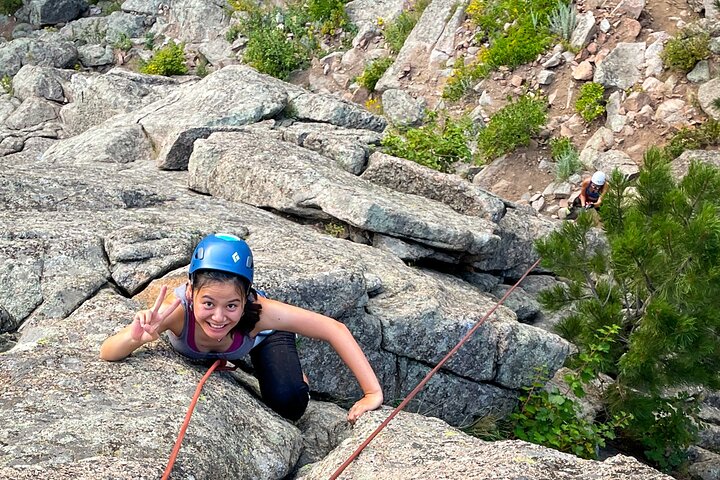
Dawn slips over Boulder like a quiet promise. The first light hits the Flatirons and they wake in bands of rust and gold, tilting up from the foothills as if to test the sky. A spry breeze tumbles off the canyons and threads through town, nudging aspen leaves, tugging at café umbrellas, reminding you that altitude has its own mood. You climb into a comfortable van, water bottle in hand, and the city falls away in quick flashes—brick storefronts, cyclists coasting the greenways, the scent of espresso and pine sharing the morning air. This is Boulder as locals love it: half-mountain, half-town, entirely its own tempo.
The Private Boulder Explorer Tour is the simplest way to get the full picture in four hours. It’s part scenic drive, part trail sampler, part living history lesson—a guided loop that stitches together Flagstaff overlooks, the base of the Flatirons at Chautauqua, and the slow, easy rhythm of the Boulder Creek Path. Transportation is included, the guide brings local perspective, and the foothills do the rest: folding and unfolding around you as the road switchbacks through ponderosa pines and out to those sudden, dazzling views.
At Chautauqua Park, the grass hums with morning walkers and the Flatirons lean forward like old friends eager to tell a story. Your guide points out the geology: ancient beach sands and riverbeds compacted into what geologists call the Fountain Formation, then uplifted and tilted during mountain building roughly 300 million years ago. Their faces run with grooves and lichens; the stone seems to breathe, warming as the sun climbs. You take a short, steady stroll—nothing heroic, just enough for your legs to register the altitude (5,430 feet in town, a whisper higher here). The trail moves under ponderosa and yucca, and the breeze carries the faint vanilla scent from the pines. Birds narrate: a Steller’s jay heckles, a red-tailed hawk circles and edits the sky.
From there, Flagstaff Road gathers you into the hills. The drive is brisk, the corners neat. Pullouts appear like well-timed commas—a chance to catch your breath and widen your gaze. At one overlook, Boulder spreads into the plains, a green city trimmed by gold grassland. Beyond, the High Plains soften into distance. On a clear day, you can pick out Denver’s skyline to the southeast, a tiny geometry on the horizon. Here the wind has an opinion; it nudges your jacket, flips your hair, makes a case for layers even in summer. This is the Front Range announcing itself. The mountains don’t shout—they lean close and say, stay alert.
Culturally, Boulder’s story pivots between grit and idealism. The town grew on the momentum of the 1859 gold rush, then remade itself into a university hub and open-space pioneer. The historic Chautauqua campus, established in 1898 during the national Chautauqua movement, still hosts concerts and lectures in a broad wooden auditorium, its lawn anchored by cottages and old shade. The pedestrian-friendly Pearl Street Mall, built in the late 1970s, re-centered the city around small businesses and street life. On this tour, you’ll likely skim past it—brick-lined, flowered, busy with buskers—on the way to the creek path or campus drive-bys. University of Colorado’s sandstone buildings echo the geology around them, trimmed with red tile roofs that glow at sunset. It’s not accidental; this was a conscious design choice that binds town to terrain.
Boulder’s modern identity is outdoors-forward, tech-curious, and food-obsessed. The guide will talk you through favorite trails and quick hikes, where locals sneak in a lap before work or unwind after. You might stop at Settler’s Park to see the red rock spires at the mouth of Boulder Canyon, or pause along the Boulder Creek Path, where runners and families slide by in an easy procession. The creek whispers around boulders, daring toes to test meltwater, reminding everyone that the Rockies sip from their snowpack all summer. In winter, it’s quieter, frost beading along the banks, the city’s sounds muted beneath a light snowfall.
The beauty of a private tour is tempo. Want more time among the Flatirons? Done. Prefer an extra overlook on Flagstaff or a deeper dive into Pearl Street’s history? Easy. Your guide will steer by season and weather, adding context as the landscape changes. In spring, wildflowers test the sun along Enchanted Mesa; in fall, cottonwoods flash bright as coins along the creek. You’ll get advice on how locals layer up, why afternoon storms deserve respect, and how to read a trailhead kiosk. You’ll also hear how this community treats its open space—Boulder’s Open Space and Mountain Parks over 45,000 acres strong—as a shared backyard worth protecting.
Practicalities make the day smooth: bring a reusable bottle (the tour offers refills), wear sturdy walking shoes, and carry a light layer even in August. Altitude is gentle but honest; drink more water than you think you need and keep your pace conversational. The route involves short, optional walks (typically 0.5–2 miles total) on well-traveled trails with mild elevation. If you’re a runner or seasoned hiker, it will feel like a warm-up; if you’re here for the views and stories, it’s a perfect fit. Either way, the Boulder guided tour format keeps everything approachable and efficient.
By the time you return to town, the day has rounded into itself. Cafés crowd with lunch chatter. Bikes sluice through protected lanes. The Flatirons, having done their work, stand by like patient guardians. You hop out with a smarter map in your head and a shortlist of places to revisit on your own: a mellow sunset at Artist Point, a stroll past the wooden porches of Chautauqua, a slow amble along the creek with ice cream in hand. That’s the real promise of the Private Boulder Explorer Tour: not just seeing Boulder, but knowing how to move inside it.
Planning tip: The tour runs beautifully year-round. Summer demands sun protection and water; fall delivers crisp air and standout foliage; winter brings a quiet, crystalline calm with occasional icy patches on paths; spring is green and hopeful but muddy in spots. Book a morning slot for softer light and fewer crowds, or opt for late afternoon to catch the Flatirons firing at golden hour. Either way, this explore Boulder experience gives you the city’s greatest hits without the guesswork, letting the mountains set the rhythm while your guide handles the rest.