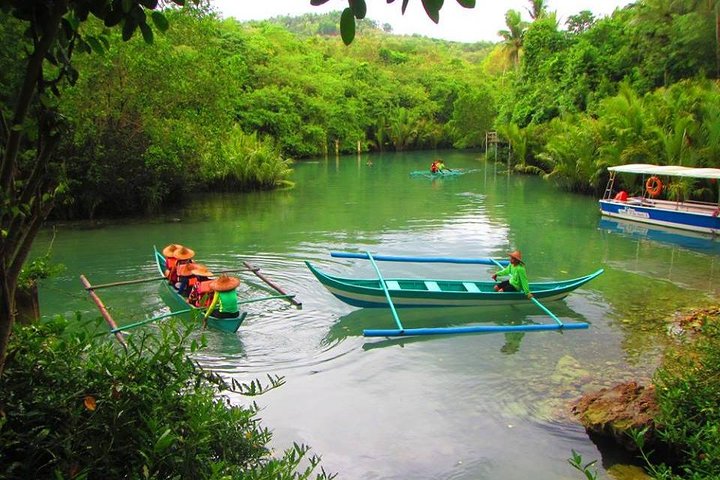
You step into the shadow of a wooden banca and the river answers: cool, brown water sliding past mangrove roots like a hand trailing through a sleeve. The boat’s bow parts green fingers—prop roots and aerial leaves—while the driver eases the engine and the place tightens around you: mangrove trunks leaning in, birds calling like punctuation. For eight or ten hours that follow, Bojo River becomes both classroom and playground: a micro-ecosystem that dares you to slow down, look closer and, eventually, wade in.
The Bojo River Eco-Adventure Tour is not an adrenaline blockbuster; it’s an invitation to curiosity. It weaves three distinct threads—ecology, culture and a little island sportiness—into a single day trip out of Tagbilaran. You glide through a living barrier reef of mangroves, watch fiddler crabs stitch the mud with tiny footsteps, learn to spot a heron’s telegraphed patience and, later, swap island stories over a picnic of grilled fish and rice. There’s snorkeling and swimming where the river meets the sea; there’s a stop at Capilla Sta. Ana Museum to see centuries-old religious icons and church textiles that anchor the island’s colonial history; and there’s a hands-on mat-weaving demonstration that turns mangrove fiber and rattan into useful art. The itinerary reads like a love letter to lowland coastal systems and the communities that protect them.
Why Bojo River, and why Bohol? Geologically, the river cuts a short corridor from upland limestone outcrops to the Bohol Sea, and along that corridor mangroves thrive in brackish, tidal water. Their complex root systems trap sediment and protect inland villages from storm surge; culturally, those same root systems supported livelihoods for generations—fishers, mat weavers and boat builders. For visitors, the river’s narrow channels offer intimacy: it’s easy to miss a motmots’ break of iridescence or the distinctive clap of a kingfisher if you’re barreling past, but the slow drift of a small boat makes the landscape readable.
Local stewardship is part of the story. Community-based conservation programs run guided trips and mangrove replanting, turning tourism dollars into tangible protection for the shoreline. Capilla Sta. Ana Museum, part of the route on many days, offers a contrast—its carved altars and religious portraits place the river inside Bohol’s longer human narrative: Spanish colonial missions, local patron saints and a pattern of faith that shaped the island’s towns.
On the practical side, this tour is full-day (roughly 8–10 hours), typically including round-trip transport from Tagbilaran, the river cruise, a guided eco-talk, a stop for snorkeling at the river mouth, a picnic lunch and the museum visit. The trail—if you can call narrow boat channels a trail—ranges from flat, easy glides to short wading spots. There’s a light dose of exertion when you swim or when you climb small banks to photograph the shoreline, but nothing technical. Expect tropical humidity, sudden patches of sun and frequent bird sightings.
For planning, timing matters. Morning launches catch the river with cooler air and more active birds; late afternoons turn the mangrove leaves to gloss as the sun softens. Bring reef-safe sunscreen and a change of clothes for the picnic and the museum visit. Footwear that can get wet—sandals with straps or light water shoes—works better than heavy hiking boots. Hydration is simple but essential: islands are deceptively draining.
This tour is especially friendly for curious travelers who want more than a postcard snapshot. Families with older kids, nature lovers and travellers interested in community tourism will find it rewarding. Photographers can get close to detail—root systems, reflections, the tight choreography of shorebirds—without the crowds you might find at better-known river systems.
If you go, leave the boombox and the disposable plastic behind. Part of the tour’s ethos is low-impact visitation: the boat routes skirt fragile banks and the guides often explain how tiny disturbances can erode habitat. Ask the guides about local replanting efforts, take a short detour off the shaded boat gangway to feel the tannin in the water and, if you’re snorkeling at the mouth, treat the reef like a library—don’t touch the books.
Bojo River won’t give you Everest views, but it offers something rarer at that scale: a chance to read a shoreline and leave it stronger than you found it. Whether you’re there for the birds, the craft of mat weaving or the quiet of pushing through a green corridor with nothing but oars and a polite engine hum, the day has a satisfying arc: a gentle launch, moments of discovery, an active swim, and then the small cultural finale inside a chapel museum that frames Bohol against its own layered past.
Practical snapshot: the tour runs about 8–10 hours and is often booked with pick up from Tagbilaran; expect early departures, communal picnic lunches and a mix of boat cruising and light snorkeling. Book with a community-minded operator that includes park fees and a local guide—your money should be part of the conservation cycle, not just a photo op. Bring a sun hat, a sense of curiosity and shoes you don’t mind wetting: the river will accept them all.
If your travel itinerary allows, pair the tour with a stay in Tagbilaran or a few nights in Panglao for beaches and diving. But don’t rush this river. Sit back, let the mangroves lean in, and let the rhythm of the water reorder your idea of what an island day should feel like.


