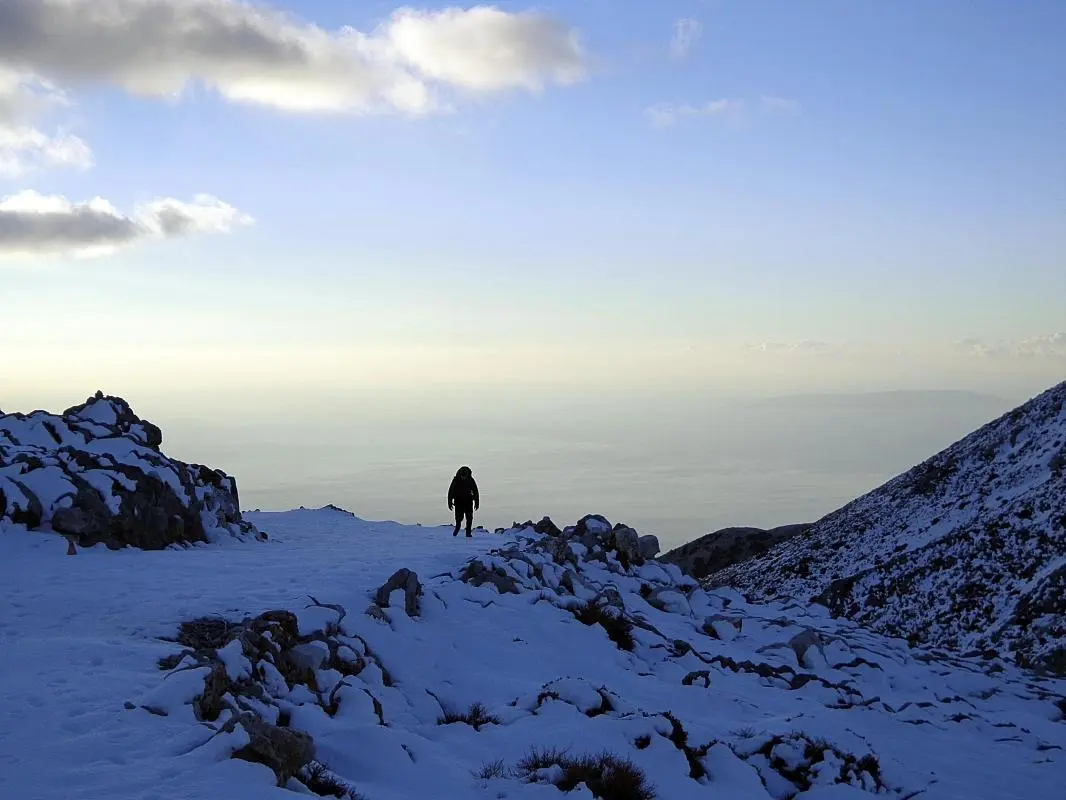
At Xyloskalo, where a wooden rail hems the cliff and the wind shakes the pines awake, you step off Crete’s high plateau and into a canyon that runs like a seam through the White Mountains. The trail pitches steeply at first—tight switchbacks etched into pale limestone—and the gorge wastes no time setting the tone. Scree shifts underfoot, cypress roots grip the path, and the air smells like resin and rock dust. Below, a silver thread of water flickers in and out of view, beckoning you down toward the Libyan Sea.
This is Samaria Gorg—one of Europe’s longest—and it revels in contrasts. It begins in the thin, cool air of Omalos and ends with salt on your lips in Agia Roumeli. Over roughly 16 kilometers and five to seven hours, the gorge keeps the pace honest. The river mutters and hurries, the walls close in and then relax, and a clerestory of sky unspools above you. Your guide keeps the rhythm: short pauses in the shade, checks on hydration, stories that latch the landscape to time.
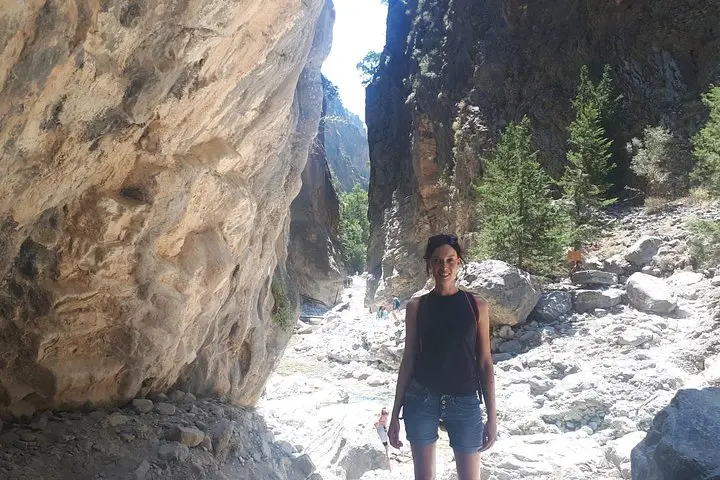
The geology reads like a field manual in slow motion. These are the Lefka Ori—the White Mountains—built from thick limestone that drinks winter rain and gives it back as springs. Over millennia, water bullied its way along fault lines and chiseled a passage from 1,200 meters to sea level, carving the famous Iron Gates, where the walls squeeze to just a few meters across and soar nearly 300 above the riverbed. Here, the gorge narrows deliberately, testing your stride as the current pushes its own agenda. A gust funnels through as if the canyon itself is exhaling.
History clings to the bends. The path passes the deserted village of Samaria, evacuated when the area became a national park in 1962—established primarily to protect the island’s shy mountain goat, the kri-kri. Stone houses remain, warmed by the sun and ghosted by fig leaves. The gorge served as a corridor and refuge for centuries: shepherds moving flocks, villagers crossing to the coast, resistance fighters slipping through the mountains in World War II. Your guide points out a crumbling chapel, a terrace wall, a spring where everyone used to meet the river.
Culturally, the gorge belongs to Crete’s iron-willed heart. Mountain villages keep their own time, and the old customs hang on: bitter coffee, small glasses of tsikoudia, cheese pies that taste like a secret. Down at Agia Roumeli, the menu leans toward the sea—grilled fish, tomato-bright dakos, cool watermelon. But first you have to earn lunch.
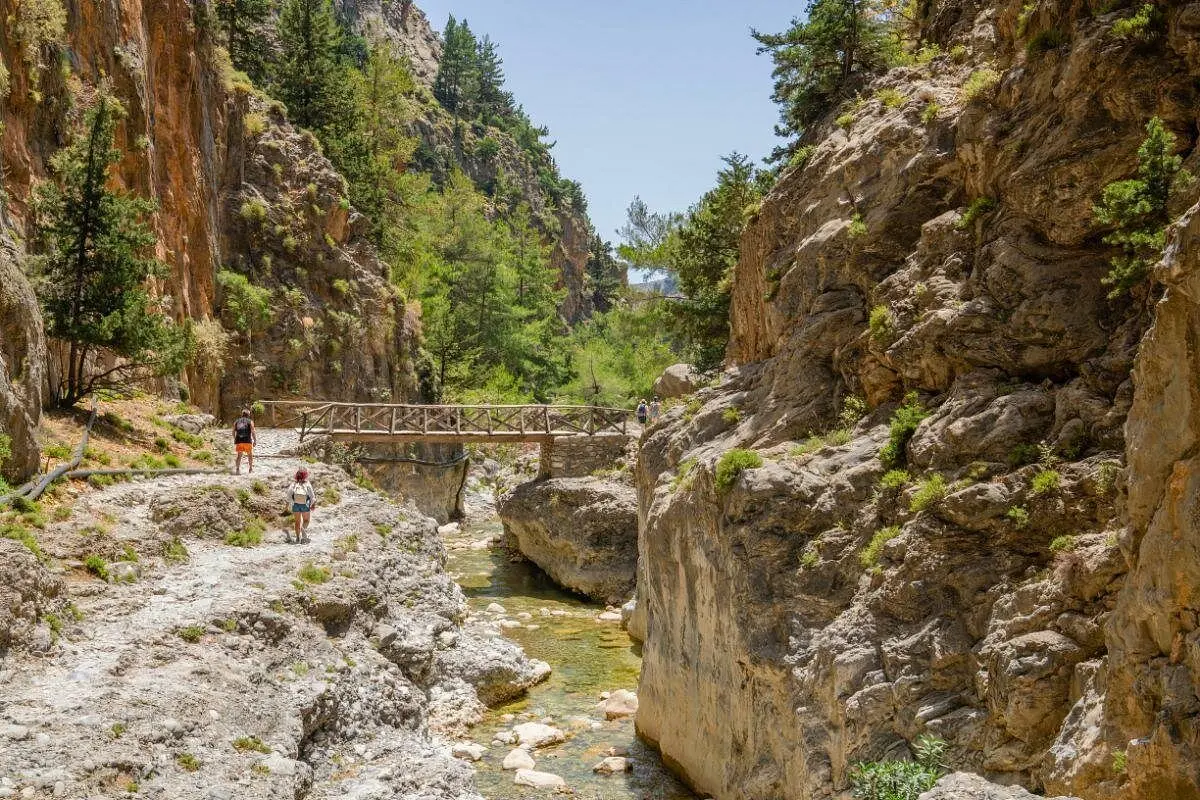
The walking itself is straightforward but not trivial. Expect an unrelenting descent to start, then rolling terrain along a rocky riverbed with frequent wooden footbridges. Foot placement matters; ankles and knees will feel the miles. Your reward is variety: shaded sections under plane trees, aromatic stretches of pine, and wide amphitheaters of rock where the sun pools. The kri-kri sometimes materialize above the trail, poised and nonchalant on ledges that seem invented just for them. Griffon vultures ride thermals overhead, scanning the canyon’s currents like seasoned pilots.
After the Iron Gates, the canyon relents. The path broadens, the sea breeze begins to thread upstream, and the blue line of the Libyan Sea appears. Agia Roumeli sits at the mouth of the gorge without a road to the rest of Crete—everything comes and goes by water. The first swim is non-negotiable: black-pebble shore, glassy water, legs unwinding in salt. Lunch follows with the efficiency of a well-earned feast, then a ferry hums in, low and sturdy, to track the rugged coast to Sougia. White coves slide by; the mountains pivot behind you. At the dock, a bus rolls you north through the switchbacks—back to Chania and the soft hum of the harbor.
Practicalities keep this adventure smooth. It’s a full day—roughly 14 hours including transfers—so an early start pays off in cooler temperatures and a quieter trail. Bring at least 2 liters of water per person; there are springs along the way, but flow varies with season. Good hiking shoes are essential for traction on limestone and gravel; trekking poles help on the descent. The national park charges an entrance fee, and the ferry ticket is required to exit the gorge at Agia Roumeli; your guide will cue you on timing and logistics. In high summer, heat is the main adversary; in shoulder seasons, the river may run higher and demand attention at crossings.
Samaria’s reputation endures because it balances challenge with clarity. The path is obvious; the task is simple: move from mountain to sea with patience and respect for the terrain. Nature handles the showmanship. The gorge narrows to make you notice. The river changes tone to quicken your step. The sea waits like a finish line that’s as much ceremony as relief.
For hikers who want an iconic day on Crete, guided or not, this is the route to pencil in ink. You get geology in motion, cultural memory you can step through, and an ending that asks you to rinse the dust from your skin before you board a boat and let the island redraw itself in profile. It’s adventure with a practical edge: a long walk with just enough complexity, made easier—and richer—by local know-how and a guide who can translate the canyon’s dialect.