Go at dusk for the glow
Plan to arrive 45–60 minutes before sunset to catch the changing light and possible crater glow; guided night visits are safest if you want after-dark views.
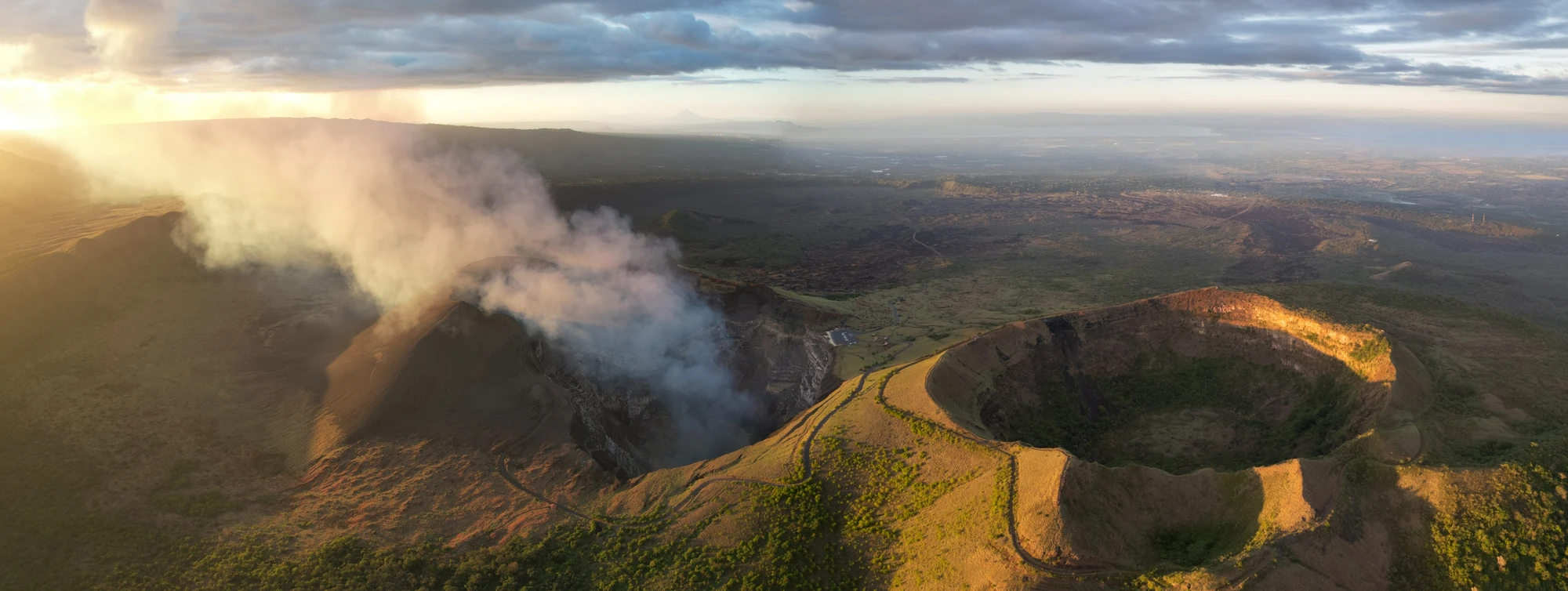
A short, dramatic encounter with an active crater—best timed at dusk for glow and atmosphere
You arrive at Masaya as the light is thinning. A wind from the crater smells of sulfur and iron; it carries the steady, low breath of an active earth. From the rim, the Santiago crater sits like a sleeping animal that will not be ignored—steam and gas rising in broad white curtains, rocks rimed with mineral crusts that glitter where the sun still touches them. Visitors lean against the low guardrail, cameras hunched like binoculars; the ground hums beneath their shoes, a subtle reminder that this place is alive.
Plan to arrive 45–60 minutes before sunset to catch the changing light and possible crater glow; guided night visits are safest if you want after-dark views.
Check with park rangers about wind direction and gas levels—if you have respiratory issues, avoid downwind viewpoints or skip the close rim entirely.
Fine volcanic dust and sulfurous fumes make a lightweight mask or bandana useful for comfort and camera lenses.
Pair the crater with the Masaya artisan market or Catarina viewpoint to make a half- or full-day cultural loop.
white-tailed deer at dawn in surrounding scrub, various raptors and kestrels circling thermal updrafts
The park balances visitor access with monitoring of gas emissions and fragile habitats—stick to marked paths, minimize smoke and noise, and support local artisans to reinforce community stewardship.
Spring (March–May) still lies in the dry season—expect good visibility and comfortable daytime temperatures, with cooler winds on the rim at night.
Summer months (June–August) fall in the wet season—afternoon downpours are common and can reduce crater visibility; mornings are often best.
Fall (September–November) can bring a mix of wet and dry conditions; late fall moves toward clearer skies and improved crater viewing.
Winter (December–February) is peak dry season—excellent visibility and high chance of good crater glow at dusk, but expect more visitors and cooler rim winds.
Bring a wide-angle lens for rim panoramas and a medium telephoto (70–200mm) for compressing the crater and capturing fumaroles; use a tripod for dusk/night shots and bring a lens cloth for fine volcanic dust.
Protects feet from abrasive volcanic rock and provides traction on gravel and paved surfaces.
Wind and cooler temperatures on the rim make a packable shell useful, especially at dusk.
Hydration is essential in the dry heat and on exposed rim viewpoints.
Helps with sulfurous fumes and volcanic dust, and protects camera gear from grit.