Arrive early
Parking is limited at the roadside pullout—get there before 9 a.m. on weekends to secure a spot and enjoy quieter light for photos.
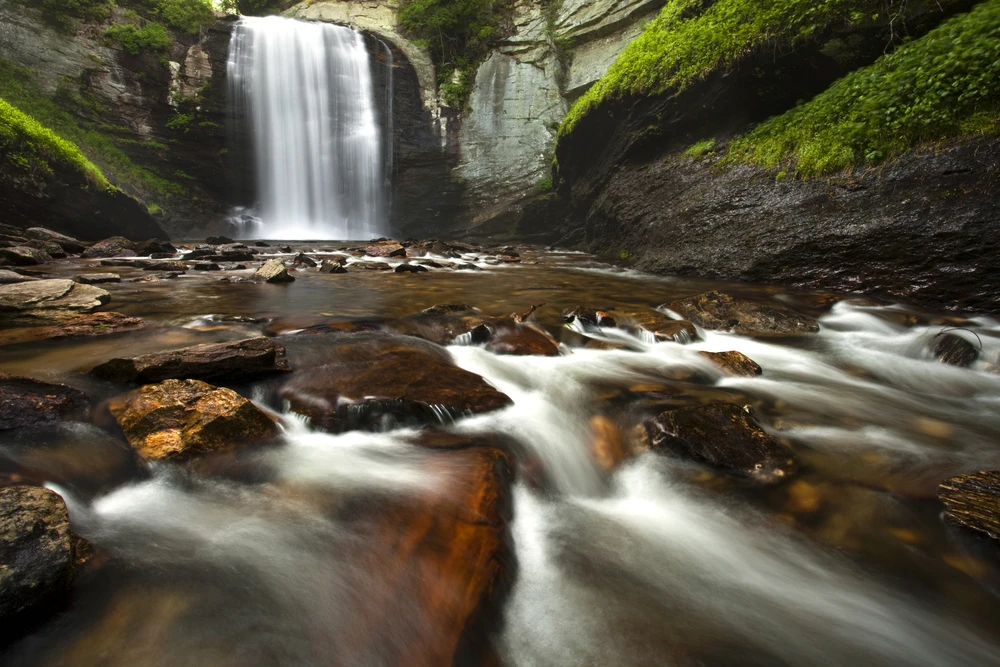
A 60‑foot roadside cascade that anchors big‑mountain adventures and intimate nature moments
The first time you pull off the narrow shoulder of NC‑276 and step out of the car, the falls announces itself before you see it: a steady, deep bass note that fills the forest like a heartbeat. A ribbon of white water peels off a dark, lichen‑slick slab of basalt and throws itself sixty feet into a shallow basin, sending a cool, mineral mist that reaches your face and demands that you slow down. The rock seems to hold a memory of the sun—catching and throwing light back at you—which is how Looking Glass earned its name. It’s the kind of roadside spectacle that makes you forget your plans and stay a while.
Parking is limited at the roadside pullout—get there before 9 a.m. on weekends to secure a spot and enjoy quieter light for photos.
Wet rock and algae make the approach slippery—sturdy shoes with traction are essential even for the short walk to the viewing area.
The spray creates a microclimate; bring a light waterproof layer to stay comfortable during extended viewing or photography.
The plunge basin is shallow and rocky—avoid swimming and do not dive; currents and submerged rocks are hazardous.
black bear (rarely seen), white‑tailed deer
High visitation stresses roadside vegetation and shorelines—stick to established paths, pack out waste, and avoid rock climbing or bonfires at the base to protect riparian habitat.
Snowmelt and spring rains bring the falls to peak flow—expect saturated soils and vibrant understory blooms.
Warm air and full canopies make summer ideal for combining the falls with longer Pisgah hikes; arrive early to beat the crowds.
Fall colors frame the cascade dramatically—plan midweek or early mornings for the best light and fewer people.
Cold spray can glaze the rocks with ice, creating spectacular scenes—but bring traction devices and move slowly near the water.
Shoot during golden hour for warm side‑light on the basalt; use a neutral density filter for long exposures that create a silky fall, bracket exposures to retain highlight detail in spray, and protect gear from mist with a rain cover or plastic bag.
Good traction reduces slip risk on wet rock and muddy approaches.
Mist from the falls and changing mountain weather make a light waterproof layer useful year‑round.
Use an ND filter for long exposures to smooth the cascade into a silky ribbon in daylight.
Attachable traction for icy ledges and paths if visiting during freezing conditions.