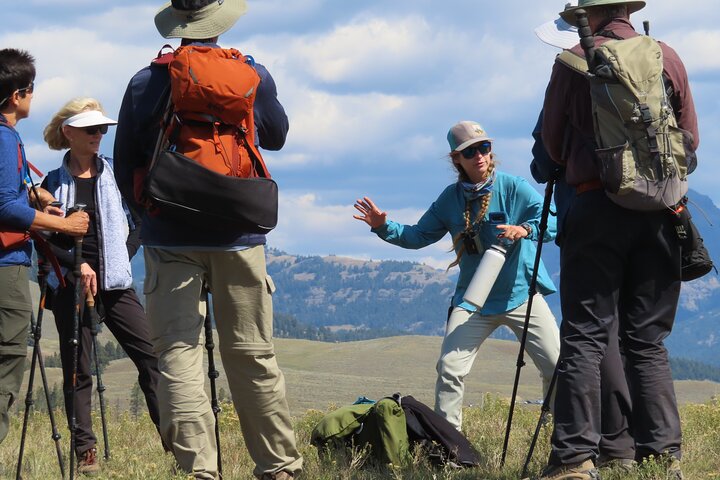
By dawn the van is more a quiet theater than a vehicle: cameras importuned, scopes poised like binocular-armed tripods, the group breathing in a thin Montana cold that smells faintly of diesel and pine. Shadow Canyon unfurls out the window in low light—silver water daring the banks, willows brushing the road as if to check your pulse. The guide nudges the driver, and the van eases into a familiar choreography: pull over, listen, watch. Somewhere ahead an elk coughs, and the entire convoy leans forward with him.
This is the rhythm of the Upper Loop Tour from West Yellowstone: less about distances logged and more about patience rewarded. Over eight hours you’ll thread through the park’s geological chapters—hot springs that lace the earth with mineral terraces, the wide-open sweep of Lamar Valley where bison move like slow weather, and the higher, wind-brushed slopes around Mount Washburn that hold eagle thermals. The payoff is intimate and dramatic: wolves glimpsed through spotting scopes, a grizzly’s silhouette at the edge of morning mist, the terraces of Mammoth Hot Springs steaming like some white-city ruin.
Yellowstone’s story is written in hot water and ice. It was designated the world’s first national park in 1872, protecting a landscape shaped by volcanic fire and glacial patience. The terraces at Mammoth—formed from travertine deposits left by mineral-laden water—silt and stack like a slow, lacing stair to the sky. Lamar Valley, meanwhile, is the park’s great grassland stage. Sometimes called the “Serengeti of North America,” this bowl of sage and meadow supports a density of predators and prey rare in the Lower 48—an ecosystem that regained some of its balance after the controversial reintroduction of wolves in the 1990s.
Culturally, the park is also a crossroads. Native peoples have lived on and moved through these lands for millennia, and today gateway towns like West Yellowstone carry the practical, tourism-hardened energy of lodges, gear shops, and diners built around early starts and long days. Guides on this tour carry more than spotting scopes; they carry stories—of wolf packs organized like tight families, of bison trails worn deeper than roadways, of visitors who saw the park’s best moments by waiting, quietly, with someone who knew where to look.
The geology is the big, slow actor here. Rivers cut, hydrothermal features bubble, and the air itself feels animated—hot breaths near the springs, wind that scours and raises the hair on your forearm. That interaction is why the tour pays close attention to safety: walk only on boardwalks at thermal sites, keep distance from wildlife, and follow your guide’s instructions. The van gives access without the fuss of long hikes, but it asks for something else—calm observation, readiness with a camera, and a tolerance for sitting in stillness.
Practical guide: the tour departs from West Yellowstone early; expect an eight-hour outing with stops at Shadow Canyon, Mount Washburn viewpoints, Lamar Valley with spotting scopes and hot drinks, Mammoth Hot Springs terraces for a short walk, and wildlife stops on the return. Wildlife sightings aren’t guaranteed—animals move on their own timetable—but the route increases your odds by visiting multiple habitats at prime times: mornings and evenings. Dress in layers; mornings begin brisk and can turn windy near Mount Washburn, while midday in the Lamar Basin can feel warm in bright sun. Bring binoculars and a telephoto lens if photography is a priority; guides provide spotting scopes for group viewing, which is when the van feels like a small, mobile observatory.
Timing matters. Spring brings calving season and dramatic predator-prey interactions, but also mud and lingering snow. Summer is the most reliable for comfort and road access; fall brings elk rut activity and spectacular light. The tour includes a lunch and a hot drink, but pack snacks and water for comfort. Cell service is patchy inside the park—plan to be present and camera-forward rather than phone-forward.
This is not an adrenaline tour; it is a patience tour. You’re rewarded for quiet attention more than for daring. The guides act as both interpreters and safety stewards—listening to them and following basic wilderness etiquette keeps the experience authentic and respectful. If you go in prepared to watch rather than chase, the valley will give you the kinds of moments that lodge bar-stories are made of: a wolf’s eyes catching a glint of sun, a grizzly finishing a roll in the grass, a steam-swirled terrace glowing like bone-white coral.
For photographers the advice is simple: bring a long lens, learn to stabilize (or use the van window as a brace), and shoot through the spotting scope if the guides allow it. For families, the tour is accessible—just know there’s a lot of sitting and short walks rather than long hikes. For birders and wildlife enthusiasts, it’s a compact, high-yield way to experience the park’s signature species in a single day.
At day’s end you return to West Yellowstone with hands still smelling faintly of coffee, pockets full of photos, and a quieter appreciation for how wild behavior resists human timetables. The van drops you at the gateway town where the pace snaps back to tourist-hour—restaurants opening, guidebooks turning into dinner plans. If you came for spectacle, you likely found it. If you came to feel the park’s pulse, the tour showed you the places where that pulse is strongest—and taught you how to listen.