Dress for a 15–20°F Drop
Mountain dawn is colder than town. Pack a warm layer and a windproof shell even in summer.
Small Groups • 2.5 Hours • Asheville’s Only Sunrise Tour
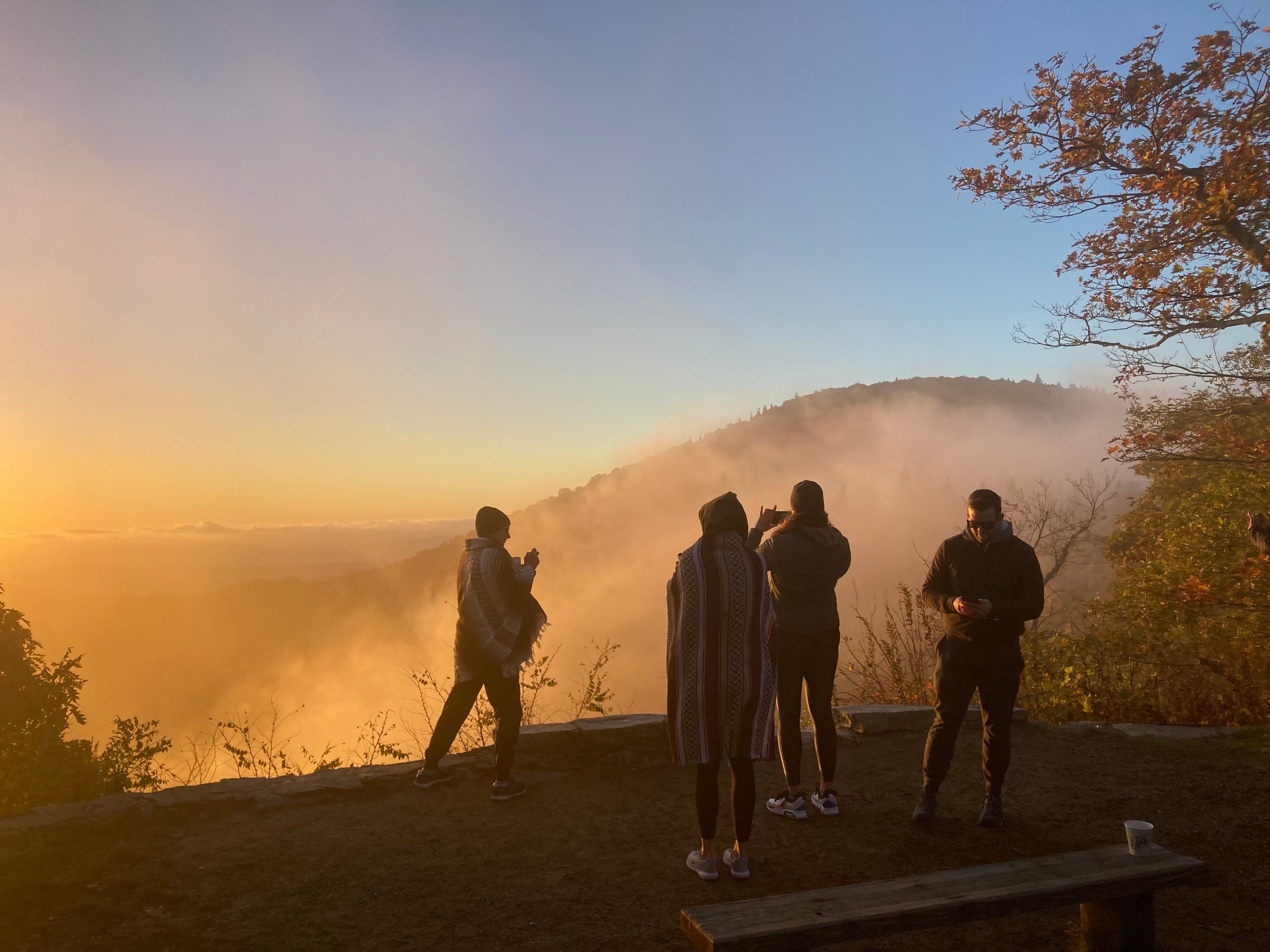
Continue ReadingBefore the city wakes, Asheville is all hush and silhouette. Streetlights dim as a boxy Jeep rolls away from the French Broad River, tires whispering on wet pavement. A thermos rattles somewhere in back. The mountain ridge ahead is a dark braid against a star-pocked sky, and the Blue Ridge Parkway—America’s favorite ribbon of two-lane—waits like a promise. You climb by switchback, slipping into colder air. Clouds shuffle. The horizon cracks. And then the show begins: slow and patient, a sweep of amber sliding across wave after waveform of mountains. Coffee steam rises like a signal. Morning has found you, and it is kind.
Mountain dawn is colder than town. Pack a warm layer and a windproof shell even in summer.
Sunrise won’t wait—being prompt ensures the group reaches the overlook as the sky changes.
If you’re sensitive to winding roads, grab a forward seat and consider motion relief before departure.
Keep voices low at the overlook so everyone can soak up the dawn—and listen for birdsong.
Wild turkey at dawn, White-tailed deer along the Parkway
Stay on designated overlook areas to protect fragile plants. Pack out all trash and keep noise low to reduce wildlife disturbance during sensitive dawn hours.
Expect fresh greens and moody horizons. Layers are key; fog often makes for dramatic light rays.
Comfortable temperatures but hazier views; early starts beat heat and summer crowds.
The gold standard for sunrise—bold colors and crisp air. Book ahead during peak leaf weeks.
When accessible, winter offers stunning clarity. Dress very warm and watch for weather advisories.
Arrive a few minutes early to set white balance around 5600K and use exposure compensation (-0.3 to -1) to hold sky detail. Stabilize your phone on the Jeep rail or a bag, shoot in burst to catch cloud color shifts, and frame silhouettes—people, pines, or the Jeep—for scale. A polarizer is useful after sunrise to cut haze on distant ridgelines.
Dawn temperatures at elevation can be significantly cooler than in town.
Mountain weather changes quickly; a light shell keeps you comfortable during mist or wind.
Stable footwear is helpful for stepping out at overlooks and uneven pull-offs.
Low-angle light rewards good sensors; bring a microfiber cloth to manage dew.