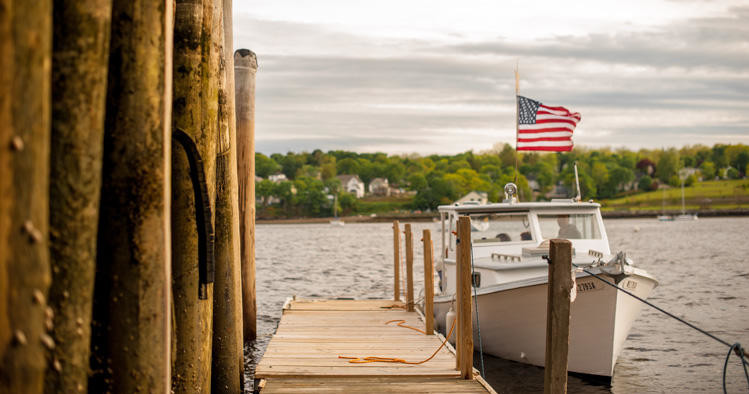
The morning tide tugs at the Belfast City Harbor Dock like an eager dog, impatient to run. You step aboard the working lobster boat and the deck answers with a hollow knock underfoot. Diesel hums awake, gulls circle with veteran confidence, and a thin breeze lifts the briny scent off Penobscot Bay. The captain checks the hauler—a metal arm ready to muscle traps from the sea—and grins as the boat noses past bobbing moorings. Out here, the water carries its own pulse, urging you forward. This is not a contrived sightseeing cruise. It’s a two-hour apprenticeship, a compact portal into Maine’s proudest living tradition: lobstering.
Penobscot Bay is a moody teacher. One moment it’s glass, the next it’s choppy with a fresh southerly. On a clear day, the Camden Hills lean against the horizon while bald eagles patrol from high perches and harbor seals scout the edges of rocky ledges. The skipper steers along a dotted line of colorful buoys—each buoy a family signature, each line a doorway down to the trap. When the boat idles beside the first buoy, the crew snags the warp with a gaff, slips it over the spinning hauler, and the line tightens. The trap rises—a dark rectangle inflating from green water—barnacles tapping, seaweed flagging. The Gulf of Maine hands over its ledger: lobsters, crabs, baitfish, bycatch. The crew works quickly, measuring carapaces, sexing lobsters, notch-checking females, returning undersized and egg-bearing bugs with quiet respect. You learn that all this—careful measuring, escape vents, v-notching brood females—isn’t just regulation; it’s culture. Lobstering here is generational and self-policed, an economy of patience as much as muscle.
It’s equal parts lesson and play. Kids can help bait a trap, feel the heft of a live lobster, and, under the captain’s eye, put a hand to the wheel. Adults ask the good questions: How old is a two-pound lobster? How do seasons shift the catch? What really happens when the water warms? The answers come with local specifics, not broad strokes. This is a place where weather and water temperature steer the day. The crew’s stories carry a dry humor familiar to New England wharves, the kind earned by early mornings and long seasons.
This bay has been a working stage for centuries. Belfast’s shoreline once rang with shipbuilding, its harbor a cradle for schooners and steamers. Lobstering grew into the region’s heartbeat, filling co-ops and bait coolers, supporting wharfside shacks that serve the evening’s catch. The town’s working-waterfront culture hasn’t been sanded down for postcards; it’s still a living, evolving system, where boats earn their keep and buoys talk in color.
Between trap hauls, the boat cruises the inner bay, the engine settling to a contented thrum. The sun slants across wavelets like scales on a fish. Osprey dive. A porpoise rolls once and disappears, aloof as a secret. The bay has its own tempo, and you fall into it. For a few minutes you’re not just watching a livelihood—you’re participating, your fingerprints bait-scented, your ears tuned to the slap of line against rail. And then: a camera moment. The crew lifts a legal lobster for photos, showing the crusher claw and the pincher, pointing out the tail fan’s subtle notch. Snapshots that look like trophies but feel like invitations—come back, learn more, respect the resource.
This is where experience beats spectacle. Yes, you’ll take home memories and probably a few ocean-salted laughs. But you’ll also learn why this fishery remains one of the most carefully managed in the country, how a simple notch can protect a population, and why you leave eggers and shorts for another season. The romance here is in the reality: rope burns, weather calls, hard choices. That’s the story you tell later over chowder in town.
If you’re planning a coastal getaway and want the water to matter, this two-hour outing is a smart anchor for your day. It slots easily between a morning harbor walk and an afternoon ice cream, but it also holds its own for travelers who prefer substance with their scenery. Curious kids, multigenerational families, and travelers who collect skills as much as souvenirs will find an honest window into Maine life. To get a feel for the crew and book direct, start with the official listing for Belfast's Lobster Fishing Experience. Want a primer before you go? Browse this guide, then tap through to the lobster boat tour details for timings and what’s included. If hands-on learning is your style, bookmark the Maine lobster fishing experience in Belfast—it’s as authentic as coastal travel gets.
Practicalities are straightforward. Trips run about two hours with up to six passengers, making it intimate and easy to hear the crew’s patter over the engine. You’ll meet at the Belfast City Harbor Dock; arrive 5–10 minutes early. There’s a basic head onboard, a mix of covered and open seating, and cold water provided. Dress for the marine layer, not the sidewalk—layers, non-slip shoes, a windproof shell. If you’re prone to seasickness, take your remedy in advance. Maine weather is mercurial, but most trips go; cancellations happen only when the bay insists.
After you step back onto the dock—palms still faintly scented with bait and salt—Belfast unfolds at a pleasant human scale. You can trace the Harbor Walk, watch a yard launch at Front Street Shipyard, or sit on a bench and read tide tables like tea leaves. Go eat something right. The best post-boat meals taste like the water you just rode over.
The bay will still be there tomorrow, lifting and settling, daring you to learn a little more. That’s the quiet power of this place: it turns spectators into participants, and participants into stewards. You come for lobsters. You leave with respect.
To plan your day and secure a spot on deck, head to the official page for the Belfast lobster fishing tour and book ahead in peak season.