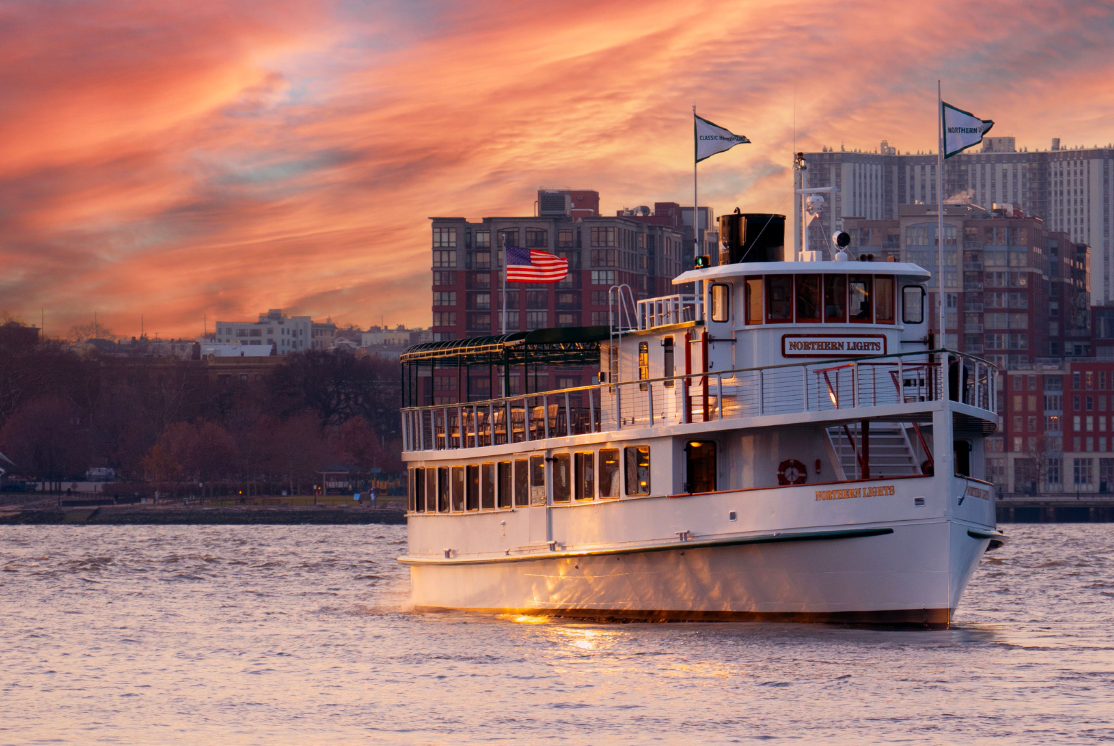
The harbor greets you with a salt-bright morning and the low hum of engines warming beneath Rowes Wharf. Granite archways echo footsteps, coffee breathes steam into cool air, and the skyline—glass, brick, and stubborn history—waits like an audience. A crew member waves you aboard and the gangway thunks. Boston Harbor slides under the hull, nudging the bow south, as if to say: come see how the city learned to love its water again.
A brunch cruise is two hours of easy motion and shifting perspective, a table set with eggs and bakery items and a buffet that does the simple things well while the view does the heavy lifting. You settle in—inside at a window or outside along the rail—and the city reels off its story in chapters: the Seaport’s sharp-edged newness, the stoic sweep of the North End, the Bunker Hill Monument standing like a granite exclamation point. The USS Constitution and her stalwart neighbor, the USS Cassin Young, anchor the Charlestown Navy Yard, living reminders that this harbor once mattered less for leisure and more for might. The water is calm today; gulls heckle the skyline; a cormorant torpedoes under, then surfaces beside you like a quiet conspirator.
Boston’s islands materialize as the boat moves: Spectacle Island, green and neatly reborn from a century of landfill, now wearing its trails like a victory sash; Deer Island, guarded by those unmistakable egg-shaped digesters that helped turn this harbor from punchline to pride; Long and Lovells sit lower to the water, quiet sentries to storm and story; and Georges Island—home to Fort Warren’s brick labyrinth—squares its shoulders against the channel. Castle Island, tied to the mainland by Pleasure Bay's looping causeway, holds Fort Independence, a granite star whose angles ask the Atlantic to think twice.
This is not a high-stakes expedition, but it is an adventure—the kind that trades altitude for insight. The harbor has a voice now; the tides push, the ferry wakes jostle, a passing tug clears its throat. You learn to time bites of bacon and sips of coffee between glances outward, because the captain keeps a steady patter: Old North Church—yes, that steeple; the Seaport’s ship-turned-restaurant lore; the shipyards that built and repaired the bones of a young navy; and the Boston Harbor Islands National and State Park, a necklace of 34 outcroppings that changed shape with glaciers and city decisions.
All of it comes together on a morning like this: the city, the sea, the plate. If you sit inside, the windows frame Boston like postcards; sit outside and the wind gets involved, insisting you earn your views with a layer or two. The current nudges the hull as if to push you toward the next landmark. It’s accessible, social, and quietly educational. You don’t need to be a mariner; you just need to be curious and on time.
Geologically, the harbor is a drowned landscape, shaped by retreating ice and slow-rising seas that turned hills to islands and valleys to channels. Culturally, it’s a stage. The 1773 tea toss made a statement heard around the world, but so did the late-20th-century cleanup that routed sewage to Deer Island and gave the water clarity and life. You can see the difference in the way sunlight now flares off ripple lines and in the presence of fish—and, in colder months, the occasional harbor seal that bobs up like a spectator.
What you’ll notice most, though, is how the city relaxes when seen from the water. The Seaport District’s angles soften; cranes look purposeful rather than looming. Rowers stitch the channel; ferries keep schedules like heartbeat. The boat lingers within sight of icons—the Old North Church spire, the Constitution’s masts—and then points toward open water as if testing the leash. The skyline recedes, then returns; your plate refreshes; the tide keeps its own counsel.
Timing matters. Morning is kind to photographers, and the brunch window can catch the harbor before the sun turns harsh. Spring and fall bring crisp air and fewer crowds; summer is sunny and simple; winter, when cruises are limited, rewards with stark clarity and a better chance for seals. Layer up; it’s almost always cooler on the water than on land.
Practicalities are straightforward. The cruise lasts about two hours. Boarding typically begins 30 minutes prior; seating is first-come, so early arrival pays off. Dress with the wind in mind—light jacket, non-slip shoes—and bring sunglasses. The buffet caters to broad tastes, and advance notice helps the crew do their best with food allergies. Restrooms are onboard; motion is gentle but, if you’re prone to seasickness, choose a seat midship near a window and keep your eyes on the horizon.
What you take away is not just a well-fed morning but orientation: how Boston works with its water, where history sits in the skyline, how the islands connect past and present. As the boat turns back toward Rowes Wharf, the city seems to lean in, a little closer, a little more legible. The harbor has had its say—and it’s worth listening over coffee and a second pass at the bakery table.