You arrive at Hon Chong in the hour after breakfast, when the day is still cool and the sea has the clarity of glass. The promontory sits at the northern edge of Nha Trang’s sweep of beach—an uncompromising knot of granite boulders stacked like a ruined fortress. Salt wind polishes them to a soft grey. Fishermen mend nets on the low rocks; a father steadies his toddler on a sun-warmed ledge. From the vantage point you can watch the city’s skyline slide sideways into islands—blue forms drifting away into the South China Sea.
Hon Chong is not a hike in the classical sense. It’s a short land-and-sea encounter: a 10–20 minute scramble along a paved and stepped approach ultimately rewarded by slabby viewpoints and tidal channels that dare you to lean closer. Terraces of exfoliated granite tilt toward the water; the waves, in turn, have bored clefts and polished the stones into seats where you can sit and feel the ocean’s slow negotiation with rock.
Geology and cultural memory are braided here. The granite at Hon Chong is ancient—deep magma that cooled underground, later uncovered and sculpted by weather and tide. The rocks’ rounded edges and stacked forms make it obvious why local storytellers and visitors quickly anthropomorphize the place. On maps and in guidebooks you’ll see it as Hòn Chồng (roughly “stacked rocks” in Vietnamese). Small shrines and painted markers nearby nod to the human stories layered onto the landscape: fishermen’s offerings, temple incense, and the occasional couple lining up for sunset photographs.
Nha Trang itself is a city of contrasts: a working fishing port and a coastal resort rolled into one. Hon Chong sits near the northern end of Tran Phu promenade, within easy reach of the city’s better-known cultural stops—Po Nagar Cham Towers and Long Son Pagoda—and a quick run in a taxi or motorbike will take you to cafés and seafood restaurants that feel like an extension of the shore. The coastline here rewards short, sharp attention: a focused stroll across the rocks, a long gaze, then movement on to a temple or a boat charter.
Why come? Hon Chong is compact but cinematic: it frames the bay and the offshore islands, and it offers sensory clarity you won’t find on busy beaches. For travelers who prefer short, high-reward gateways—photographers scouting light, families wanting an accessible coastal adventure, or day-trippers stitching together cultural sites along the promenade—Hon Chong is effortless to add and generous in return. The site suits travelers who want tactile contact with the sea without committing to a full-day boat trip.
Practicalities are simple but worth knowing. The walk to the main viewpoints is under 1 kilometer round-trip from the roadside parking and involves 15–30 meters of elevation gain across stepped paths and large, uneven slabs. Footwear with good traction matters: slick granite can be surprisingly slippery, especially near wave-splashed ledges. Arrive in the early morning or late afternoon for softer light and fewer tourists; midday sun can be intense and leaves little shade. If you’re planning photography, low tide opens more foreground rocks and interesting tidal pools, while high tide brings breakers closer to the slabs for dramatic action shots.
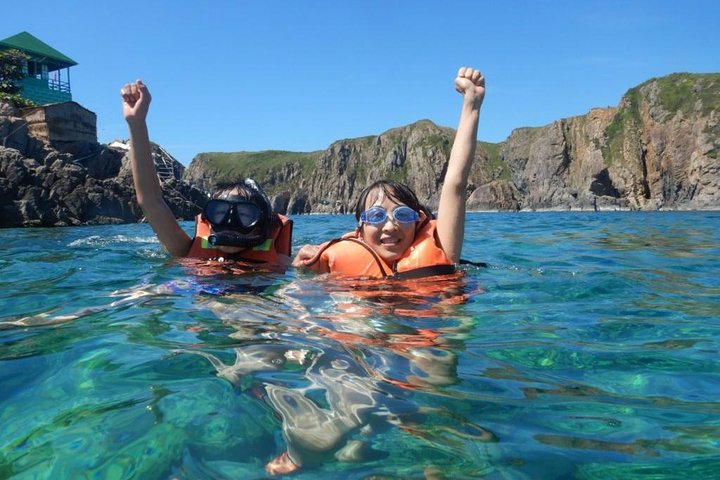
Combine Hon Chong with nearby activities for a well-rounded day. Start with a short morning visit here, then ride to Po Nagar Cham Towers for a window into the region’s pre-Khmer and Cham heritage. Later, consider a harbor charter for snorkeling among Nha Trang’s reefs or an evening at a seafood restaurant along Tran Phu. If you have a half-day, the city’s cable car to Vinpearl Island and the islands in the bay are easy add-ons for swim-and-snorkel time.
For safety and comfort: bring water, wear non-slip shoes, and respect tide lines—waves can surprise the unwary. The promontory is exposed, so wind and spray are constant players. There are basic amenities nearby in the city, but if you plan to linger on rocks or explore the shoreline pools, a small daypack with sun protection and a windbreaker is useful. Keep an eye on young children—the rocks are inviting but not without risk.
Hon Chong’s compactness is part of its appeal. It asks for minimal time commitment while offering a satisfying coastal ritual: arrive, climb, watch, and move on—perhaps later in the day to a night market or a beachfront bar. For travelers who prefer experiences that feel elemental and immediate, it’s an ideal plug-in to a larger Nha Trang itinerary: accessible, photogenic, and honest about what it is—a place where granite meets sea and the city breathes in the background.
In short, Hon Chong is a quick, tactile encounter with the natural forces that shaped Vietnam’s coastline. It’s not a wilderness trek or a remote island adventure, but it’s a perfect place to recalibrate: take a breath of sea-scented air, test your balance on weathered rock, and watch the bay keep its slow, steady conversation with the shore.