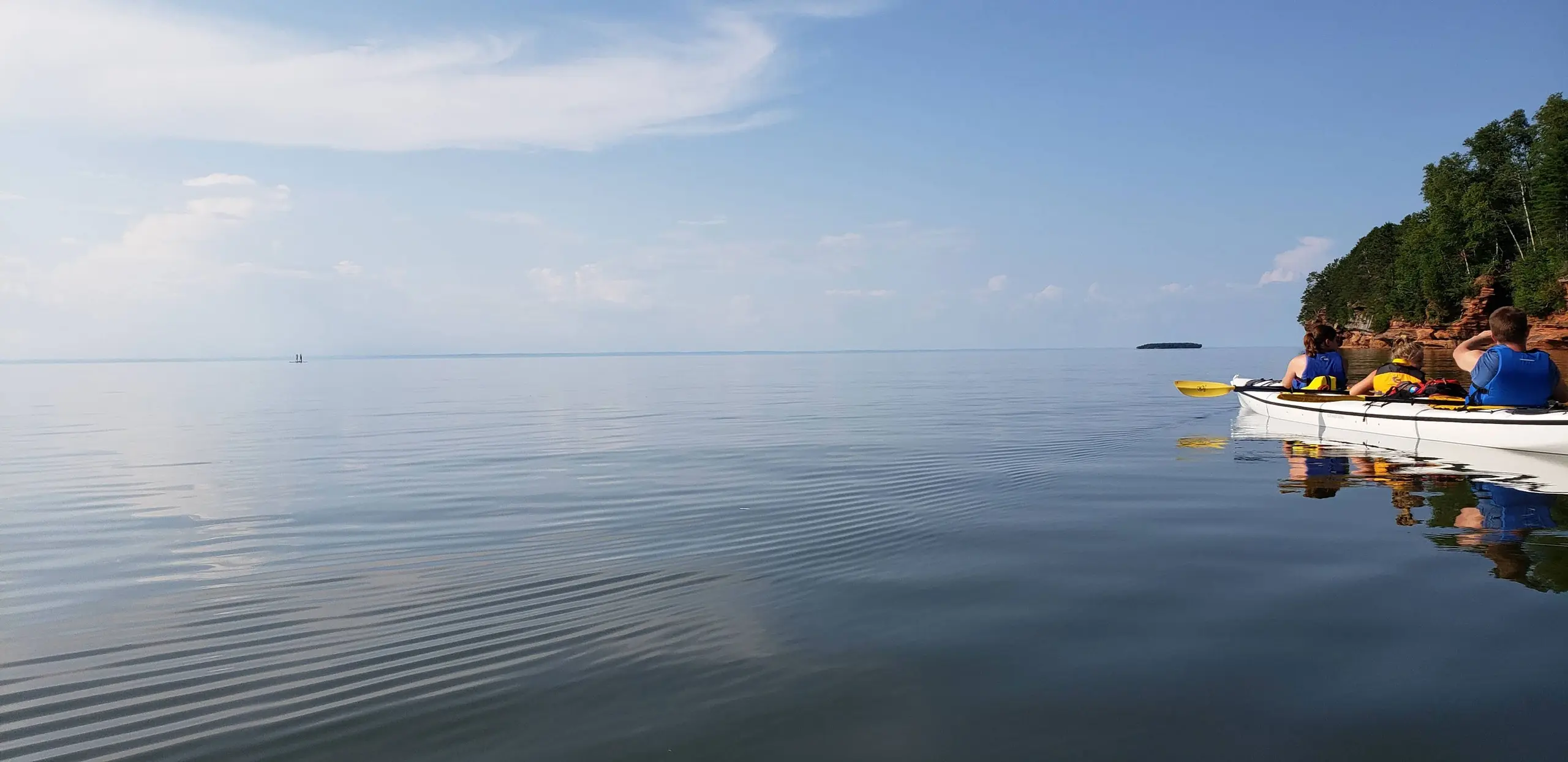
At Little Sand Bay, Lake Superior flexes its shoulders. The morning is glassy, a quiet mirror that dares you to leave the shoreline and trust the deep. Tandem sea kayaks nose forward one by one, hulls shushing into the shallows as a loon's call stitches the stillness. Your guide gives a final nod—paddles up—and just like that, you’re slipping into the cold-blue distance toward Sand Island, a low green line crowned with a lighthouse that seems to beckon and keep its secrets in the same breath.
The crossing is the truth of this day: about two miles of open water where Superior sets the cadence. Even on calm days the lake whispers under the boat, rolling a slow pulse that nudges you into rhythm. Wind can push you sideways, currents can tease you off course, and those sandstone cliffs ahead—guarded by eagle nests and a fringe of spruce—get larger with every stroke. This is not a theme park ride. It’s a measured negotiation with a freshwater inland sea that likes to remind visitors who’s in charge.
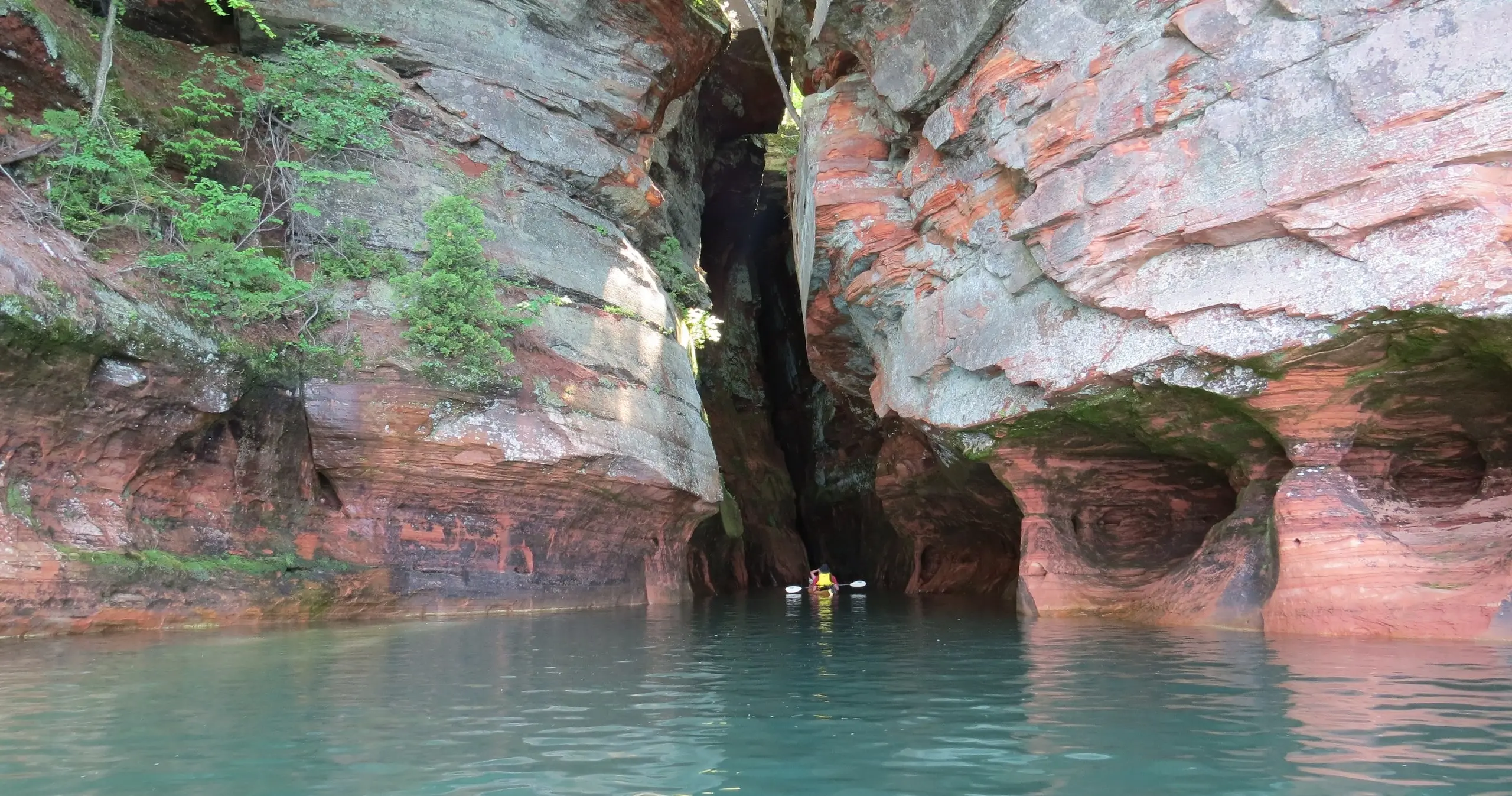
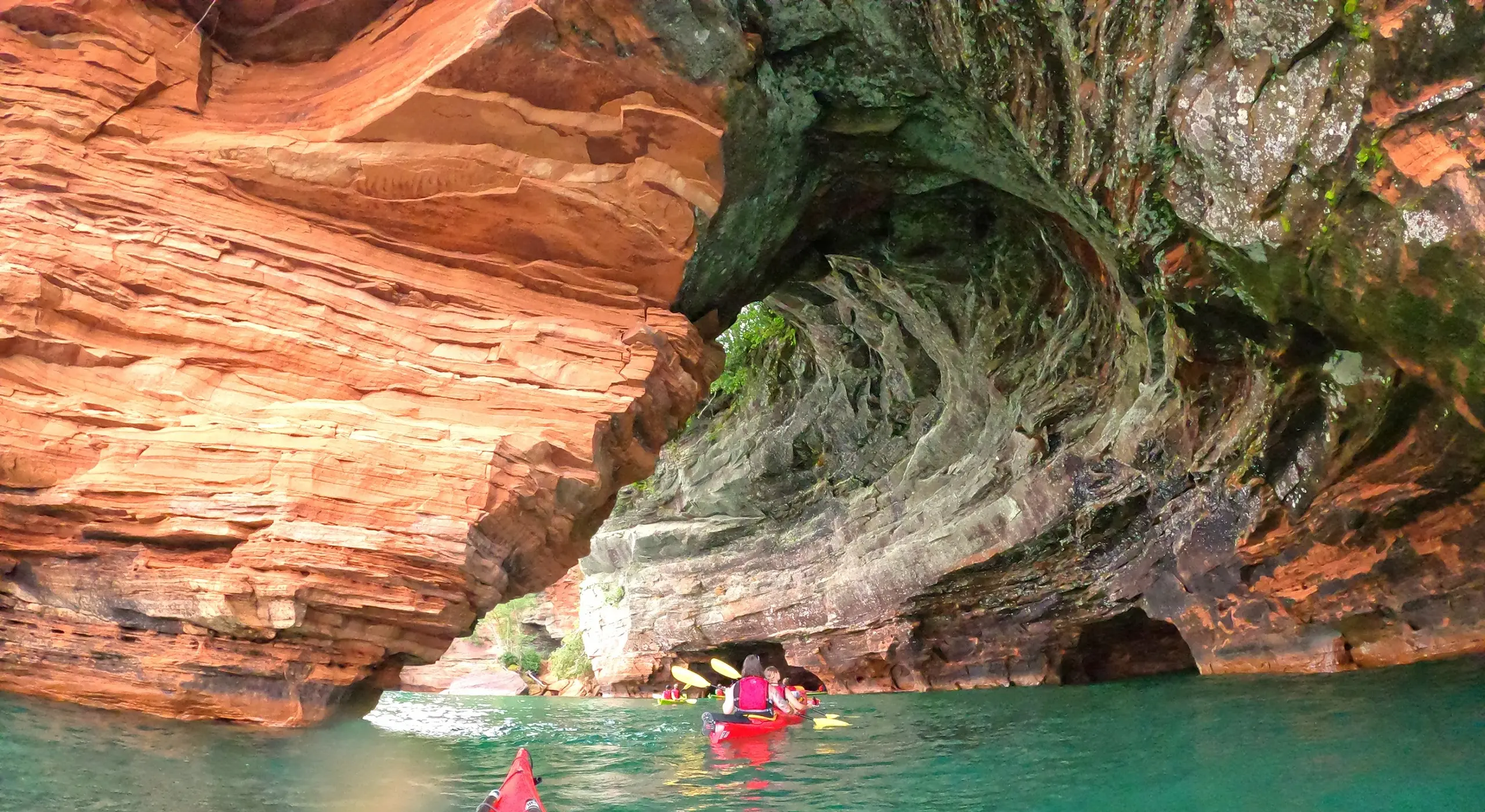
And yet, the payoff begins almost before your shoulders warm. The first of Sand Island’s sea caves appears like someone pulled back a curtain. Arches and grottoes open in the brownstone—a geology lesson written in waves. The rock here is Precambrian sandstone, iron-streaked and patient, carved by freeze-thaw cycles and Superior’s relentless surge into smooth hallways and echoing cathedrals. Your kayak hovers beneath overhangs where water drips like a metronome. Sunlight bounces off the moving surface, painting the ceilings with silver light. The caves invite you in even as they hum with their own rules: keep your distance if the swell says so; pivot with soft strokes when the lake breathes inward.
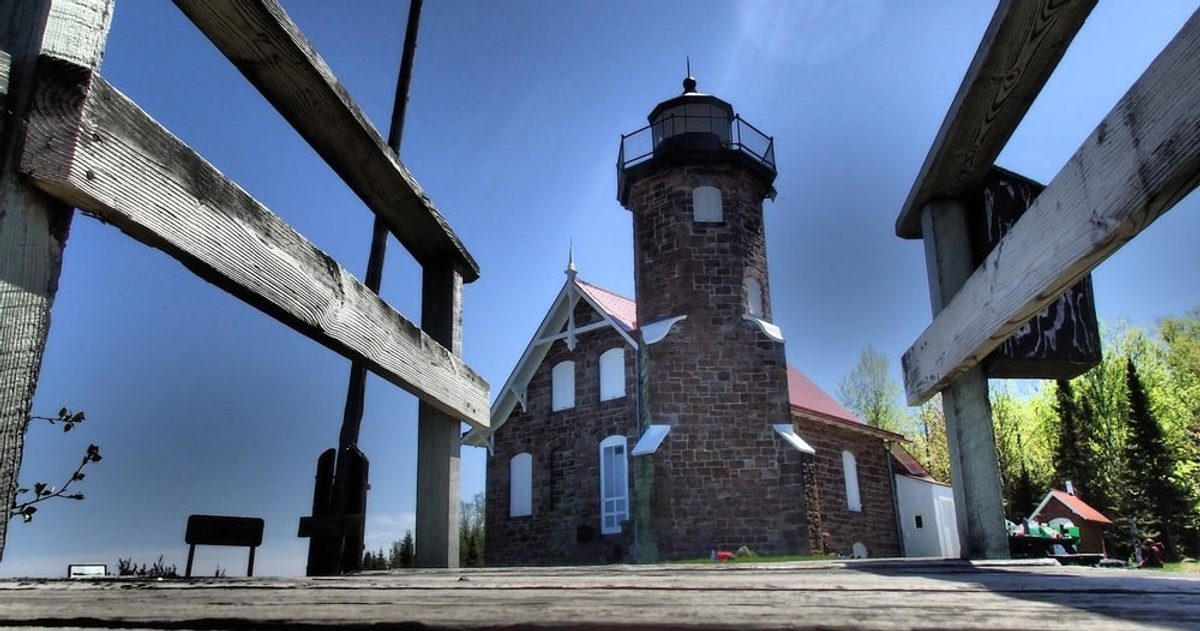
Sand Island is the westernmost of the Apostle Islands, one of 21 wild dots scattered off Wisconsin’s mainland and protected as Apostle Islands National Lakeshore. Hitting Sand on a bluebird day is like walking into a well-edited highlight reel: sea caves, a lighthouse, gentle trails, and beaches of crushed stone that ring with tiny notes underfoot. The Sand Island Lighthouse—built in 1881 from local brownstone—stands watch on a wave-battered point, a testament to an era when lightkeepers waged daily battles with gales and ice. Some summer days, National Park Service volunteers open the lighthouse for tours; other times, it’s just you and the wind pressing around the lantern room, where Superior has the last word.
On shore, lunch is a welcomed pause. Your guide pulls out a spread from Bayfield’s Cafe Coco: crusty crostini, bright fruit, hefty sandwiches, cookies, lemonade. The island’s spruce and balsam firs shake the breeze into a soft hiss while gulls angle for the slightest chance. You might walk a bit of the island’s trail system to stretch your legs—light hiking through a canopy that smells clean and resinous, with glimpses of red-tinged stone along the coast.
This full-day guided paddle blends big-lake excitement with low-stress logistics. You’ll meet your guide in Bayfield, gear up, and shuttle out to Little Sand Bay. A short on-beach tutorial sets the tone—how to sync strokes with a partner, what to do if wind freshens, and why a wetsuit is your friend in Superior’s famously cold water. It’s a tour designed for travelers who want more than a quick photo op. The route includes real distance and texture, yet you’re buffered by expert local knowledge and safety planning. Want to dig deeper into the route, conditions, and how to prepare? Tap one of our local experts to help shape your day: https://app.advcollective.com/local-experts/sand-island-full-day-bayfield
Beyond the obvious wow-factor, there’s context to absorb here. The Apostles hold the largest collection of historic lighthouses in any U.S. national lakeshore, and Sand Island’s is among the most striking, its stonework glowing warm against Superior’s steel. Bald eagles often perch in shoreline snags—watch for their pale heads fixed like vigilant sentries. Common mergansers arrow past the caves, and if the lake is quiet, you might even hear the hollow thud of waves collapsing inside chambers carved over millennia.
By afternoon, the wind may get ideas. Superior likes to test your form on the return crossing. This is where the tandem kayak really shines, with stability that makes small chop feel manageable and gives you the confidence to split focus—one eye on the horizon line, the other on the color in the sky as the day opens up. Your guide reads the water, threads safely along the Swallow Point caves one more time, and keeps you out of trouble if the lake’s mood shifts. Planning to book? Visit our Sand Island Full Day resource page for up-to-date insights and trip planning guidance: https://app.advcollective.com/local-experts/sand-island-full-day-bayfield
Practical takeaways: this tour is best for fit, adventurous travelers who want a full-value day on the water without going ultra-technical. Expect roughly three to four hours of paddling spaced around a leisurely lunch and lighthouse stop. Dress smart—thin synthetic layers under the provided wetsuit, and a windproof shell in your dry bag even on sunny mornings. Footwear that can get wet and still handle light trail walking is key. Water is mandatory; Superior’s cool air can trick you into forgetting to drink. Finally, build a weather buffer into your trip. Guides cancel when wind or thunder puts safety in question—and the lake doesn’t negotiate. If you can, give yourself an extra day or two in Bayfield to try again if conditions won’t cooperate.
For many, this tour becomes the hinge memory of a Great Lakes summer—the day Lake Superior nudged you past your comfort zone and then rewarded you with tunnels of stone, a sturdy lighthouse, and a beach lunch under the steady beat of wind and water. The lake does not give up its best lightly, but when it does, it feels earned. On the final glide back into Little Sand Bay, the shoreline rises to meet you, the kayaks clatter softly onto pebbles, and Superior exhales. You can almost hear it say: come back when the weather changes. The story will, too.