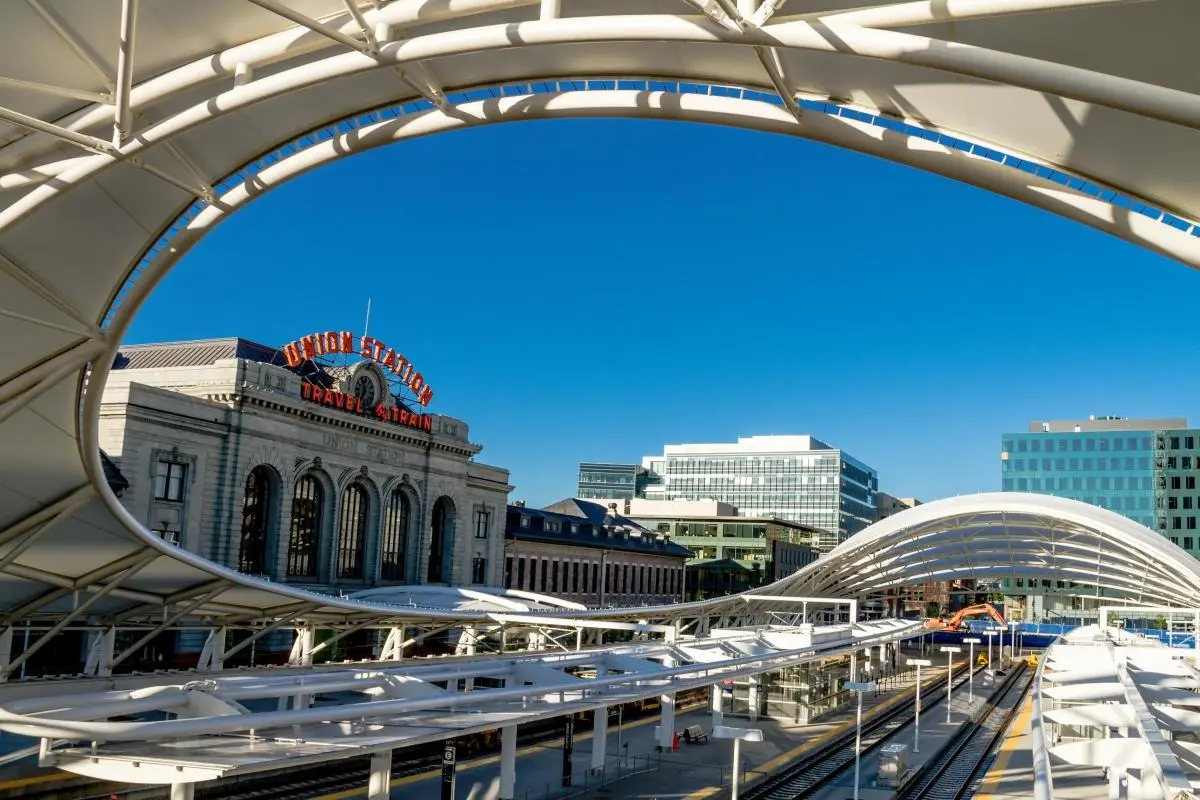
The morning unfurls in LoDo the way an old ledger opens — a little stiff at first, then warm with the residue of a hundred small transactions. Steam climbs from paper cups outside Union Station, strings of bistro lights glint over Larimer Square, and the city’s glassy towers lean in like curious neighbors. Footsteps click on the worn cobblestones; delivery bikes hum; a vendor slides open a market stand and the smell of roasted coffee folds into the air like a soft invitation. This is Lower Downtown Denver — LoDo — where the city’s past is worked into the seams of a lively present.
Walk LoDo and you’ll feel its two stories at once. One is the 19th-century railroad town that built Denver, where brick warehouses and iron facades still hold their place on a map and in the city’s character. The other is a 21st-century urban center that has remade and repurposed those same buildings into hotels, bars, boutiques, and transit hubs. Together they create a compact neighborhood that rewards slow exploration: artful façades that reveal local designers; craft breweries with taprooms thumping to afternoon games; and public rooms like Union Station that hum with arrivals and departures while offering a surprisingly domestic sense of place.
LoDo sits on the edge of the South Platte River and the confluence of Cherry Creek — a geographical meeting that shaped Denver’s earliest commerce and continues to be the neighborhood’s quiet spine. Cross the Denver Millennium Bridge and you find Commons Park, where joggers and young families stake out morning real estate and red-tailed hawks wheel above, scanning for the city’s smallest movements. From Coors Field on game day the neighborhood vibrates with fans, but on an ordinary weekday the sound is more like a city clearing its throat — coffee shop conversation, the clink of brunch plates, a busker’s guitar under the station’s eaves.
Geology here is modest but meaningful: LoDo sits on river gravels and high plains soils that were a practical stopping point for rails heading west. Those rails brought a flow of people and goods, and later a decline that left empty lots and warehouses. The restoration of Union Station in the 2000s and the neighborhood’s subsequent revival in the 1990s and 2000s transformed decay into opportunity without erasing character — a model of adaptive reuse that travelers can see in the district’s braided alleys and boutique storefronts.
Culture in LoDo has a usable quality: it’s civic and convivial. Larimer Square, Denver’s oldest block, is a lesson in how a city preserves architecture while letting new life in — string lights, bistro seating spilling onto sidewalks, and window displays that nod to the neighborhood’s artisan bent. Food is local-forward: seasonal menus, neighborhood bakeries, and a craft-beer scene that doesn’t announce itself with bravado but with solid pints and well-honed palates. The people you meet are often transplants who care about place — restaurateurs, brewery owners, and transit advocates who will happily point you to a quiet alley or a sunrise view.
For travelers, LoDo is as practical as it is charming. It’s compact enough to explore on foot in a morning, but rich enough to justify several days. Here’s a reliable approach: start at Union Station to feel the pulse, follow the cobblestones toward Larimer Square and its canopy of lights, cross the Millennium Bridge toward Commons Park, then loop back through 16th Street and the historic warehouse blocks. Sprinkle longer stops where they matter — a brewery tour, an exhibition in a small gallery, or a late-afternoon ballgame.
Logistics are friendly. Union Station is a transit hub — light rail, buses, and regional trains stop here — so arriving without a car is trivial and often preferable. If you drive, be aware cobbled streets and limited curbside parking can make short trips take longer; paid garages and lots are plentiful. Time your walks for early morning or late afternoon to enjoy softer light, cooler temperatures, and fewer crowds. In summer, shade and hydration matter; in winter, bring traction-friendly shoes — the cobbles get slick.
What makes LoDo special is how approachable the adventure is. You don’t need technical gear or a guide to feel like you’re getting an inside view of Denver; you need curiosity and a willingness to linger. Listen for the city’s quieter features — a porter opening a heavy door; the echo in a train concourse; a brewer telling the story of a new hop blend. Those small encounters are the feathers that make the experience comfortable, memorable, and distinctly urban.
Whether you come for a game, a tasting, a heritage tour, or simply to walk and notice, LoDo repays attention. It’s a neighborhood that understands its past without being trapped by it and that invites exploration without demanding theatrics. In a single day you can watch a city’s history play out against the skyline, and still have time for a late-afternoon IPA while the sun lowers behind the Rockies. That’s the real draw: a dense, walkable pocket of Denver where ordinary moments — coffee, a bookshop browse, a riverfront bench — feel like the best parts of travel.