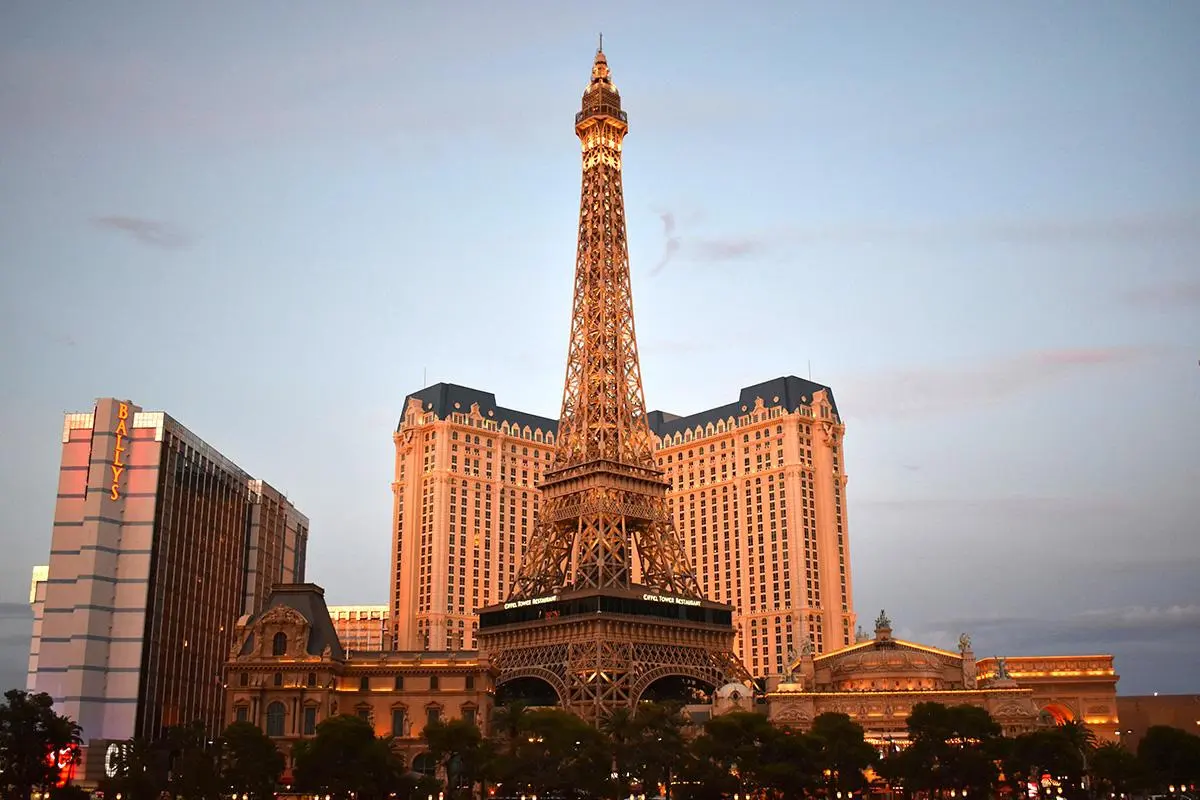
The Strip is a cathedral of light, and the New York-New York Hotel & Casino is its most audacious stained glass. At dusk the facade—an interpretive skyline of spires and setbacks—glows like a miniature Manhattan, and the Big Apple Coaster slices through that glow with a sound like a distant thunderclap. Step onto the pedestrian bridge that links the property to its neighbors and you feel the city compress: neon reflections in a puddle, the magnet pull of a slot machine, the bench-press hum of passing limos. Then the coaster dives—twist, spiral, a 203-foot drop—and suddenly the Strip is not just seen, but felt.
This is an urban adventure that trades in adrenaline as often as it trades in spectacle. New York-New York opened in 1997 as part of a wave of themed mega-resorts that remade Las Vegas into a simulacrum of the world’s great cities. Its façade and the scaled Statue of Liberty nod at the original, but the real appeal is how familiar imagery gets reframed in the Mojave: the skyline becomes a playground, narrow alleys between casinos become corridors of discovery, and high above the boulevard the coaster offers a bird’s-eye, or rather a daredevil’s-eye, view of a city that never sleeps.
Las Vegas is, geologically speaking, an island of human energy in the high desert. The built environment here is the region’s defining landscape; the Strip cuts across the southern edge of the city like an engineered river of neon. Historically, the hotel sits on ground whose earliest institutional stories are modern: post-war development, the rise of corporate resorts, and a tourism model that turned hyperbole into architecture. New York-New York is part of that lineage—less about replicating New York’s geology than about translating its attitude into rides, restaurants, and casinos.
But this destination is more than a postcard prop. The experiences clustered around the hotel—the Big Apple Coaster, guided walking tours of the Strip, curated food tastings, and professional photo shoots—are how the place reveals itself. The coaster is not just fast (it hits 67+ mph) but inventive: a 180-degree heartline twist and an inverted dive maneuver that make the track feel less like steel and more like choreography. For travelers who prefer their thrill served slower, the guided walking tours thread from the Bellagio fountains to New York-New York’s replica Liberty, halting at conservatories, art installations, and oddities like the Hershey’s Chocolate storefront. The Best Bites culinary route curates mid-Strip flavors—four deliberate tastings that connect food to the ongoing story of Las Vegas hospitality—while photo tours let you capture the Strip without the fumbling selfie.
What makes New York-New-York compelling is this juxtaposition of spectacle and sensible experiences. There’s the visceral—looping, wind-in-face speed—and the practical—the insider tour that teaches you where to sit for the best fountain view, where to find a quieter terrace for people-watching, and how to navigate indoor paths to avoid the noon sun.
Practicalities: the coaster is a must for anyone who tolerates thrills; it’s loud, fast, and elevated above the Strip so you’ll feel every element of the city as you fly. Wear comfortable, secure shoes—loose sandals and flip-flops are not ideal for quick exits and returns—and bring a light jacket: sprinting wind on the coaster feels colder than the desert air at street level. If you’re combining experiences, do the walking or food tours in the morning or early evening when temperatures are friendlier; summer afternoons can be brutal even in the shade. Booking combo experiences—such as a morning photo tour followed by an afternoon food walk—lets you collect great images at golden hour and then unwind with tastings.
Safety and timing matter. Lines for the coaster swell with evening crowds and during holiday weekends; early evening or mid-afternoon visits usually shorten waits. For guided tours, check exact meeting points: many start at major casino lobbies (Bellagio often anchors walking routes) and end within easy distance of New York-New-York, making it simple to use the hotel as a base. For food tours, communicate dietary restrictions ahead of time; these curated routes offer high-value stops that aren’t the typical buffets but rather chef-driven or locally beloved quick-service spots.
If you want to photograph the Strip’s energy, aim for the blue hour—the sky still carries color while neon begins its work. A small tripod or a camera with good low-light capability will let you capture the ferry-wheel geometry of the coaster and the reflections along the Boulevard. For less-enthusiastic thrill-seekers, the hotel’s public spaces—replicated neighborhoods, indoor pathways, and themed bars—offer discreet moments of entertainment without a single G-force.
Beyond the spectacle, local guides bring context: the smart-tips tour isn’t about showing the famous things; it’s about teaching you how Vegas works—how to get cheaper show tickets, where to find quieter restaurants, and how to navigate the Strip’s logistics without wasting time or money. Those are the sorts of lessons that transform a surface-level visit into a well-executed trip.
Why go? Because New York-New-York is Las Vegas in miniature and on steroids: it lets you feel the city’s bravado and the Strip’s theatricality, but it also offers curated ways to slow down and understand the place—through food, through photography, through the simple human joy of looping around a skyline on a roller coaster. For travelers who want one destination that both thrills and informs, who want an urban playground that also hands you a map, New York-New-York is a tightly packaged, high-energy gateway to how Las Vegas entertains.
When you leave, you won’t just remember the speed and the lights; you’ll carry a short list of tastes, a handful of photos that actually look like the Strip, and a practical sense of how to move smarter through a city that rewards those who show up curious and prepared.