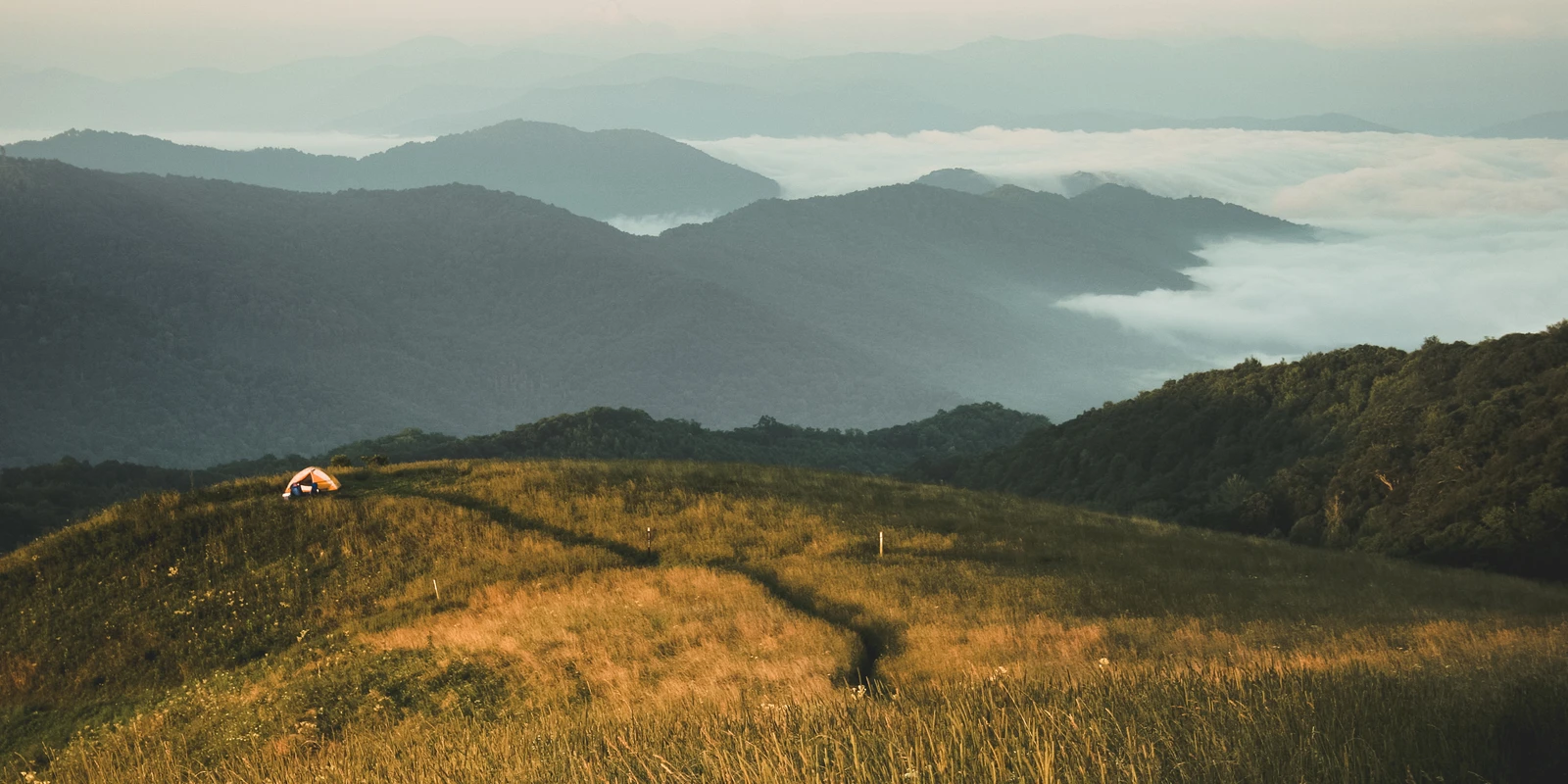
The first thing you notice at Max Patch is openness. After miles of hemlock shade and rhododendron tunnels, the trail kicks you out onto a wide, wind-swept bowl of grass. The horizon stretches in an uncomplicated line: ridgelines stepping down into Tennessee, the Black Mountains to the south, and the Great Smokies folding away in soft blue layers. On a clear morning the sky feels close enough to touch; in wind and weather the bald seems to breathe in very public, very theatrical ways.
Max Patch is the kind of place that suggests ceremony. Hikers unlace boots at the stone wall, photographers angle tripods toward sunrise, and families spread blankets for an afternoon picnic. It sits along the Appalachian Trail in western North Carolina at roughly 4,600 feet and is one of the most accessible high balds in the Southern Appalachians. The route across the bald is short—most visitors do a 1.5–2 mile loop that includes a stretch of the AT and a short climb to the meadow rim—but because the views are so immediate, time stretches differently here. You move slowly and watch the weather move faster.
Geologically, Max Patch is not a mountain shaped by glaciers; its wide shoulders are the result of erosion and human history. The bald itself—open grassland perched at high elevation—is a product of past grazing and periodic disturbance. For decades, sheep and cattle kept these grassy expanses open; as grazing declined, so did the balds. Today the area is managed to preserve the openness: the U.S. Forest Service, in partnership with conservation groups, maintains the meadow character that supports unique plant communities and the sweeping views hikers prize.
Recent management has tightened rules. Camping on the bald is no longer permitted—an important point for would-be overnighters. The restriction protects fragile soils and native grasslands that are sensitive to trampling and camping impacts. For backpackers, that means planning a tent night away from the bald, using nearby established campgrounds or permitted backcountry sites, and treating Max Patch as a day-use destination.
Culturally, Max Patch has become an Appalachian rite-of-passage for locals and visitors alike. Hot Springs, the nearest town, still carries the relaxed, small-town vibe of a trail-community hub: outfitters, diners, and the intermittent sound of old-time music drifting from a porch. The bald’s popularity makes it a social landscape as much as a natural one—wedding portraits, graduation photos, and sunset stand-offs are common—and that communal sense is part of the charm. But the volume of use is also why the rules changed: conservation and visitor experience are both at stake.
On the trail, the walking is honest and forgiving. Expect grassy, sometimes wind-scoured terrain on the bald itself, with short sections of rocky footing or rooty singletrack on approach. Elevation gain is modest—most hikes involve 200–400 feet of climbing depending on which parking area and loop you choose—so the trip is accessible to a wide range of hikers. But accessibility shouldn’t be confused with ease: strong sun, gusty wind, and exposure mean you need to plan gear and timing. There’s no reliable water on the bald; filter or carry what you need.
Timing matters. Sunrise and sunset are spectacular and crowded; if you want solitude, go mid-morning on a weekday or push for a fringe season visit. In fall, the bald becomes a coronation of color, with the surrounding hardwoods breaking into oranges and crimson. Spring brings wildflowers and green, but also muddy approaches. Winter is a raw, elemental affair: the bald can be windblasted and snow-swept, and the views have a crystalline clarity.
Practical planning is simple but specific. Park in the designated lot on Max Patch Road (take care to obey signage and parking limits), wear sturdy trail shoes or light hiking boots, bring sun protection and layers for wind, and respect the no-camping rule. If you’re a photographer, be ready for quickly changing light—bring a small tripod and a polarizing filter—and for visitors in groups, arrive prepared to share space: this is a destination that rewards patience and etiquette.
There’s also an element of stewardship to the visit. The bald’s character depends on active management: periodic mowing and controlled disturbance keep woody plants from reclaiming the meadow. The more visitors understand that the sweeping grassland is not ‘wild’ in the non-human sense but a cultural landscape maintained for species and views, the more likely they are to respect rules. Leave no trace, pack out trash, keep dogs on leash where required, and avoid creating new social trails.
Max Patch is not a backcountry expedition; it’s a high-elevation stage for quick, meaningful contact with the Southern Appalachians. It’s a place to practice slow observation—watch the clouds, listen for distant cow calls or the whine of a breeze—and then walk off before sunset to a permitted campsite. The bald invites a kind of humility: you stand in a big space that feels like a summit but asks you to treat it gently.
For anyone planning a visit, this is a day to schedule with care. Bring water, dress in layers, time your arrival for soft light if that’s your goal, and plan a respectful exit. Max Patch rewards a measured approach: arrive with attention, leave with an impression that will last longer than a single photograph.


