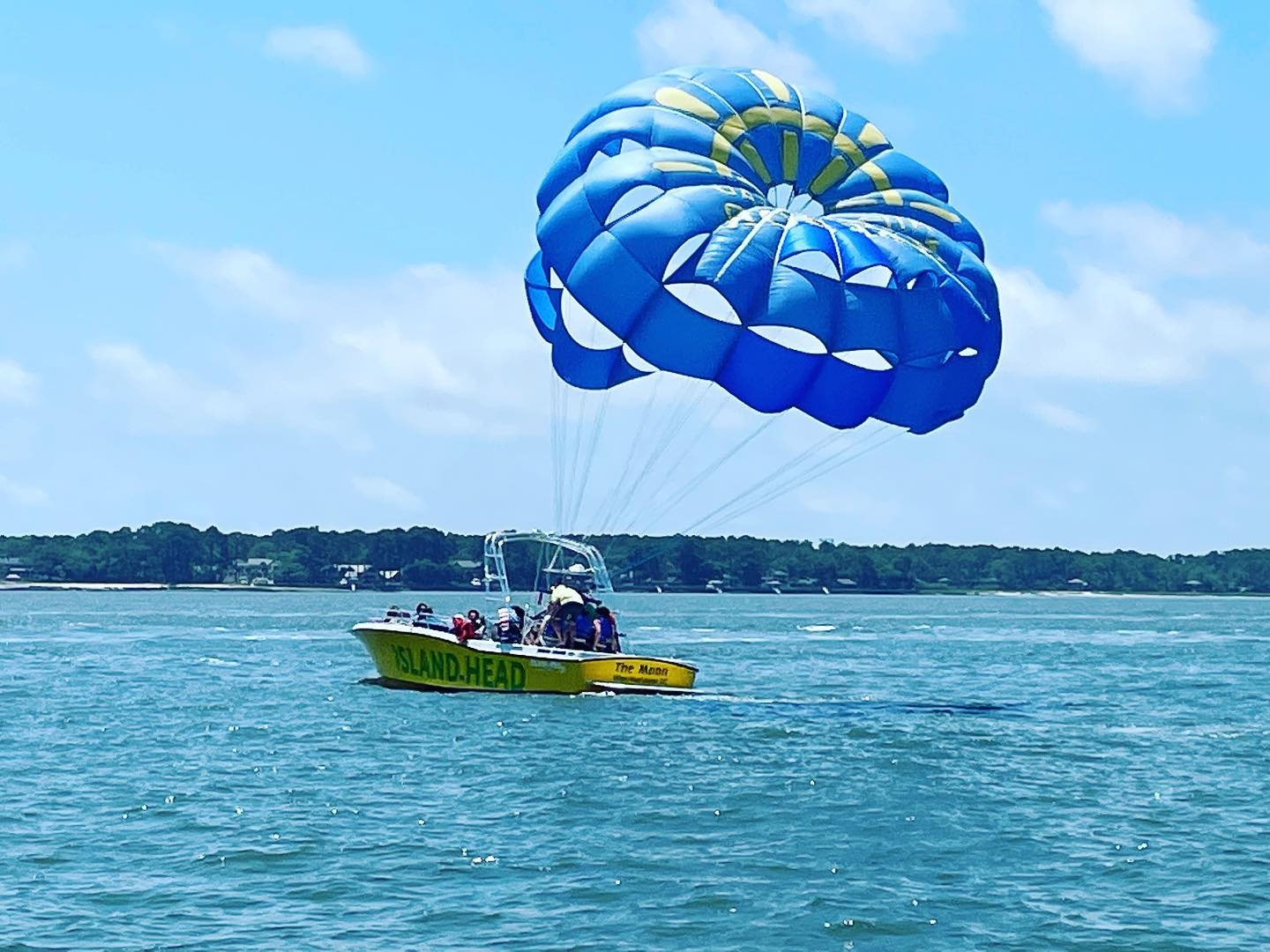
Parasailing Above Hilton Head: Dolphins, Lighthouse Views, and Lowcountry Sky

Parasailing Above Hilton Head: Dolphins, Lighthouse Views, and Lowcountry Sky

Starting at $95 | Ages 6+ | 1.5 Hours | Get a Bird's Eye View of Hilton Head!

Continue Reading

The boat idles out of the marina and the Lowcountry wakes with you—marsh grass combs the breeze, egrets stitch white lines across a blue morning, and Calibogue Sound rolls its shoulders like it’s shrugging off sleep. You clip into the harness, the chute blossoms, and suddenly the deck falls away. Hilton Head spreads out in clean geometry: sandbar, spartina, sailboat. To your left, the candy-striped Harbour Town Lighthouse stakes its claim at the edge of the sound. Ahead, Daufuskie Island lazes in the haze, an old soul with no bridge and plenty of stories. From 400 feet up, the wind takes the lead. It doesn’t howl—it nudges, it carries, it decides.

Parasailing here isn’t adrenaline for adrenaline’s sake. It’s clarity. Eight to ten minutes in the sky feels longer when your mind has only horizon to process. The boat becomes a toy, the wake scribbling cursive on a cobalt slate. Bottlenose dolphins punctuate the water with easy exclamation points, sometimes riding the pressure wave like they own the right of way—which, frankly, they do. If you’re lucky, the captain arcs the boat to skim past Harbour Town Yacht Basin so you can catch a clean angle on the lighthouse and the golf greens of Sea Pines. Stay dry if you want; take a warm dip if the day demands it. Either way, you’re airborne, and Hilton Head is a map you can finally read.

On paper, this is neat and tidy: a 1.5-hour outing, tandem or triple flights available, ages six and up, starting at $95 for flyers and $49 for observers. In practice, it’s the kind of light-lift adventure that manages to feel big. Takeoff and landing happen right on the boat’s flight deck with practiced ease. The captain watches wind and chop, pairing flyers by weight, and when conditions are right, you’re up. Time on board runs about 90 minutes with a full boat of 12, and the rotation keeps things moving. The ride between flights is its own show, with the Sound pushing pulses of water that the hull answers with a thrum you can feel in your calves.

This coast rewards curiosity. The wide, shallow shelf that gives Hilton Head its gentle surf also sets the stage for rich estuaries—and the Calibogue Sound is a gateway, a saltwater artery that breathes with the tide. From above, you can witness how the marsh navigates change, channels flexing to catch the day’s current. Even the sky plays along; clouds don’t just pass, they patrol. When the wind stiffens, you’ll know—the paraglider tugs, asserting its own opinion.

For families, parasailing delivers shared bragging rights without the stress of a technical sport. For couples, it’s a date with an aerial encore. And for anyone who has walked the Hilton Head beach and wondered what the island looks like from above, it provides the answer in one simple arc. If you want to go deeper on planning, or to lock in a seat on a boat that knows where dolphins like to intersect the wake, check out these curated details on unforgettable parasailing adventures with dolphin views.

A few easy logistics make the day smoother. Sunscreen early, not just onboard. Polarized sunglasses help cut glare off the water—bring a retainer so the Sound doesn’t claim them. Wear a swimsuit if you’re game for a toe-dip; otherwise a comfortable quick-dry outfit is perfect. Most operators offer secure storage for small items, but assume that anything loose can go airborne or overboard. Seasickness is uncommon inside the Sound, yet a non-drowsy motion remedy can be a trip-saver if you’re prone. Keep your camera simple—waterproof action cams on a wrist strap do well in this environment; phones are fine if they’re in a lanyard case.

What keeps this experience grounded is the Lowcountry itself. Daufuskie Island, to your south, remains boat-only, preserving a quieter rhythm. Harbour Town Lighthouse, completed in 1970, stands less as a warning to ships than a beacon for visitors, its spiral bands a signature of an island reinvented for outdoor life. Here, the water dictates play, and you learn to read its cues. Currents push, breezes bargain, and tides write the schedule. When you’re aloft, you’re part of that conversation.

When you touch back down, you’ll find the afterglow is practical: your legs adjusted to boat sway, your head full of new map lines. Want to stay in the moment? Reserve in advance during peak season—summer mornings sell fastest. If wind becomes a factor, captains call it; safety leads. That’s part of the deal with a sea that insists on having a say. Ready to rise? Start planning with this local guide to parasailing over Hilton Head so you can pick the best time of day and snag prime seats.

Duration1.5 hours (8–10 minutes in the air)
Plan your visit

Trail Wisdom

Book the first flight of the morning

Morning air is typically calmer on Hilton Head, delivering smoother flights and clearer views before afternoon sea breezes pick up.

Secure your shades

Bring polarized sunglasses with a retainer strap to cut glare and avoid losing them to a sudden gust.

Choose your splash plan

Tell the crew if you want to stay dry or dip your toes—both are easy, but they need to know before you launch.

Pack light, go hands-free

Use a waterproof phone lanyard or action cam with a wrist strap; pockets and loose items don’t mix well with wind and water.

Local Knowledge

Hidden Gems

  • Climb the Harbour Town Lighthouse museum for island history and a 360° vantage before or after your flight
  • Take a passenger ferry to boat-only Daufuskie Island for quiet beaches and Gullah heritage

Wildlife

Bottlenose dolphins, Brown pelicans

Conservation Note

Respect marine life—give dolphins space and never feed wildlife. Choose reef-safe sunscreen to reduce runoff impact on coastal waters.

Hilton Head’s Harbour Town Lighthouse was completed in 1970 and quickly became the island’s signature landmark, signaling the rise of Sea Pines as a planned resort community.

Seasonal Guide

spring

Best for:Calmer winds, Wildlife viewing
Challenges:Cooler mornings, Variable fronts

Spring delivers smooth air and crisp visibility with fewer crowds—bring a light layer for early departures.

summer

Best for:Warm water dips, Family travel
Challenges:Afternoon wind, High demand and heat

Expect hot, bright days and livelier breezes; reserve early and aim for morning flights.

fall

Best for:Clear skies, Mild temps
Challenges:Shorter daylight, Occasional windy fronts

Autumn brings golden light, pleasant temps, and steady conditions—ideal for photography.

winter

Best for:Quiet marinas, Budget-friendly travel
Challenges:Cool air temps, Weather-dependent schedules

Winter can offer calm, crowd-free outings, but dress warm and stay flexible with weather windows.

Photographer's Notes

Shoot with a fast shutter (1/1000s) to freeze motion, and use a circular polarizer to cut surface glare. If you’re on the boat photographing flyers, go wide to capture the chute against the coastline. In the air, keep the horizon level and bracket exposures to balance bright sky and dark water. Always tether cameras and stash lens caps—wind takes what it wants.

What to Bring

Polarized sunglasses with retainer

Essential

Reduces glare off Calibogue Sound and stays secure when the wind picks up.

UPF 50+ sun shirt or rash guard

Essential

Protects skin during midday sun and dries fast after a splash-down.

○

Waterproof phone pouch with lanyard

Lets you capture photos hands-free while keeping your device safe and secure.

○

Non-drowsy motion remedy

Helpful for those sensitive to boat motion, especially on breezier afternoons.

Common Questions

Can I choose to stay dry during the flight?

Yes. Tell the crew before takeoff—captains can keep you dry or provide a quick toe-dip landing depending on your preference.

How long will I be in the air?

Each flight typically lasts 8–10 minutes, with about 1.5 hours total on the boat depending on group size and conditions.

Is parasailing suitable for kids?

Yes—flyers ages 6 and up are welcome, with tandem or triple flights available based on conditions and combined weight.

What if the weather changes?

Captains monitor wind and weather closely. If conditions aren’t safe, trips may be delayed or rescheduled, and you’ll be notified as early as possible.

Will I see dolphins?

Calibogue Sound is home to bottlenose dolphins and sightings are common, though not guaranteed.

Can I bring a camera or phone?

Yes, but secure it with a lanyard or strap. The crew may recommend a waterproof pouch to protect your device.

What to Pack

Polarized sunglasses with retainer: reduces glare and won’t fly off; Quick-dry layers or swimsuit: comfortable whether you splash or stay dry; Reef-safe sunscreen: strong coastal sun without harming marine life; Waterproof phone pouch: easy photos with less stress around water and wind.

Did You Know

Daufuskie Island, visible from the air during parasailing, has no bridge access—visitors and residents reach it only by boat.

Quick Travel Tips

Arrive 30 minutes early to check in and gear up; Morning flights are smoothest and coolest in summer; Bring cash or card for marina parking or Sea Pines gate fee, if applicable; Build in a weather buffer—wind calls are safety-first and worth the flexibility.

Local Flavor

Celebrate the flight with hushpuppies and local shrimp at The Crazy Crab in Harbour Town, or a cold drink and live music at The Salty Dog Cafe in South Beach. Coffee and a flaky pastry from Harbour Town Bakery & Cafe make an ideal pre-launch ritual. If you’re into craft spirits, swing by Hilton Head Distillery for a tasting that leans into coastal botanicals.

Logistics Snapshot

Closest airports: Hilton Head Island (HHH) ~15 minutes; Savannah/Hilton Head (SAV) ~1 hour. Departure points vary by operator; if your launch is inside Sea Pines, expect a per-vehicle gate fee. Cell service is generally strong around Harbour Town and Calibogue Sound. No permits required; reserve in advance and arrive early for safety briefing and harness fitting.

Sustainability Note

This estuary is home to protected bottlenose dolphins and sensitive marsh habitat—use reef-safe sunscreen, pack out all trash, and keep respectful distances from wildlife.

Topics