Pedal, Coast, Repeat: Exploring Barbados on a Fat‑Tire E‑Bike

Pedal, Coast, Repeat: Exploring Barbados on a Fat‑Tire E‑Bike

Fat‑tire e-bikes unlock Barbados’ cliffs, cane fields, and coastal culture—without the sweat.

Continue Reading

You kick the bike into life and the first thing that surprises you is how quiet it is—no choking gears, no labored breathing—just the soft hum of the motor and the ocean’s hush in the background. The trail peels away from a palm-lined lane and opens onto a patchwork of cane fields and limestone outcrops; around the next bend, a cliff edge drops to a ribbon of surf. On Captain Larry’s fat‑tire e-bikes, three hours feels like a permission slip: to go farther, notice more, and let the island do the work.

Barbados is compact—just 21 miles long—but it’s a compressed geography lesson. That narrowness is a gift for an e-bike tour: within a single outing you can cross several microclimates, ride past colonial sugar estates, coast along coral-carved headlands, and duck into neighborhoods where the rhythm of daily life is still measured by the tide and market hours. Your guide, often a local like Amil Dixon (a fourth-generation Barbadian), stitches together these scenes with stories. He’s the interpreter who will point out a 19th‑century martello tower, call out the old rum distillery’s smoke, and direct you to the perfect spot for a photograph as the Atlantic wind fills the sails of a distant catamaran.

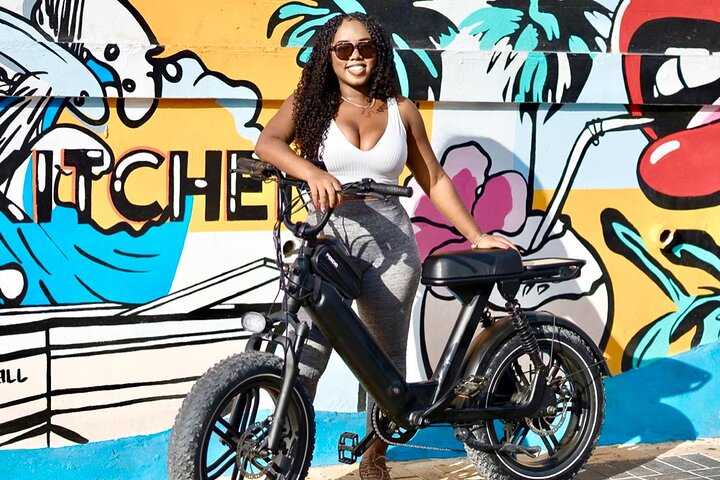
Big Smiles happen when you ride out Ebikes!

Geologically, Barbados is different from many Caribbean islands. It’s the exposed edge of an underwater plateau that’s been built up from coral and marine sediments over millions of years, so the interior bears gentle hills rather than volcanic peaks. Those limestone cliffs along the east coast—where waves dare the rocks and sometimes win—create dramatic viewpoints and coastal tracks that are uniquely suited to fat tires. The bikes’ wide treads are as much about comfort on sand and rock as they are about stability when the trade winds decide to lend a hand.

Culturally, an e-bike tour is not just sightseeing; it’s a social lens. Barbados keeps a strong link to its British colonial past—cricket pitches, plantation architecture, and the historical importance of sugar—but it is vibrantly Barbadian in its food, music, and daily rhythms. Stops aren’t contrived photo-ops; they’re places where locals buy bread, where a vendor grills flying fish, where the guide will introduce you to a roadside rum shop or a community garden. The beauty of a private tour is that you get those moments with context: why a particular grove of coconut palms was planted, who still tends the field, and how the road grew where it did.

A Great day!

Practicality is baked into the experience. Tours run 3–4 hours and move at a pace that’s flexible—this is an electric assist, not competitive cycling. Expect to cover roughly 12–20 miles (20–32 km) depending on the route chosen, with short moderate climbs that the motor eases. Terrain varies from paved coastal roads to compact dirt tracks and occasional sandy sections near beaches. Helmets are standard, and guides handle navigation and local traffic etiquette so riders can focus on the ride and the view.

Why choose an e-bike here? For many reasons: you’ll ride farther than you would on a rental bike, you’ll arrive at viewpoints with energy left to explore, and you’re less winded when stopping to chat with locals. For families or mixed-ability groups, the e-bike levels the field: teenagers, grandparents, and casual riders can share the same itinerary and enjoy it together.

Timing matters. Barbados’ dry season (roughly December–April) offers crisp mornings and steady trade winds that make cliffside riding exhilarating. The wet season brings lush countryside and fewer tourists, but also a chance of squalls—still manageable on an e-bike, but something to plan around. Heat and sun are constant considerations; midday can be intense, and the Atlantic breeze will alternate between gift and challenge.

Before you book, know that these are private tours run by local operators—expect small groups, island knowledge, and the chance to tweak an itinerary to include a beach stop, a distillery visit, or a local food market. Pricing starts affordably, and the value is not just the kilometers but the cultural context a guide like Amil provides.

Come watch the sunset!

In short: an e‑bike tour in Barbados is an ideal way to see more of the island without the stress of driving on unfamiliar roads or the exhaustion of pushing through hills. It’s an active day that rewards curiosity—bring a camera, a willingness to taste the local flavors, and the expectation that the island will surprise you in short order. You’ll arrive at lunch with sand in your shoes, sun on your arms, and a clearer sense of what makes this little Atlantic island quietly magnetic.

Duration3–4 hours
Group Size1–10 Guests
LanguagesEnglish
Rating4.1 (33 reviews)

Not recommended for travelers with spinal injuries

Not recommended for pregnant travelers

Not recommended for travelers with poor cardiovascular health

Plan your visit

Trail Wisdom

Start early

Morning tours avoid the strongest sun and the busiest roads; aim for a start around 8–9 AM.

Use the motor, don’t fight it

Trust the electric assist on climbs to keep your cadence steady and conserve energy for photo stops.

Stay hydrated

Carry a 1–2L hydration pack—you’ll be in sun and wind for several hours and shops can be sparse on some stretches.

Respect local traffic

Ride single-file on narrow roads and follow your guide’s signals—drivers know routes but visibility can be tight.

Local Knowledge

Hidden Gems

  • Small roadside rum shops for a quick sample and bite
  • Quiet east-coast headlands with fewer visitors and expansive Atlantic views

Wildlife

Tropical seabirds (e.g., frigatebirds), Green vervet monkeys seen inland occasionally

Conservation Note

Stick to marked roads and trails to avoid dune and coastal vegetation damage; support local guides who practice low-impact touring.

Barbados’ history is shaped by sugar and rum—plantations built the island’s early economy and Mount Gay, established in 1703, is one of the oldest rum distilleries in the world.

Seasonal Guide

spring

Best for:mild temperatures, blooming coastal vegetation, fewer crowds than winter
Challenges:occasionally variable showers, increasing humidity

Spring is a pleasant shoulder season: warm, with lush growth and generally steady trade winds—great for comfortable riding.

summer

Best for:green landscapes, off-peak pricing, fewer tourists
Challenges:higher humidity, afternoon thunderstorms, hurricane season risks

Summer brings greener interiors and quieter roads but also heavier rain spells—keep flexible and watch forecasts during hurricane season.

fall

Best for:warm water stops, lower hotel rates, late-season sunshine
Challenges:sporadic heavy showers, potential storm systems

Fall can be warm and inviting for coastal rides, though you’ll want contingency plans for rain interruptions.

winter

Best for:dry weather, crisp mornings, steady trade winds
Challenges:higher tourist numbers, higher prices around holidays

Barbados’ peak season offers reliable dry conditions and great visibility—expect more visitors and book ahead.

Photographer's Notes

Shoot early or late for warm light on limestone cliffs; use a wide lens for coastal vistas and a 50mm for candid street scenes—bring a lightweight tripod for golden-hour panoramas.

What to Bring

Helmet

Essential

Protects against falls and is typically required by operators.

Hydration pack (1–2L)

Essential

Keeps water on hand for long coastal stretches and sunny climbs.

Sunscreen & sunglasses

Essential

The tropical sun is strong even with trade winds—protect skin and eyes.

Closed-toe shoes

Essential

Provide better pedal grip and foot protection on mixed surfaces.

Common Questions

Do I need prior e‑bike experience to join?

No—operators provide a brief orientation and the bikes’ electric assist makes them accessible to beginners; basic bike-handling comfort is useful.

How far will we ride?

Tours typically last 3–4 hours and cover roughly 12–20 miles (20–32 km), depending on the chosen route and stops.

Are tours private?

Yes—these listings are for private tours, so itineraries can often be tailored to your group’s interests and pace.

What is the minimum age or fitness requirement?

Minimum ages and fitness guidelines vary by operator—confirm specifics when booking; children may need a responsible adult and size-appropriate equipment.

What happens in bad weather?

Operators will monitor conditions and may reschedule or modify routes for safety in the event of heavy rain or storms.

Is there an option to stop for a swim or food?

Yes—many private tours include a beach stop or local food tasting if requested when booking.

What to Pack

Helmet (safety); Hydration pack (stay hydrated); Sunscreen & sunglasses (tropical sun); Closed-toe shoes (pedal grip and protection)

Did You Know

Barbados is home to Mount Gay Distillery, which traces commercial rum production on the island back to 1703—often cited as the world's oldest commercial rum distillery.

Quick Travel Tips

Book morning departures; confirm age/weight limits with operator; bring cash for roadside snacks; check hurricane-season forecasts

Local Flavor

After the ride, head to Oistins (south coast) for fried flying fish and a local beer, or visit Bridgetown’s harborside for fresh seafood and a Mount Gay rum tasting to connect the day’s landscapes to the island’s culinary and cultural roots.

Logistics Snapshot

Closest airport: Grantley Adams International Airport (BGI); Typical drive to start/meeting point: 20–45 minutes from Bridgetown depending on route; Cell service: good near towns and main roads, intermittent on remote headlands; Permits: none required for public road tours

Sustainability Note

Ride on designated routes, avoid disturbing shoreline vegetation, pack out all trash, and support local operators who follow low‑impact touring practices.

Topics

Included

  • Premium Ebike, Bike Helmet and bike lock and Experienced Tour Guide

Good to Know

  • Public transportation options are available nearby
  • Not recommended for travelers with spinal injuries
  • Not recommended for pregnant travelers
  • Not recommended for travelers with poor cardiovascular health
  • Travelers should have a high level of physical fitness