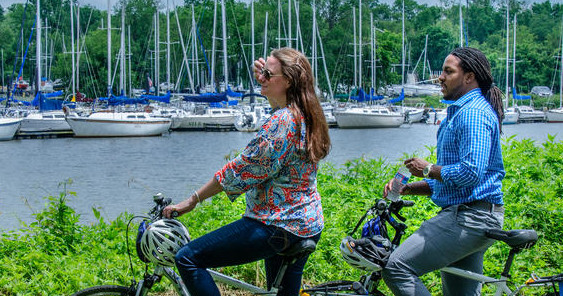
You push away from the curb and the city exhales. Brick sidewalks give way to a ribbon of asphalt alongside the Potomac; freight of history and commute falls behind. Heads turn as you coast past red-brick row houses, the air taking on a salt-and-river tang that hints at Washington’s skyline across the water. This is Old Town Alexandria by bike: an easy, immediate way to see a layered city where Colonial lamp posts live alongside lunchtime cyclists and weekend families.
Start at 1199 N Fairfax St, the friendly shop where Unlimited Biking outfits you with a helmet, color-coded map, basket, and a lock—then sets you loose with three route ideas and local tips. Bikes are maintained in-house, and the staff’s routing suggestions are practical: a couple-hour loop to the waterfront and back, a cross-river commute to the National Mall, or an all-day pedal heading south on the Mount Vernon Trail toward the quiet gardens of George Washington’s estate. Rentals range from two hours to a month, which means the same shop serves both quick tourist loops and multi-day urban bikepacking.
What makes the ride here rewarding is contrast. Old Town’s King Street—lined with cafes, antique storefronts and the Torpedo Factory Art Center—has a human scale that invites stopping. A few pedaled minutes away, the Mount Vernon Trail unfurls along the river in uninterrupted views: barges slip by, herons stand like sentries on the shoreline, and across the water the monuments punctuate the skyline. The grade is mercifully forgiving; expect a mostly flat ride with the occasional short rise at bridges and ramps, and cobbles or brick in the historic district that reward wider tires and a second of attention.
Alexandria’s story is stitched into these streets. Founded in 1749 and named for Scottish immigrant John Alexander, the town became a bustling port in the 18th and 19th centuries. Shipping, tobacco and proximity to the nation’s capital left a built environment that still reads as an open-air museum: Federal-style row houses, a preserved waterfront district, and warehouses repurposed into galleries and restaurants. Cycling here feels almost like moving through pages of local history—each turn offers an architectural footnote or a plaque marking a site of note.
The Mount Vernon Trail itself is a reminder of how geology and infrastructure shape outdoor experiences. Running roughly 18 miles from Theodore Roosevelt Island to George Washington’s Mount Vernon, the trail follows the Potomac’s alluvial plain—flat terraces and riverbanks that make for steady, predictable pedaling. Because the surface is paved for most of the route, you can focus on scenery rather than technical terrain. Wind off the river can kick up, though; during afternoon hours that effect is tangible and will add a pleasant resistance or a steady push, depending on which way you’re headed.
Practicalities matter here: a typical “Old Town loop” clocks 6–10 miles depending on stops; a one-way ride to the National Mall is roughly 4–6 miles, and a dedicated outing to Mount Vernon is a longer commitment—plan for 12–20 miles round trip if you start and end in Old Town. This makes Alexandria perfect for a mixed group of riders—families, casual tourists and experienced cyclists who want mileage without serious climbs.
To get the most out of your rental, go early for softer light and quieter streets. King Street fills up with delivery vans and pedestrians later in the day. If you want to cross into D.C., the Mount Vernon Trail links to multiple river crossings and dedicated bike lanes that eventually connect to the National Mall, allowing you to stitch a scenic urban ride that passes the Jefferson Memorial and Lincoln Memorial without having to navigate dense city traffic.
Safety and comfort are baked into the offering: helmets and locks are included, and the color-coded maps use clear landmarks—King Street, the Torpedo Factory, Waterfront Park—so you spend less time guessing and more time moving. Bring a water bottle and a lightweight lock for when you want to pause for coffee or a gallery stop. Expect good cell service through most of Old Town and along the trail, though pockets of shade and river-brush can occasionally lower signal.
Why book a bike rental here instead of in the city? Because Alexandria is a microcosm of regional variety—historic streets, riverfront parks, and a direct, low-stress route to the monuments. You can spend the morning rolling through preserved 18th-century blocks and the afternoon following the river into open green space. When your legs tire, King Street offers an immediate reward: cafes, seafood counters, and the smell of bread baking from storefront bakeries. For photographers, the late-afternoon golden hour turns brick façades and river ripples into a quiet, cinematic palette.
If you’re planning, a few pragmatic notes: reserve a bike if you’re visiting on a weekend in spring or fall, choose wider tires for cobbles, and consider bringing a daypack for layers—the river can make evenings cool even in summer. Unlimited Biking’s flexible rental windows mean you can fashion the day to your energy: a two-hour sampler, a half-day ride to the monuments, or an overnight-plus excursion if you want to take your time exploring Alexandria’s neighborhoods.
Link up with local flavor as you ride: stop at the Torpedo Factory Art Center, wander the King Street shops, then follow the river south for wide-open views and native trees. If you want a single link to plan routes, reservations, or rental details, the shop’s local-expert page is a good first step: explore historic Alexandria by bike. It’s the practical doorway from idea to saddle—route suggestions, maps, and booking options all live there.
Pedaling through Old Town feels like moving slowly through time: immediate, social, and surprisingly restorative. Whether you want a family-friendly ride, a history-dosed afternoon, or a commuter shortcut into the capital, an afternoon on two wheels here is as much about pace as place. The Potomac dares you to keep going; the city reminds you to look around and stay awhile.