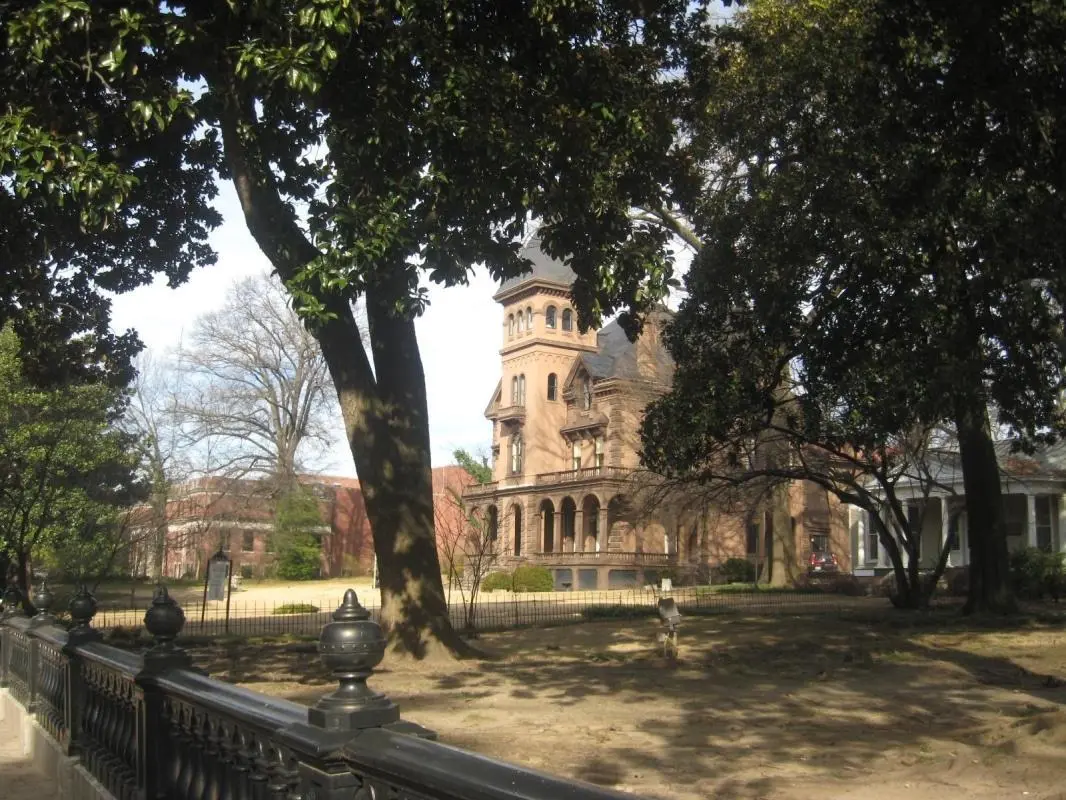
The late-afternoon light softens the brick facades along Peabody and a hush settles over the wide, tree-lined streets. Shadows from mature oaks lace the sidewalks, and the city hum—distant traffic, a baritone trumpet from Beale Street—becomes a companion rather than a clamor. You pause at a wrought-iron gate and let the architecture do the talking: turreted roofs, carved brackets, stained glass catching the sun. Victorian Village feels less like a neighborhood and more like a curated chapter of Memphis history that’s been set aside for slow discovery.
This pocket of Midtown grew up as Memphis rehung its fortunes after the Civil War. Cotton merchants, railroad barons, and cultural entrepreneurs built mansions here between the 1870s and early 1900s, an era when the Mississippi River both paid and punished the city. Those wealthier decades left behind high porches and carriage-house footprints; today those same porches act as vantage points for porch-swinging conversation, a quieter counterpoint to the roar of downtown.
Geology isn’t dramatic here—Memphis sits on the broad, alluvial plain of the Mississippi—but the river is always present as idea and agent. It dared the city to become a port and pushed commerce inland; its levees and channels shaped the urban grid. Walk Victorian Village and you can read that history in brick and stone: the decorative facades of homes financed by cotton profits, the social geography that placed grand mansions a few minutes from factories and riverfront warehouses.
The neighborhood has become a hinge connecting Memphis culture. Spend an hour exploring the district on foot, and you can later plug into a guided music-and-history drive for deeper color. Private tours led by local musicians are a smart move here; they turn street names into characters and transform a view of a mansion into a story about the soundtrack of American music. Several local operators pair a Victorian Village drive-by with visits to Sun Studio, the Peabody Hotel to see the ducks, and Beale Street for the blues—all within a compact itinerary that ranges from 90 minutes for a winter-friendly drive to three hours for a deep dive led by a professional musician.
For a different rhythm, combine your neighborhood stroll with a Memphis Riverboat cruise. The Mississippi is, after all, the spine of the city; a leisurely cruise offers perspective, revealing why so many neighborhoods—including Victorian Village—grew where they did. On a circuit that lasts roughly 60 to 90 minutes, you’ll watch the shoreline recede, see cotton-row warehouses turned into offices, and understand Memphis as a place shaped by sound and water.
Victorian Village is as much about sensory detail as it is about dates and design. Magnolia trees perfume the street in late spring, squirrels treat the lawns like obstacle courses, and iron finials glint in afternoon sun. The district’s scale encourages a gentle pace: a loop of the most notable homes covers about 1 to 2 miles and takes 45 to 90 minutes depending on stops. There’s negligible elevation change; this is flat, walkable ground, forgiving to most visitors.
Practical planning is straightforward and improves the experience. Morning and late afternoon offer the best light for photography and the most pleasant temperatures from spring through fall. If you prefer context with your walk, book a private musician-led tour or a discovery tour that includes Victorian Village as a stop; these tend to blend neighborhood history with visits to Beale Street, Sun Studio, and an option to add museum admission at the National Civil Rights Museum. Hop-on, hop-off bus options let you move between Victorian Village and downtown landmarks without committing to a single guided timeline.
Respect the neighborhood. Victorian Village is a living block, not a museum; many of the homes are private residences. Stay on sidewalks, avoid stepping onto lawns, and treat porches as visual stops unless a resident clearly invites you.
Logistically, you can pair the neighborhood visit with lunch at a nearby barbecue joint—the city’s barbecue is worth the detour—or with museum time. The National Civil Rights Museum and Rock 'n' Soul Museum sit within easy reach if you want a deeper historical framework. For a civic contrast, time a stroll through Overton Park adjacent to the district; its greenspace and the Memphis Brooks Museum of Art make a balanced afternoon.
Why travel here? Victorian Village is a concentrated way to read Memphis: its prosperity and social shifts translated into architecture; its proximity to the river and to Beale Street reveals how commerce and music rose side by side. Tours that include Victorian Village give you narrative anchors—dates and names are useful, but it is the anecdote from a musician-guide that makes a turret feel like a page in a living city story. Whether you move quietly on foot or join a well-paced drive and river cruise, the neighborhood rewards a slower curiosity.
A final note on timing: early spring colors and fall light are ideal for both temperature and photography. Summer brings humidity and a thicker urban hum; winter tours often switch to a comfortable vehicle-based format that trades walking for storytelling. No matter the season, Victorian Village reads best when you listen—let the city’s soundtrack, from riverboat whistles to a distant guitar, be your guide.