Power, Stone, and Sky: A Three-Hour Hoover Dam Immersion

Power, Stone, and Sky: A Three-Hour Hoover Dam Immersion

A half-day deep dive into the West’s most audacious dam—art deco bones, turbine thunder, and desert horizons

Continue Reading

Dawn slips across the Mojave like a slow breath, washing Boulder City in rose light as you roll toward Black Canyon. The road rises and the desert seems to tilt with it—hills of volcanic rock leaning in as if to listen. Then the horizon drops away and there it is: Hoover Dam, a curve of concrete gripping the canyon, holding back a blue expanse that looks almost unreal in this stark country. The Colorado River murmurs below, a muscle always flexing, daring you to consider what it took to tame it.

A three-hour guided tour here moves like the river itself—steady, purposeful, and full of turns. You’ll step out to air that smells faintly metallic and sun-baked, with the wind searching the canyon walls like a curious hand. On the crest of the dam, thousands of Art Deco details watch over you: sunbursts in terrazzo floors, bronze winged figures that seem to push the sky higher. The dam feels alive, and in a way it is. Inside, turbines spin in a deep, cathedral-like gallery; you feel the hum through your shoes. Concrete holds its own weather, cool and sure, while the river pushes forward behind thick walls.

This tour isn’t just a photo op—it’s a front-row seat to one of America’s boldest engineering plays. Built between 1931 and 1936, Hoover Dam rose from necessity and ambition during the Great Depression, when the Colorado was a restless force flooding farms downstream. The project drew thousands of workers to a brand-new town, Boulder City, designed to house them with tidy streets and no gambling—a policy still in place. High scalers hung from ropes, chipping the canyon clean; concrete was poured around the clock. The scale remains staggering today: the dam’s mass, the cavernous galleries, the way Lake Mead spreads like a sea into the Copper and Virgin basins.

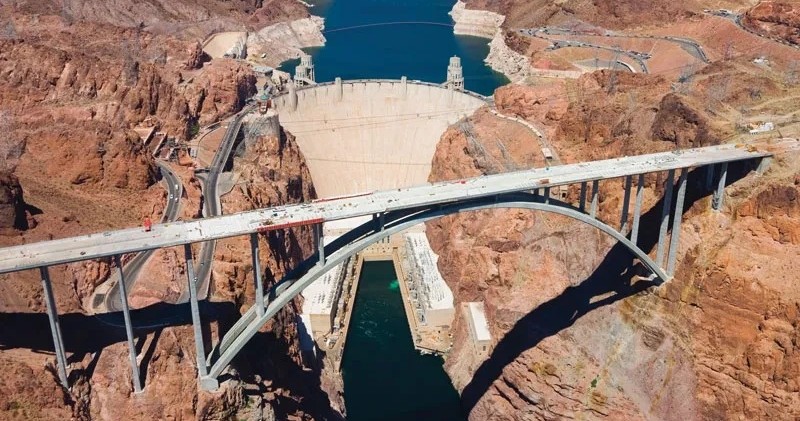
Your guide threads the timeline with place: Black Canyon’s volcanic bones, the way basalt and andesite shouldered the weight. The river carved here for eons, then humans stitched a wall across its path. The Mike O’Callaghan–Pat Tillman Memorial Bridge arcs above, a simple line in the sky that gives you a new angle on everything—dam, lake, river, desert—stacked in a single frame. Walk the pedestrian span and the wind leans on you, nudging your camera, asking for steadiness.

Views are constant and shifting. From the Arizona Lookout, Lake Mead is a watercolor—turquoise panels layered into dry mountains. The famous bathtub ring tells a modern story, marking drought years that changed the West’s water math. Below the dam, the river runs clean and cold, a ribbon that glints and yawns as it bends toward Eldorado Canyon. Ravens wheel in the thermals. Desert bighorn sometimes step out on the cliffs like they own the deed. And in a way, they do.

The tour’s rhythm is designed for curiosity: exterior overlooks, interpretive stops, and—when scheduled—access inside where the infrastructure does its quiet work. Guides bring the place to life without fluff: how power flows to three states, how flows are balanced with environmental needs downstream, how every bolt has a job. It’s part history class, part geology walk, part backstage pass. If you want the most efficient way to pack this much context into half a day, this is it. You can learn more and connect with trusted local experts through this in-depth guide: Three Hour Tour – Hoover Dam, Boulder City.

Boulder City itself is a worthy base. It’s close—about 10 miles from the dam—and its historic district keeps a small-town pace. No casinos, just palm-lined streets, a pocket museum, and locally loved cafes. It’s a reminder that Hoover Dam is not a spectacle in the middle of nowhere; it shaped a community that still feels neighborly and grounded. If you want a day that ebbs between big-scale infrastructure and approachable desert town, this is your pairing.

Practicalities matter in the desert. Even in cooler months, sunlight sprawls across everything. Wear closed-toe shoes with grip; the surfaces are smooth but there’s plenty of walking. Bring water, especially if you’ll explore the outdoor overlooks and the bridge walkway. Security is tight inside the complex—bag checks are standard, and large backpacks are typically not permitted. It’s best to travel light. Photography is welcomed in most exterior areas, but interior rules vary; be ready to shoot handheld in low light if you’re heading into the power plant.

Time your visit for morning or late afternoon to soften the sun and crowds. Spring and fall offer agreeable temperatures; winter makes the air crisp and the canyon colors pop. Summer is a different creature. The heat presses, the light is hard, and hydration is non-negotiable. Still, the dam holds steady through it all—a presence that seems to breathe with the river. For booking details and seasonal nuances, tap into local expertise here: Hoover Dam Three Hour Tour insights.

If you have time, pair the tour with a quick walk on the Historic Railroad Tunnel Trail, starting near the Lake Mead Visitor Center. The path follows the old railway that carried materials to the dam, punching through five tunnels with wide views of Lake Mead. It’s an easy add-on, the kind of stroll that knots story to place.

In the end, this isn’t just about concrete and kilowatts. It’s about a river that keeps pushing, a desert that forgives little, and a community that learned to work with both. Hoover Dam stands where human ambition met a canyon and listened before it acted. The result is a landmark that still powers millions—and still surprises at first sight. On a three-hour tour, you feel that meeting in your bones. You step back into the sun, and the canyon exhales, as if satisfied you were paying attention.

Ready to plan? Start with a trusted local operator to streamline timing, access, and interpretation: Three Hour Tour – Hoover Dam. Half a day. A century of story. And a view you’ll carry long after the desert fades in your rearview.

Duration3 hours
Plan your visit

Trail Wisdom

Beat the Heat and the Crowds

Aim for morning departures for cooler temps and easier parking; late afternoon light is excellent for photography.

Travel Light Through Security

Large bags are typically restricted; bring a small daypack, water in plastic bottles, and keep metal items minimal for faster screening.

Footwear Matters

Wear closed-toe shoes with good grip—expect plenty of walking on smooth surfaces, stairs, and exterior viewpoints.

Bridge Wind Alert

The Mike O’Callaghan–Pat Tillman Bridge can be very windy; secure hats and keep a firm hold on phones and cameras.

Local Knowledge

Hidden Gems

  • Boulder City/Hoover Dam Museum for a quick pre- or post-tour context download
  • Hemenway Park, where desert bighorn sheep often graze with Lake Mead views

Wildlife

Desert bighorn sheep, Common ravens

Conservation Note

You’re within Lake Mead National Recreation Area; stay on marked paths, pack out trash, and respect water-scarcity signage around the reservoir.

Hoover Dam was built from 1931–1936, employing thousands during the Great Depression and creating Boulder City to house workers.

Seasonal Guide

spring

Best for:Balanced temperatures, Clear views
Challenges:Occasional wind, Increasing visitation

March–May delivers comfortable weather and sharp canyon color, ideal for exterior overlooks and the bridge walkway.

summer

Best for:Early morning light, Power plant cool interiors
Challenges:Extreme heat, High UV exposure

June–August is hot and intense; hydrate, plan early starts, and expect strong sun on the dam crest and bridge.

fall

Best for:Mild weather, Golden-hour photography
Challenges:Variable winds, Busy weekends

September–November brings pleasant days and dramatic sunsets over Lake Mead—prime time for a three-hour tour.

winter

Best for:Crisp air clarity, Lower crowds
Challenges:Cool canyon winds, Short daylight

December–February is cool and quiet; bring a light jacket for exterior stops and enjoy open viewpoints.

Photographer's Notes

For classic dam shots, walk the Mike O’Callaghan–Pat Tillman Bridge and use a wide lens; brace against the wind and boost shutter speed. A circular polarizer helps cut glare on Lake Mead and deepens the desert sky. Inside, expect low light—shoot at higher ISO with image stabilization and avoid tripods where restricted. Golden hour warms canyon hues; winter air clarity delivers sharp detail.

What to Bring

Reusable Water Bottle (Plastic or Metal Allowed by Security)

Essential

Stay hydrated while exploring exterior overlooks and the bridge walkway, especially in warm months.

Sun Hat and Sunglasses

Essential

The dam crest and bridge are fully exposed; protect your head and eyes from high desert sun.

○

Light Jacket or Layer

Interior areas can feel cool and canyon winds pick up—bring a layer for comfort.

○

Compact Camera with Polarizer

A circular polarizer cuts glare on Lake Mead and deepens sky contrast for iconic shots.

Common Questions

How long is the tour and how much walking is involved?

The guided experience lasts about three hours and includes walking on the dam crest, overlooks, and possibly interior areas; expect periods of standing and some stairs.

Are children allowed?

Yes. This tour welcomes ages 5 and up, with ages 18+ required to book.

Is the tour accessible?

Many areas of Hoover Dam are accessible via elevators and ramps, though some interior sections include stairs; contact the operator in advance to discuss mobility needs.

What are the security rules?

All visitors pass through security screening. Large backpacks, weapons, and glass containers are typically prohibited; carry water in plastic bottles and pack light.

Can I take photos inside the dam?

Photography is permitted in most exterior areas and many interior locations, but flash and tripods may be restricted; follow guide and staff instructions.

Where do tours depart from?

Most tours stage from Boulder City or nearby locations; confirm your exact meeting point and parking details with your booking confirmation.

What to Pack

1) 1–2 liters of water—desert air dehydrates fast. 2) Closed-toe walking shoes—smooth surfaces, stairs, and long standing. 3) Sun protection—hat, sunglasses, SPF 30+ for exposed overlooks. 4) Light layer—interiors are cool and canyon winds can bite, even on sunny days.

Did You Know

Hoover Dam contains about 3.25 million cubic yards of concrete in the dam itself—and 1.11 million more in the power plant and related structures—enough to pave a two-lane highway from San Francisco to New York City.

Quick Travel Tips

Arrive 15–20 minutes early for security screening and parking. Plan an early morning slot in summer to avoid peak heat. Combine your tour with the Historic Railroad Tunnel Trail for easy extra views. Bring a small bag only; large backpacks may be turned away at security.

Local Flavor

Post-tour, head to Boulder Dam Brewing Co. for house beers and shaded patio seating, or grab hearty diner classics at The Coffee Cup Café on Nevada Way—both local staples. Stroll the Boulder City Historic District for vintage signs, public art, and a quick stop at the Hoover Dam Museum for context and cool air.

Logistics Snapshot

Closest airport: Harry Reid International Airport (LAS), ~30–45 minutes by car. Drive time from Boulder City to Hoover Dam: ~10–15 minutes. Cell service: Generally good in town; spotty in canyon and inside structures. Permits/Passes: Hoover Dam security screening onsite; parking fees apply at the garage; tour tickets required for interior access.

Sustainability Note

Lake Mead reflects ongoing drought in the Colorado River Basin—use refill stations, pack out all trash, and do not disturb desert crust or feed wildlife. Stay behind railings and respect closures that protect habitat and infrastructure.

Topics