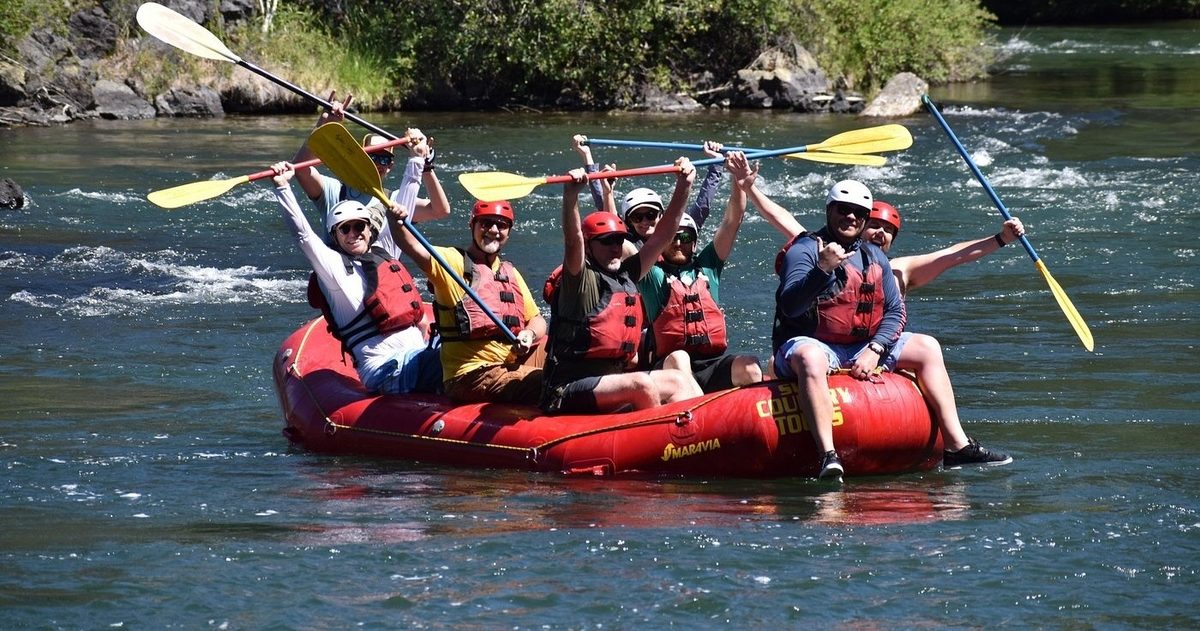
Deschutes All Day: A Family-Friendly Whitewater Run Through Oregon’s High Desert

Deschutes All Day: A Family-Friendly Whitewater Run Through Oregon’s High Desert

Raft 13 Miles of Classic Lower Deschutes Whitewater—with Lunch on the Banks

Continue Reading

Morning in Maupin arrives with the blunt honesty of desert light. The Deschutes flexes through town like a coiled muscle, green and insistent, shouldered by columns of black basalt that drink the sun. Guides unload rafts on the gravel bar, the air sweet with sage and river silt. Osprey ride thermals above the canyon rim, scanning for their next dive. You step into the current and it nudges you—polite, but firm—reminding you that everything here flows to one rhythm.

This is the lower Deschutes: 13 miles of classic western river from Maupin downstream, a 4.5-hour run threaded with splashy class III rapids and long, glassy pools that invite you to breathe. The day starts with a safety talk—the kind worth listening to. Hold the T-grip. Keep your feet up if you fall out. Paddle as a team. These are simple rules, and the river rewards those who respect them. Then the raft noses out, the current grabs hold, and the canyon begins its slow turn toward the Columbia.

Within minutes, the river shows its teeth, though it smiles while doing it. Wapinitia Quickwater warms up your paddle timing; Boxcar Rapid—named for an old railcar wrecked here—throws a bit more muscle at the boat, standing waves slapping the tubes as if to say keep it together. Basalt cliffs shadow the water, fractured like chocolate bars from prehistoric eruptions, and the desert air vibrates with the buzzy trill of cicadas. By Surf City and Oak Springs, you’re laughing in unison, the raft knifing clean lines as the guide calls forward and everyone digs. The Deschutes dares; you answer.

What makes this run special is how approachable it feels without giving up the charge of real whitewater. Families and first-timers slot in beautifully here, helped by guides who understand that a good day on the river is as much about confidence as it is about waves. Ages 6 and up are welcome (45 pounds minimum for life jackets), and the progression of rapids builds skills without overwhelming. In summer, the water runs cold while the air runs hot, a pairing that keeps the boat refreshed and the sunscreen working overtime. When the oars rest, the canyon’s quiet is its own kind of show: bighorn sheep cruising talus slopes, swallows stitching the air, the subtle perfume of rabbitbrush.

Geology does the heavy lifting for scenery. The canyon walls are a master class in the Columbia River Basalt Group—massive lava outpourings 10 to 17 million years old that sheeted across the Pacific Northwest and left the Deschutes to carve its way down through the stack. The result: neat, hexagonal columns and broken organ pipes, a playground for light and shadow. Culture runs deep here too. Look for the old railroad grade that tracks the river—a reminder of early 1900s rail wars—and remember that much of the lower river corridor flows along the ancestral lands of the Confederated Tribes of Warm Springs, whose fishing platforms still dot the lower canyon.

Midday, the rafts slide into a cobble bar and lunch emerges—simple, satisfying, and best eaten with wet hands: sandwiches, fresh fruit, snacks that taste better in river air than anywhere else. You can swim here. The current swings past with a steady push; the Deschutes is generous if you respect it. On shore, basalt pebbles warm your feet, and the wind combs the grasses. It’s the kind of pause that makes the next rapid more fun.

For those planning a trip, Maupin is the launchpad. It’s a river town in the truest sense—boats on racks, rods in truck beds, river sandals on porch steps. If you want to dial in details, consult trusted local experts for Deschutes rafting logistics and timing at https://app.advcollective.com/local-experts/undefined. They’ll help you read the season, pack smart, and pick a departure that suits your group. Expect sun exposure (bring layers you can get wet), cool water even in July, and a full-body smile by the takeout.

By the time you drift to the end, the canyon feels like it’s shared a secret. The Deschutes encourages you forward, all the way to the Columbia, but that’s not the point. The point is the rhythm you found paddling together, the quick flash of an osprey’s talons on water, the cool river breath on a hot afternoon. If a whitewater day can be both gentle and thrilling, this is it—an all-day adventure that moves at the pace of the river itself.

Planning essentials: the run covers 13 miles in roughly 4.5 hours, with class III rapids and mellow pools between. It’s suitable for first-timers and kids meeting age and weight requirements, guided by professionals who keep safety front and center. Trips run rain or shine, because the river operates on its own schedule. Pack like it’s the desert with a river running through it: sun hat, reef-friendly sunscreen, secure footwear, extra water. And when you’re ready to turn inspiration into an actual seat in the raft, consult Maupin-focused river guides and outfitters via https://app.advcollective.com/local-experts/undefined—your shortcut to doing the Deschutes right.

Duration4–5 hours
Plan your visit

Trail Wisdom

Protect Your Grip

Hold the T-grip of your paddle at all times to avoid accidental bumps and to keep strokes powerful and safe in class III waves.

Dress for the Splash

Wear quick-dry layers and secure river shoes; cotton stays cold and heavy once wet, while synthetics keep you comfortable between rapids.

Hydrate Like It’s High Desert

Even on the water, the sun is strong—bring a full bottle and sip steadily to avoid afternoon fatigue.

Listen for Commands

Follow your guide’s calls—forward, back, and hold—to keep the boat lined up cleanly for features like Boxcar and Oak Springs.

Local Knowledge

Hidden Gems

  • White River Falls State Park: a short drive north for a dramatic basalt amphitheater and thundering waterfall
  • Rail grade viewpoints south of Maupin: catch ospreys and canyon light along the historic rail corridor

Wildlife

Osprey, Rocky Mountain bighorn sheep

Conservation Note

The Lower Deschutes is protected as part of the National Wild and Scenic Rivers System. Pack out all trash, use reef-safe sunscreen, and avoid trampling streamside vegetation.

The lower Deschutes cuts through the ancestral lands of the Confederated Tribes of Warm Springs, and the canyon’s rail grade traces early 20th-century railroad competition along the river.

Seasonal Guide

spring

Best for:Cooler temps, Fewer crowds
Challenges:Cold water, Variable weather

Spring runs feel wild and fresh, with crisp mornings and feisty flows. Dress warmer and expect a mix of sun and wind.

summer

Best for:Warm air temps, Family trips
Challenges:Strong sun, Busier river

Peak season brings hot, dry days and classic splashy lines. Book early and plan for robust sun protection.

fall

Best for:Golden canyon light, Mellow vibe
Challenges:Cool mornings, Shorter days

Autumn softens the canyon palette and thins crowds. Layer up at launch and enjoy relaxed flows.

winter

Best for:Solitude, Big skies
Challenges:Cold air and water, Limited commercial trips

Off-season days are quiet and starkly beautiful, but conditions are cold and not all outfitters run trips.

Photographer's Notes

Shoot early or late to sculpt basalt columns with side light. Use a fast shutter (1/1000+) for action in rapids and a circular polarizer to cut glare and deepen greens. Secure your phone or camera with a leash, and aim for eye-level shots in the raft to capture expressions framed by canyon walls. Between rapids, grab wide canyon panoramas and look up for osprey dive sequences.

What to Bring

Secure River Footwear

Essential

Closed-toe river shoes or sandals with heel straps protect feet on cobble bars and won’t slip off in current.

Reef-Friendly Sunscreen & Sun Hat

Essential

High desert sun is intense; broad-spectrum SPF and a brimmed hat keep you comfortable on open water.

Quick-Dry Layers

Essential

Synthetic shirts and shorts (plus a light fleece in shoulder seasons) stay warm when wet and dry fast between rapids.

○

Waterproof Phone Case/Small Dry Bag

Protects your phone and snacks while keeping deck space clear; check with your outfitter about onboard storage.

Common Questions

Do I need prior rafting experience?

No. This 13-mile section features class III rapids ideal for beginners and families, with professional guides providing instruction and commands.

What are the age and weight requirements?

Participants must be at least 6 years old and a minimum of 45 pounds to properly fit a U.S. Coast Guard–approved life jacket.

Do I have to know how to swim?

Swimming skills are helpful but not required. You’ll wear a life jacket at all times and follow your guide’s instructions for any unexpected swims.

What should I wear on the river?

Wear quick-dry clothing, secure water shoes, and bring a light layer; avoid cotton. Sunscreen and a hat are crucial under the high-desert sun.

What happens in bad weather?

Trips run rain or shine. The canyon often stays warm and dry, but be prepared with layers. Outfitters may adjust logistics for safety if conditions change.

Is lunch included and can dietary needs be accommodated?

A riverside lunch is included. Contact your outfitter before your trip to note dietary preferences so they can plan accordingly.

What to Pack

Quick-dry clothing (stays warm when wet), secure water shoes (protect feet and won’t slip off), reef-friendly sunscreen and brimmed hat (high UV in open canyon), reusable water bottle (hydrate in the high desert).

Did You Know

The Lower Deschutes River was designated a National Wild and Scenic River in 1988, protecting 100 miles of its free-flowing character and canyon ecosystem.

Quick Travel Tips

Book morning departures to beat peak heat and afternoon winds; Complete digital waivers in advance to speed check-in; Lodging in Maupin is limited in summer—reserve early; Bring a dry change of clothes and sandals for after the takeout.

Local Flavor

After your run, head to Imperial River Company’s restaurant for a post-rapid burger and a cold drink on the lawn, or grab tacos and milkshakes at local Maupin spots along Highway 197. If you’re basing in Bend, celebrate with a pint at Deschutes Brewery or 10 Barrel Brewing and watch the sun catch the Cascades—river day, mountain sunset.

Logistics Snapshot

Closest airport: Redmond (RDM), about 1.5–2 hours from Maupin. Put-in: Maupin area launches along the lower Deschutes. Driving: ~45 minutes from The Dalles, ~2 hours from Portland, ~1.5–2 hours from Bend. Cell service: Spotty to limited in the canyon. Permits: Guided guests are covered by the outfitter; private boaters require a Boater Pass on the Lower Deschutes.

Sustainability Note

This river is part of the National Wild and Scenic Rivers System—pack out all trash, avoid trampling riparian plants at lunch stops, and choose mineral or reef-safe sunscreen to protect aquatic life.

Topics