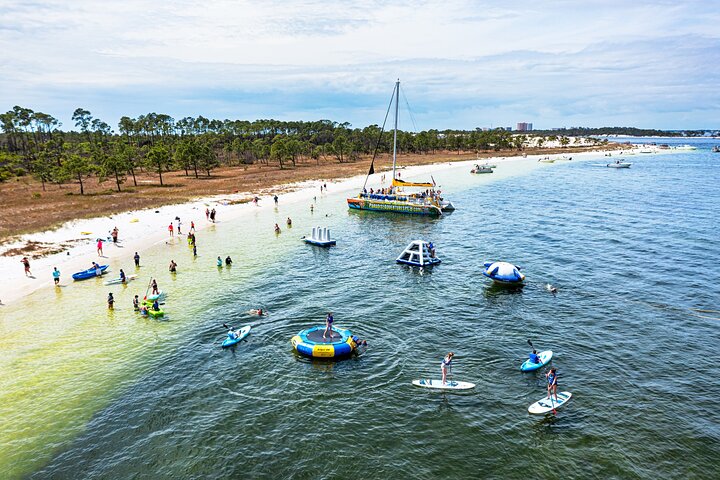
Morning light hits the Gulf like a coin you can almost pick up. The sea breathes slow and low, then, as your guide cuts the engine and points toward the backside of Shell Island, it quickens — a dare. You push the start button, the hull vibrates, and the world becomes speed and spray: the jet ski answers with a growl, the wake breaks into powder, and dolphins thread the surface like live punctuation marks. For two hours, the shoreline blurs between powder-white sand and the low, scrubby back dunes of a famously undeveloped barrier island. It’s equal parts adrenal rush and natural theater.
The Guided Jet Ski Adventure Tour out of Panama City Beach is intentionally simple: two hours, a fast-paced route that traverses the calmer tidal waters behind Shell Island and skims open Gulf stretches, and time set aside for dolphin sightings and beach exploration. Price is per jet ski (from $175), and you can ride double as long as two people don’t exceed 350 pounds. That straightforward setup keeps the focus on motion — the small, staccato beats of throttle inputs and the long, wind-stretched vistas that unfold at 30–40 mph.
Geology and history are stitched into the landscape. Shell Island is a classic Gulf barrier island, formed by shifting sands that protect the mainland from storm surge and create a mosaic of habitats: tidal flats, dune ridges, and seagrass meadows. For centuries Indigenous peoples, and later coastal settlers, used these islands seasonally for shells, fishing, and shelter. Today, Shell Island remains largely undeveloped and vehicle-free — a rare stretch where the beach still reads like a living museum of shells and bird tracks.
The human story here is also modern seaside culture. Panama City Beach is a laid-back beach town with a fishing and tourism economy that has learned to balance access and stewardship. Local guides on this tour are part marine naturalist, part captain: they read the water, know where dolphins typically feed in the morning, and understand how to thread riders through channels without damaging fragile seagrass beds.
Practical details are part of the charm. The tour lasts roughly two hours — a compact window that combines a short safety briefing, guided time on the machines, wildlife watching, and a beach stop if conditions permit. No special license is required for casual riders in most states, but operators will offer a safety orientation; listen closely. Plan for a 30–45 minute warm-up on the throttle if you’re new to personal watercraft. For experienced riders it’s an efficient, high-value way to see this slice of the Gulf that’s otherwise reachable only by boat or kayak.
Timing is everything. Morning trips usually mean glassy water and the best dolphin activity; late afternoon runs offer dramatic light as the sun softens the sand and brings cooler air. Avoid midday in high summer unless you’re prepared for strong sunlight and busier waters. Weather matters: Gulf seas can shift quickly with wind, so a calm, clear morning is ideal for an untroubled line along the island’s backside.
Safety and stewardship go hand in hand. The guides enforce sensible distance from marine mammals and beach-nesting birds and insist on sticking to marked channels to protect seagrass and submerged habitats. Respect that — it’s part of keeping this place as wild and clean as it looks.
Who should book this? People who want a short, high-energy taste of the Gulf without committing to a full-day charter. It’s approachable for adventurous beginners with a quick orientation, and it’s properly fun for experienced riders who enjoy tempo and freedom. Families with older teenagers do well here; younger children are better served on calmer, slower excursions.
Practical tips: book early in spring and early summer to lock in good morning slots; bring reef-safe sunscreen; hydrate before you go because wind and sun leach moisture fast; and stash a small dry bag for your phone and wallet. After the ride, step into town for fresh Gulf shrimp or oysters at a local shack to make the day feel complete — there’s no better way to trade sea spray for salt and butter.
Two hours is enough to feel the coast and still make plans for the rest of the day. You’ll step off the jet ski with salt in your hair, a grin you can’t quite erase, and a clearer sense of why this stretch of the Gulf keeps pulling people back: speed and solitude braided together in the same line of wake.
If you go: expect dolphins, expect to get wet, and expect to leave the island with a new respect for the fragile systems that let this shoreline look effortless. The thrill is brief, but the memory is long.