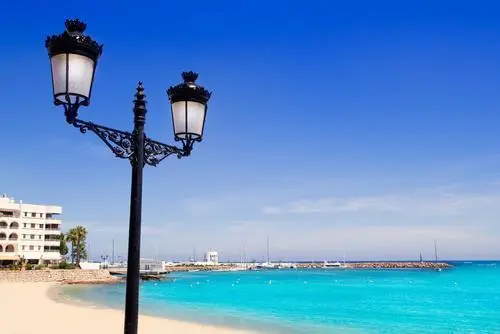
You arrive by ferry or rental car with the Mediterranean already in your bones: salt on your lips, the sun pressing warm through a late-morning haze. Santa Eulària Des Riu unfolds like a good map — compact, legible, and hospitable — its whitewashed buildings angling down to a marina that tolerantly bobs with fishing boats, pleasure craft and the occasional charter. The town feels less like a resort and more like a working place that happens to be beautiful, where the river — yes, the river — threads inland and gives the town its name and its surprisingly green heart.
Walk the river promenade and you’ll notice how the town stages itself for slow travel. Cafés spill out onto terraces, fishermen mend nets in shaded courtyards, and the pedestrianized Passeig del Parc tempts you to linger: children practice biking near palm trees, elders play dominoes under awnings, and dogs scout the edges of the square. On a clear day Puig de Missa sits over everything like a watchful guardian — a fortified church on a low hill whose white-washed steps and stone path offer a short, rewarding climb for frontal views of the coastline and the patchwork of agricultural terraces beyond.
Santa Eulària’s charm is deceptively simple. It’s not the neon of Ibiza’s night scene or the craggy cliffs of the island’s western coast; instead it’s the sensibility of place: a mix of fishermen, bakery ovens, bohemian cafés and summer visitors who come for the calmer side of the White Isle. The river that gives the town its name — Riu de Santa Eulària — is one of the island’s distinguishing features. Where Ibiza otherwise feels Mediterranean-arid, the river valley supports a ribbon of riparian trees and cool-shaded walks that feel oddly provincial for an island famous for its clubs.
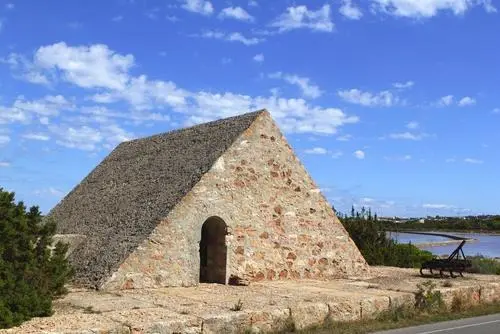
History is visible in the town’s compact architecture and in Dalt Vila’s far-off silhouette, the UNESCO-inscribed citadel that appears on many day trips from the port. Santa Eulària itself registers centuries of layered uses: Moorish agricultural terraces, 18th- and 19th-century farmhouses, salt pans that once fed the island’s economy, and village squares that hosted political debates, markets and festivals. The market circuit — from the daily fish market to the bohemian Hippy Markets at Es Canar and Las Dalias on Wednesdays and Saturdays — continues a tradition of commerce that is equal parts livelihood and spectacle.
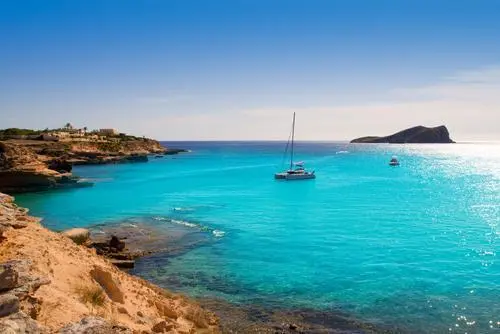
Geology is subtle here. The slopes around the town are limestone and marl, folded into low ridges that give way to sandy coves and pebbled beaches. Offshore, Posidonia meadows — underwater seagrass beds vital to the Mediterranean ecosystem — cradle juvenile fish and keep the water startlingly clear. That clarity is one reason Santa Eulària and the surrounding coast are popular for snorkeling, stand-up paddleboarding and family-friendly swimming; the seabed shelves gently and the currents are generally forgiving.
If you’re planning a day in Santa Eulària, think about layering experiences. Start with coffee and an ensaïmada — a Mallorcan pastry adopted across the Balearics — on the promenade, then stroll up to Puig de Missa for a compact history lesson and a panoramic photo. Walk along the river path to see rural houses and old stone bridges; this stretch is flat, shady and accessible, suitable even for travelers with reduced mobility. If your schedule allows, join a half-day or full-day island tour to pair Santa Eulària with other highlights: salt pans at Ses Salines, the artistic village of Santa Gertrudis, and the dramatic views of Dalt Vila.
For travelers arriving by cruise ship, shore excursions that include Santa Eulària are designed to maximize what’s possible in a single day: a guided walk through the town, free time to browse boutiques or enjoy a seaside lunch, and enough buffer to ensure you’re back at the ship on time. Private tours offer the opposite: slower mornings, detours to lesser-known coves and markets, and a guide who can tailor the route to your interests — food, history, or photography.
Practicalities matter here: footwear should be comfortable for cobbled streets and the occasional steep stair. Midday sun is strong between June and September; a hat and sunscreen make long afternoons far more enjoyable. Water is clean and widely available, but if you plan to rent a paddleboard or swim out to snorkel, bring a small dry bag for your phone and supplies. Public transport is dependable but limited outside peak season; renting a car opens up the island’s quieter bays.
Santa Eulària is a town that rewards curiosity. Stay for an afternoon, and you’ll find the rhythm; stay for a week, and you’ll discover how local life folds into seasonal festivals and market days. It’s a place that invites a different Ibiza itinerary: one that pairs shoreline strolling, historical curiosity and a river’s slow insistence, perfect for travelers who want a quieter counterpoint to the island’s world-famous nightlife.
If you go: time your visit for shoulder seasons (May–June or September–October) to enjoy warm water without the crowds. Aim for early mornings to see the fishermen untangling nets and late afternoons for the light on Puig de Missa. And wherever you walk, remember the town’s two constant companions: the Mediterranean, which tempts you toward bright-water adventures, and the river, which keeps the inland life green, patient and very much alive.