By midmorning the vans have already cut through a belt of low cloud and rubber plantations, and the air tastes of wet earth and lemongrass. You step out in Phang Nga province, where limestone teeth pierce the skyline and the Song Phreak River threads a cool, winding path through jungle. The river doesn’t beg for attention; it dares it. Guides in neon helmets check straps, joke to loosen the jitters, and push the raft toward the first swell. What follows is a pleasantly relentless alternation of adrenaline and quiet—rapids that shove you forward, and river-side clearings where the forest leans in to watch.
This is a day that stacks motion on motion: white-water paddling through class II–III drops, a flying-fox zipline over canopy gaps, a shaded jungle trek and, later, a detour to Suwan Khuha—better known as the Monkey Cave Temple—where a reclining Buddha waits in a limestone chamber populated by inquisitive macaques. The itinerary balances thrills with texture: it’s not just about the rafting. It’s a survey of Phang Nga’s raw geology, its humid lowland rainforest, and the small cultural moments that make Southeast Asian river trips memorable—tea with locals, temple incense, and the simple communal satisfaction of sharing a raft.
Geology and ecology are the trip’s silent narrators. The karst towers around you were carved over millions of years by acids in rainwater dissolving the bedrock; their fluted faces funnel clouds and host pockets of rainforest, vines and epiphytes. The Song Phreak River behaves like a living boundary: in low flows it’s a reflective ribbon hiding limestone shelves, in higher season it becomes playful and, occasionally, emphatic. Birds—kingfishers darting like blue darts, herons patient as statues—occasionally break the raft’s soundtrack of paddles and guide calls.
There’s also history embedded in this landscape. Small communities in Phang Nga have long relied on rivers and seasonal rainfall for food and transport; nearby caves like Suwan Khuha have functioned as religious sanctuaries for generations. The temple’s reclining Buddha is both a cultural waypoint and a reminder that this isn’t a remote wilderness untouched by people—rather a lived landscape shaped by human and natural rhythms.
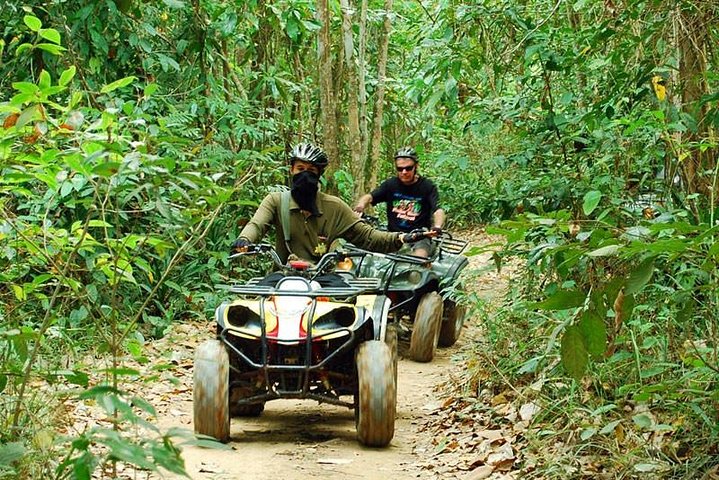
Practicalities are straightforward, which is part of the appeal. The full experience runs about 7–8 hours (the operator lists 420–480 minutes), including round-trip hotel transfers from Krabi, safety briefings, and optional add-ons like ATVs or longer jungle walks. Guides provide life jackets and helmets; experience levels range from total novice to practiced paddler, so families and mixed-ability groups find this itinerary inviting. Price starts from the low-to-mid range (around USD 39.73 at the time of publication), making it an accessible full-day push of adventure.
Why go? Because it’s efficient. In the course of one day you experience short, satisfying rapids, an aerial rush on a flying fox, and a cultural stop that feels regionally distinct. For travelers based in Krabi, it’s a compact way to experience inland Phang Nga without committing to multi-day trekking or packing specialized river gear. For families, the mix of activities keeps younger adventurers engaged; for solo travelers or couples, the group dynamic in the raft—cheering, synchronizing paddles, laughing when the next surge hits—creates easy camaraderie.
A candid note on challenge and preparation: the rapids are fun, not extreme—expect a steady workout of paddling and bracing rather than technical white-water tactics. The humidity and tropical sun will sap energy quickly; bring hydration and sun protection. Guides are experienced and safety-focused, but basic swimming competency and the ability to follow directions are required for a confident, comfortable day.
If you’re planning this trip, think of it as a curated sampler of Phang Nga’s best hits: river, cliff, canopy, cave, and culture. Time your trip for the dry season (roughly November–February) for clearer skies and calmer access points; the hot months intensify sunshine and humidity, and the monsoon brings higher flows that change the river’s personality.
At the end of the day, sitting on the van’s bench seat with wet hair and a sunburned nose, it’s easy to tally the wins: the sudden collective whoop as the raft surges, the surprising quiet of a river bend where only the drip of leaves answers you, the odd cheeky macaque checking pockets at the temple. It’s an efficient, well-paced blend of thrills and place-making—the sort of single-day adventure you leave thinking: I could have stayed longer here.
Want to squeeze more out of a Krabi-based itinerary? Pair this day trip with a bay cruise to see the karsts from water level, or spend a night in a small riverside guesthouse to hear the forest sing with the rain. Whatever you choose, come ready: the river asks for energy and attention, and it rewards both.