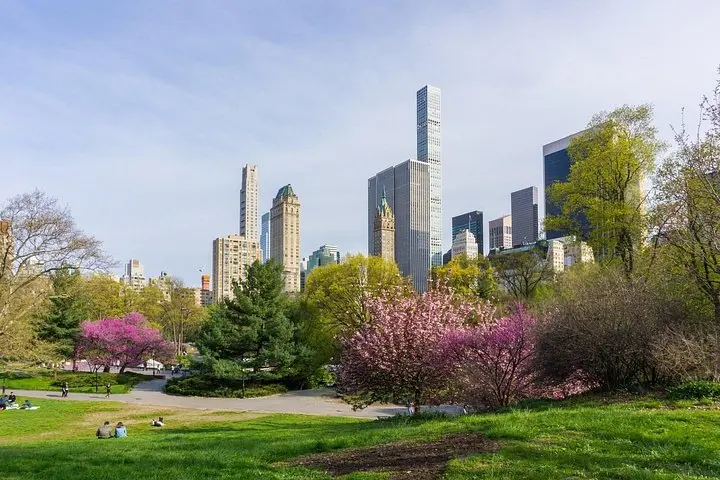
You round a bend in the promenade and the city lets go for a moment. Traffic recedes to a distant rumble; the Hudson opens like a slow-motion theater, barges drift and gulls argue with the current. On a late-afternoon walk through New York City Riverside Park, the famous skyline is a framed afterthought—glittering glass, brick and stone stacked behind the park’s canopy of London plane trees. Below, the river shifts from pewter to brass as the sun drops.
Riverside Park is not a destination in the alpine sense; it’s a city spine, five miles of riverfront that asks you to slow down. It was conceived in the century of grand parkmaking—Frederick Law Olmsted and Calvert Vaux’s sensibilities left fingerprints here—and later shaped by twentieth-century projects to stitch green space to transportation and housing. The park’s bones are familiar: broad promenades, rolling lawns, quiet playgrounds and monuments. Its personality comes from the Hudson: tides that pull and push, salt air that sharpens your step, and the way the skyline catches late light.
Geologically, you’re walking the edge of the Hudson River Estuary—an interface where freshwater meets the Atlantic’s salt and where currents and tides sculpt the shoreline. Trees cling to restored slopes, native shrubs are making a comeback in patches curated by volunteer stewards, and rangers have been busy softening hard edges with plantings designed to absorb stormwater. Those changes aren’t just aesthetic. They’re part of a broader resilience story: the city’s fight with rising water levels and a push to make public green spaces part of its climate adaptation toolkit. If you want to see resilience in action, pair your walk with the AIANY Climate Change Tour aboard a restored 1920s-style yacht—the ride gives you a different vantage on the same challenges you feel along the park’s edge.
Culturally, Riverside Park is Upper West Side living room and history lesson: plaques and statues mark the lives of residents, activists, and veterans; community gardens push out tomatoes and neighborhood pride; small groups practice tango or tai chi in a quiet lawn. The park also nods to New York’s borough-wide identity—take a longer excursion and the New York City Tour of Contrasts by 4 Districts gives context to the city beyond the river, showing how neighborhoods across Manhattan, the Bronx, Queens and Brooklyn relate back to these shoreline arteries.
For the visitor, Riverside Park is eminently approachable. The path runs roughly 59th Street to 158th Street—about five miles (8 km) end to end—with multiple access points, subway stops nearby and abundant benches for pause. Terrain is forgiving: paved promenades, crushed stone paths, short flights of stairs, and a few steeper bluffs where the park rises from the water. Elevation changes are modest—think short climbs around 40–60 feet rather than anything technical.
Plan it as a neighborhood hike, a photography session, a morning run or an afternoon of people-watching. Start early for light and fewer people; late afternoon casts the Hudson in the warm tones photographers crave. If cycling, stay on designated lanes and be alert at crossings; Riverside links to the Hudson River Greenway, a continuous bike route that runs much of Manhattan’s west side.
Practicalities: bring layered clothing—the river breeze can make warm days crisp—good walking shoes for varied surfaces, and a refillable bottle; water fountains are present but not ubiquitous. If you’re visiting in spring, cherry trees bloom in pockets and volunteer garden plots explode into color. Summer fills the park with families and festivals. Fall is when the plane trees flare in yellow and copper, and winter brings that stripped-back urban clarity, the river’s motion emphasized against bare branches.
Safety and etiquette are simple: leash and scoop for dogs, respect cyclist right-of-way on designated paths, and avoid trampling planted areas. If you’re curious about the city’s environmental future, book the AIANY Climate Change Tour to see the shoreline from a marine perspective—the contrast between what you walk past and what the river reveals from a yacht is instructive. For a broader civic primer, the Tour of Contrasts visits four boroughs and helps place Riverside Park in the city’s larger social and architectural tapestry.
Hidden details reward patient walkers: an Eleanor Roosevelt memorial tucked into a shaded nook; the Soldiers’ and Sailors’ Monument that speaks to the city’s Civil War veterans; small, well-maintained community gardens with eccentric plantings and friendly volunteers. Birders should have their binoculars ready—waterfowl and raptors use the park as a corridor—and photographers will find endless frames where human geometry meets river movement.
Riverside Park is best experienced on foot. Walk a segment, linger on a bench, climb the stairs for a bluff view, then cross a street to a local café or brownstone deli for a sandwich to-go. It’s the kind of urban green space that rewards repetition: return in different seasons and the park’s moods shift—from spring’s hummed promise to fall’s crisp, cinematic sweep. Whether you come for a focused run, a family afternoon, a quiet hour with a book, or to survey the city’s environmental future from a dockside yacht, Riverside Park asks for modest preparation and, in return, gives a clear city perspective: how a great river heals, divides, and ultimately defines a place.