Saddles in the Star Pines: Riding the Flame Fern Trail Above Asheville

Saddles in the Star Pines: Riding the Flame Fern Trail Above Asheville

A gentle climb, a pine cathedral, and a guided ride that finds Asheville’s quiet side.

Continue Reading

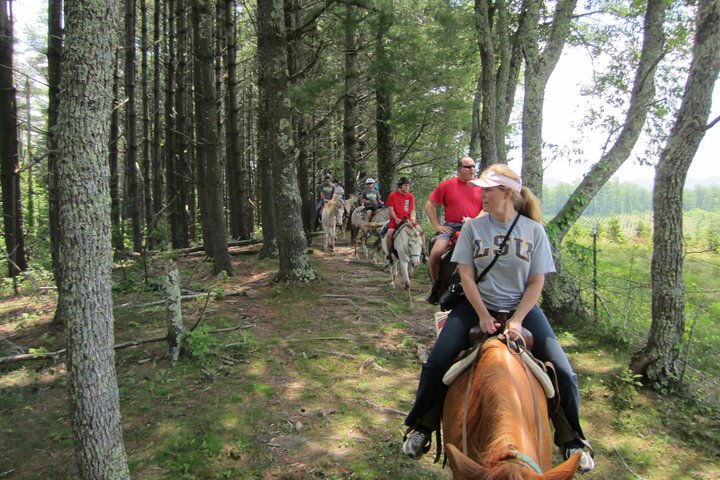
The horse steps lightly over duff and needles, ears twitching toward birdsong as the trail narrows and the forest changes character. One minute you’re under a cathedral of hardwoods where flame azaleas ignite the understory in late spring, the next you’re threading into a white pine stand so straight and tall it feels staged—like the set designers from a galaxy far, far away left it behind. The Flame Fern Trail lives up to its name, matched by the steady cadence of hooves and the gentle confidence that comes with a good guide and a sure-footed horse.

This is mountain country, just outside Asheville where the Blue Ridge hum rises and falls like a breath. The horses move as if they know the place better than any map. They read the slope, lean into the grade, and set the pace that your legs, lungs, and sense of time soon learn to follow. On a 75-minute loop, the ride climbs modestly, rolling through mixed oak and hickory before sliding into cooler shade—ferns thick as carpet, pines pouring resin-sweet air, and the occasional whisper of wind teasing the banks of needles. The forest does more than stand—it guides, nudging you around bends and daring you to look up.

It helps to know what you’re riding through. These ridges are part of the ancient Appalachians—weathered, folded mountains older than the Rockies and as storied as any American landscape. The flame azalea here—Rhododendron calendulaceum—is a southern Appalachian original, its blossoms firing off in hues from tangerine to ember between late May and July. The geology beneath your saddle has been sculpted for hundreds of millions of years, and the culture around you is deeply tied to horses: farm companions, mountain messengers, and more recently, trail partners for those who want to see the woods without outrunning them.

Asheville’s outdoor identity is easy to love and hard to exhaust. Just beyond town, private and public trail systems ribbon through the hills, connecting hardwood coves, soft pine groves, and shaded creeks where salamanders keep their own counsel. Guided horseback trips like this one lower the barrier to entry, especially if your horse experience starts and ends with childhood pony rides. The guides match riders to horses thoughtfully—steady, responsive animals that will test your attention but won’t punish tentative cues. Expect a quick orientation in the corral: how to sit balanced, how to hold the reins, how to ask for a turn or a stop. The horses do the heavy lifting—your job is to stay present and let the forest’s slow rhythm become yours.

Awesome 30 Mile Views Out to Infinity! Majestic!

On the climb, the mountain asserts itself gently. Roots cross the path like old stories. Ferns tilt and listen. In a clearing, the azaleas flare—if you’re lucky and in season—and the whole trail seems to take a deeper breath. Even without the blooms, this loop is a study in textures: bark ridges snagging sunlight, moss softening stone, pine trunks marching in ranks that pull your eye to a vanishing point. In summer, heat stacks in the hollows, but the pines keep a cool head. In fall, color drains downhill in waves—gold, rust, cinnabar—riding the same routes as wind. Winter strips the forest down to its architecture, and the horses, unfazed, step through the pale light like they own the place.

There’s local history in the soil, too. Not far from here, the nation’s first school of forestry took root on the Biltmore Estate in the 1890s under Carl Schenck, a seed that helped lead to the establishment of Pisgah National Forest in 1916. The logging boom that once roared through these mountains is long gone, replaced by a more careful relationship with the land. Today, horse trails are managed with erosion and habitat in mind; guides steer clear of soft, post-storm sections and ask riders to stay centered on the path to protect fragile edges.

In the Fern Forest

The best part of the Flame Fern ride is how approachable it feels. You’re not committing to an all-day push; this is a concentrated hit of mountain quiet with just enough rise and fall to wake up your hips and core. Beginners can relax into it. Families get a shared memory that isn’t forced. Seasoned riders still get the satisfaction of a sure stride under them and a few moments where the world narrows to trail, horse, trees, breath.

Practical matters? Wear long pants and closed-toe shoes with a small heel if you have them—sneakers work in a pinch, but boots are best. Bring water in a hands-free bottle you can secure, and leave the big backpack behind. A light layer pays dividends; mountain microclimates shift quickly. And plan your day around it: early mornings offer cool, quiet conditions, while late afternoons soften the light and open the shadows for photos. Shoulder seasons are magic—spring for blooms, fall for color—but summer stays lush and winter’s clarity has its own charm.

Through the Fern Forest

When the loop closes, the horses know it and lengthen slightly, the barn drawing them like a magnet. You’ll swing a leg over, dismount, and feel that surprising heaviness in your knees, a reminder that you’ve been moving with another living creature over uneven ground. It’s a good recalibration. The forest has said its piece. The pines have kept their counsel. And you’ve threaded a little story through one of the oldest mountain ranges on earth, guided by a trail that asks only that you meet it at a horse’s pace.

Duration1–1.5 hours
Group Size1–8 Guests
LanguagesEnglish
Rating4.6 (78 reviews)

Not recommended for pregnant travelers

Not recommended for travelers with spinal injuries

If you have a cast or a brace of ANY type on any part of your body, "EVEN IF the doctors says you can", you will not be permitted to ride

If you have allergies to horses, you will not be permitted to ride.

Plan your visit

Trail Wisdom

Dress the part

Wear long pants and closed-toe shoes or lightweight boots; bare ankles and open toes don’t mix with stirrups or brush.

Hydrate hands-free

Bring a small, secure water bottle you can stow; you’ll want both hands on the reins for short stretches.

Mind the margins

Keep your horse centered on the trail to reduce erosion and avoid brushing fragile ferns and azaleas.

Sun and bugs plan

Apply sunscreen and insect repellent before you mount—once you’re riding, re-applying gets tricky.

Local Knowledge

Hidden Gems

  • Craggy Gardens on the Blue Ridge Parkway for peak flame azalea blooms in late spring
  • Beaver Lake Bird Sanctuary for a quiet post-ride leg stretch and birdwatching

Wildlife

White-tailed deer, Pileated woodpecker

Conservation Note

Stay centered on the trail and avoid riding during saturated conditions to protect soils and sensitive understory plants like ferns and azaleas.

Asheville helped launch American forestry; Carl Schenck’s Biltmore Forest School (1898) influenced the creation of Pisgah National Forest in 1916.

Seasonal Guide

spring

Best for:Flame azalea blooms, Cooler riding temps
Challenges:Variable rain showers, Occasional muddy sections

Late spring brings the azalea show and fresh greens; trails can be damp, so expect a slower, careful pace.

summer

Best for:Lush forest shade, Long daylight hours
Challenges:Heat and humidity, Biting insects in low areas

Morning and late-afternoon departures are most comfortable, with dense canopy providing reliable shade.

fall

Best for:Peak foliage color, Stable weather
Challenges:Cool mornings, More visitors on weekends

Crisp air and bright color make for prime riding; bring a light layer for the start and shed as the sun warms.

winter

Best for:Quiet trails, Long-range views through leafless forest
Challenges:Cold snaps, Potential icy patches

Expect stark beauty and fewer crowds; rides may be rescheduled during severe weather for safety.

Photographer's Notes

Ride early or late for soft light filtering through the pines. Use a fast shutter speed (1/500+) to freeze motion from the saddle, and shoot bursts when the horse pauses. Wide lenses capture the pine symmetry; a 50mm frames rider-and-horse portraits cleanly. Watch for dappled light—expose for midtones to keep needles from blowing out.

What to Bring

Lightweight riding boots or sturdy closed-toe shoes

Essential

A small heel helps keep your foot properly positioned in the stirrup and protects toes from brush.

Long, breathable pants

Essential

Prevents saddle rub and protects legs from fern fronds and low branches.

○

Packable wind layer

Mountain breezes can feel cool in shaded pine stands, especially in spring and fall.

○

Insect repellent

Keeps gnats and mosquitoes at bay when riding near damp, shaded sections of trail.

Common Questions

Do I need prior horseback riding experience?

No. This guided ride is beginner-friendly, with a short orientation before you hit the trail and calm, responsive horses.

Is there a weight or age limit for riders?

Most outfitters set weight and age guidelines for horse and rider safety. Confirm current limits when booking and share accurate details.

What happens if it rains?

Light rain rides typically proceed; heavy rain, thunderstorms, or unsafe trail conditions may prompt rescheduling for safety.

What should I wear and bring?

Wear long pants and closed-toe shoes; bring a secured water bottle, sunscreen, and bug spray. Helmets are provided or available on request.

Can I bring a camera or phone on the ride?

Yes, but keep it secure and use a wrist strap or zipped pocket. Only take photos when your horse is standing and your guide says it’s safe.

Are restrooms available at the trailhead?

Basic facilities are typically available before you mount; there are no restrooms on the trail itself.

What to Pack

Long pants and closed-toe shoes (comfort and safety in the saddle); Lightweight layer (shade can feel cool even on warm days); Water bottle with secure lid (hydration without juggling reins); Sunscreen and bug spray (exposed clearings and summer gnats).

Did You Know

The Blue Ridge Parkway—skirting Asheville—is the most visited unit in the U.S. National Park System, drawing over 15 million visitors in some years.

Quick Travel Tips

Book morning departures in summer for cooler conditions; Arrive 20–30 minutes early to match with a horse and gear up; Leave valuables in your car—use zippered pockets for essentials; Plan a post-ride stop in Asheville for food and breweries within a 20–40 minute drive.

Local Flavor

Post-ride, head to South Slope in Asheville: Burial Beer Co. for a hop-forward pint and a sandwich, or Buxton Hall Barbecue for wood-smoked Carolina pork and glazed hushpuppies. Craving something lighter? White Duck Taco Shop along the French Broad River pairs creative tacos with a mellow riverside vibe.

Logistics Snapshot

Closest airport: Asheville Regional (AVL). Trailhead: within 20–45 minutes of downtown Asheville by car. Cell service: spotty in hollows; download directions before you go. Permits: not required for guided rides; helmets typically provided or available on request.

Sustainability Note

Horses can churn soft soils—avoid riding immediately after heavy rain, stay centered on the trail, and pack out all trash to keep understory plants thriving.

Topics

Included

  • Local guide
  • Use of all equipment (horse, tack and helmet)
  • Ponchos or Rain coats provided for inclement weather
  • Horseback Ride (based on option selected)
  • Majestic Trails with a variety in terrain from 4200 feet elevation at the top to 3400 feet in the valley
  • Helmets are mandatory for all riders
  • Safety orientation

Good to Know

  • Not recommended for pregnant travelers
  • Not recommended for travelers with spinal injuries
  • Travelers should have at least a moderate level of physical fitness
  • Plan an extra 50-60 minutes, in addition to your trail time, for your safety and training program.
  • Please Note, This Starts at your stated trail time, not before it. Your Trail immediately follows your safety program.
  • Your Safety Program consists of a video or live demonstration covering the horse's training, safety and horse personality.
  • You are given a chance to try your horse in the ring before departing. If needed, your horse can be changed before your trail.
  • All passenger ages must be advised at time of booking
  • Closed-toe shoes are required. NO ROUGH SOLED BOOTS/SHOES.
  • Long pants recommended
  • Children under 12 must be accompanied by an adult
  • Use of helmet mandatory for under 18 years old
  • Operates in all weather conditions, please dress appropriately
  • If it looks like rain, bring an extra T-shirt and towel
  • You will try your horse out in the ring before going on your trail
  • The Safety Program Starts at your stated trail time, not before it. Your Trail immediately follows your safety program
  • If you have a cast or a brace of ANY type on any part of your body, "EVEN IF the doctors says you can", you will not be permitted to ride
  • If you have allergies to horses, you will not be permitted to ride.