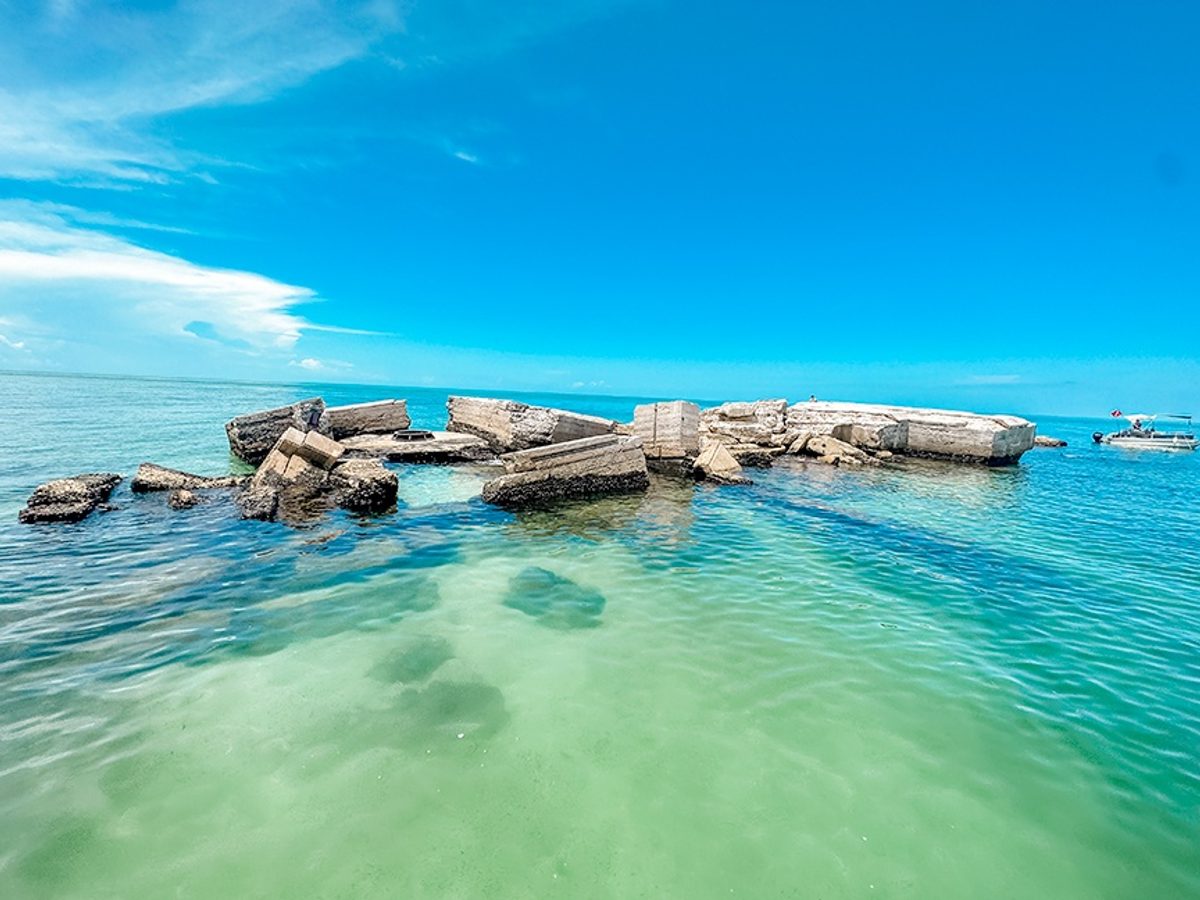
Saltwater Playground: Snorkeling Egmont Key’s Hidden Forts and Flats

Saltwater Playground: Snorkeling Egmont Key’s Hidden Forts and Flats

Island-hopping by tri-toon to ruins, reefs, and sugar-sand shoals—customized for your crew.

Continue Reading

Morning rolls in soft and glassy across the mouth of Tampa Bay, the Gulf stretching out like a silver-blue runway. The tri-toon’s deck hums, and the bow parts a path through pelicans that idle on channel markers like sentries. You point toward a thin green smudge on the horizon—Egmont Key—its white lighthouse peeking over sea grapes and dunes, the island waving you in with a quiet, old-Florida charm. The current nudges the hull as if to say, Let’s go.

This is the sweet spot of a four-hour, customizable island-hop to Egmont Key, Passage Key, Jewfish Key, and Beer Can Island—an all-ages saltwater sampler where choice is the luxury. The charter runs up to six passengers (from $649), and the vibe is simple: your day, your pace, your mix of snorkeling, paddle boarding, shelling, drifting on a giant water mat, or watching dolphins shoulder-surf your wake. It’s the kind of experience that dares you to unplug and move with the tides. For local guidance, and to book the crew that knows these waters best, tap over to the Snorkel Egmont Key Florida local experts page.

Egmont’s history adds texture to the adventure. First lit in 1858, the lighthouse still keeps vigil as the island’s sandbars and channels rearrange themselves with every storm. Walk the shoreline and you’re tracing the brick roads of Fort Dade, a Spanish–American War outpost that once housed a small town—barracks, a hospital, even tennis courts. Look closely and time reveals itself in the ruins that the sea tugs at, patient but insistent. Gopher tortoises shuffle the dunes; terns patrol the sky. The island is both State Park and National Wildlife Refuge, which means the environment calls the shots. You follow posted closures, give nesting birds space, and push off to bob over grass flats where spotted seatrout hover and rays slip past like shadows with wings.

Snorkeling here feels like Florida in lowercase letters—unfussy and direct. On calm days, visibility can surprise you, especially lee-side of the Egmont shoals and around the jetties where calmer pockets form. The Gulf’s light is honest; a polarizing lens won’t lie about what’s beneath: turtle grass meadows, shell-strewn lanes, and the occasional sandy patch perfect for anchoring. Slide in with a mask and the water greets you cool at first, then warm, the buoyancy lifting you as parrotfish peck at limestone and hermit crabs wander, tiny landlords looking for an upgrade. When the tide picks up, it nudges you along, a soft conveyor that invites a lazy drift. The water has a voice here; it whispers forward.

Because the itinerary is yours, you can swing by shallow sandbars to paddle board or unfurl the giant inflatable raft, or angle toward Beer Can Island’s driftwood sculptures for a quick photo run from the waterline. On the right tide, the sand is sugar and the blues pop like a painter went heavy on saturation. If conditions align, your captain may sidle the edges of Passage Key—an important bird sanctuary—and keep a respectful distance while you float near the shoal watching the green-blue gradient sharpen under the sun. For the best route choices and current conditions, ask your captain at booking or browse advice from Egmont Key snorkeling experts.

Logistics are seaborne-simple. Premium tri-toon boats give you space to spread out and stash gear. Cold water, soda, and ice are onboard; you can bring your own snacks and a small cooler with beer, wine, or champagne. Snorkel sets, paddle boards, underwater scooters, fishing poles—this is a floating toy chest with a USCG-approved safety kit and Bluetooth speakers (your playlist, the Gulf’s backdrop). Bring towels, a hat, sunglasses, and shoes that don’t mind a soak. Skip spray sunscreen—it drifts, slicks the deck, and isn’t reef-friendly. Use lotion-based reef-safe sunscreen instead. For a full checklist, plus booking details, see the Egmont Key boat charter overview.

Timing matters on the Gulf. Mornings often bring calmer seas and softer light. Summer ushers in midday heat and the possibility of pop-up storms; fall can offer warm water with fewer crowds; winter trades bathwater temps for crystal air and a brisker surface. Your captain will read the wind and tides; let them choreograph the dance. If the weather refuses to cooperate, charters here typically reschedule or refund—simple, fair, and focused on safety.

A few small choices amplify the day. A rash guard beats sunburn and jellyfish sting anxiety. A polarized pair of sunglasses turns the surface into a window. Water shoes will make quick landings more comfortable. A dry bag saves your phone from a Gulf baptism. Respect the closures: parts of Egmont and Passage Key protect nesting birds and sea turtles—your restraint keeps the place wild. Pack out what you pack in. The island has been losing shoreline for decades; erosion means the Gulf takes as much as it gives.

Return runs feel different. The same channel markers now carry stories—of a manatee exhale like a soft bass note under your board, of dolphins that threaded your bow wave, of gulls laughing at you when you missed that perfect shell. The tri-toon purrs home and Tampa Bay opens like a stadium. Back at the dock, the land suddenly feels heavy. That’s how you know you had a good water day.

This is Florida distilled: light, tide, and time. A charter that lets nature set the rhythm and your crew pick the chorus. When the Gulf says go, answer. And when you’re ready to plan, keep a tab open for the Snorkel Egmont Key Florida page—local knowledge is the difference between a nice outing and a day you’ll replay all year.

Duration4 hours
Plan your visit

Trail Wisdom

Aim for a morning departure

Winds and boat traffic are typically lighter early, improving water clarity for snorkeling and paddle boarding.

Use reef-safe lotion sunscreen

Sprays drift and make decks slick; lotion formulas protect skin without coating the water or gear.

Follow sanctuary signs

Respect closures at Egmont and Passage Key—nesting birds and sea turtles depend on these quiet zones.

Pack a dry bag for devices

Between spray, swims, and sandy landings, a small dry bag prevents phone and camera surprises.

Local Knowledge

Hidden Gems

  • Fort Dade’s brick roads and gun batteries on Egmont’s north end
  • Driftwood forest views from the water at Beer Can Island (Greer Island)

Wildlife

Bottlenose dolphins, Manatees

Conservation Note

These islands protect nesting seabirds, sea turtles, and gopher tortoises. Land only in designated zones, keep a wide berth from wildlife, and pack out all trash.

Egmont Key’s lighthouse has operated since 1858, and the island hosted Fort Dade during the Spanish–American War, complete with a small, self-contained town.

Seasonal Guide

spring

Best for:Calmer seas, Migratory bird activity
Challenges:Cold fronts can bring chop, Water temps still warming

A sweet shoulder season with improving visibility and lighter crowds; bring a light layer for breezy runs.

summer

Best for:Warmest water, Long snorkel sessions
Challenges:Afternoon thunderstorms, High UV and heat

Prime snorkel temps and lively marine life; plan early departures and hydrate often to beat heat and storms.

fall

Best for:Warm water without peak crowds, Glassier mornings
Challenges:Hurricane season variability, Occasional jellyfish

Conditions can be stellar with flexible dates; monitor forecasts and bring a rash guard just in case.

winter

Best for:Clear, crisp air, Active dolphins
Challenges:Cooler water (wetsuit helpful), Northerly winds can be brisk

Shorter, bright days with lower humidity—great for photos; choose leeward snorkeling spots for comfort.

Photographer's Notes

Go early for buttery light and calm water. Use a circular polarizer to cut glare and see through the surface; set a fast shutter (1/1000) for dolphins in the bow wave. Underwater, shoot with the sun at your back, get close to reduce backscatter, and use burst mode for darting fish. A red filter helps color at depth.

What to Bring

Rash guard or swim shirt

Essential

Sun protection and light sting coverage extend your time in the water without constant sunscreen reapplication.

Polarized sunglasses with retainer strap

Essential

Cuts surface glare so you can spot rays, turtles, and sandbars, and the strap prevents overboard mishaps.

○

Water shoes

Protects feet on shell-strewn landings and makes quick hops to shore more comfortable.

○

Personal mask/snorkel (optional)

Gear is provided, but bringing your own ensures a perfect fit and fog-free comfort.

Common Questions

Is snorkel gear included?

Yes—snorkels, masks, and additional water toys like paddle boards and underwater scooters are provided.

Can we bring alcohol on board?

Adults may bring beer, wine, or champagne in a small cooler. Glass is fine to keep onboard; drink responsibly and avoid red liquids.

Are there age restrictions?

All ages are welcome with responsible adult supervision; life jackets are available for every passenger.

What if the weather turns bad?

Charters will attempt to reschedule; if that’s not possible, you’ll receive a full refund for weather-related cancellations.

Is there a restroom on the boat?

Some tri-toons do not have an onboard restroom—confirm at booking and plan a pre-departure stop.

Can we go ashore on all the islands?

Landing is allowed at designated areas on Egmont and Beer Can Island; Passage Key is a protected bird sanctuary and typically off-limits. Your captain will guide you.

What to Pack

Reef-safe lotion sunscreen to protect skin and sea life; rash guard for sun and light sting protection; polarized sunglasses with strap for glare-free spotting; compact dry bag to keep phones and keys safe.

Did You Know

Egmont Key’s lighthouse has guided mariners since 1858, and the island’s Fort Dade once included more than 70 buildings connected by brick roads—many still visible today.

Quick Travel Tips

Book an early slot for calmer seas; check red tide and wind forecasts before your day; bring cash or a card for post-trip food and tipping the captain (15–20% is customary); avoid spray sunscreens—they’re prohibited onboard and can damage gear.

Local Flavor

Post-dock, head to Pass-A-Grille for gulf-front grouper sandwiches at The Hurricane or snag peel-and-eat shrimp at the Rod & Reel Pier on Anna Maria. Craft beer fans should detour to Green Bench Brewing in St. Petersburg, and for a waterfront sunset toast, Doc Ford’s on the St. Pete Pier keeps the island mood going.

Logistics Snapshot

Closest airports: TPA (Tampa International) and PIE (St. Pete–Clearwater). Typical departures from St. Pete Beach or nearby marinas; plan a 15–30 minute drive from downtown St. Petersburg. Cell service is decent nearshore but can fade around Egmont; download maps. No special permits required for the charter; observe posted closures on wildlife refuges.

Sustainability Note

Egmont and Passage Key are critical habitats for nesting seabirds and sea turtles—idle slowly near shorelines, anchor on sand (not seagrass), use reef-safe sunscreen, and pack out every scrap.

Topics