Dress in dark, non-reflective layers
Dark clothing helps reduce window glare in your photos, and layers keep you comfortable in the cabin’s variable temperatures.
Flight for up to 3 to Lake Lanier • $269 per person
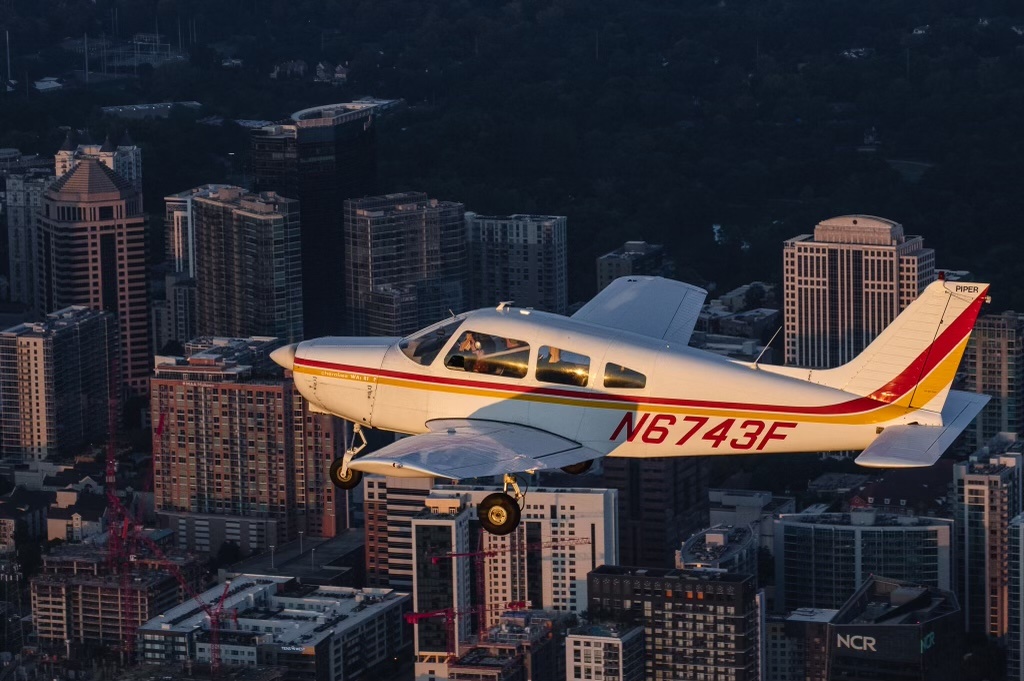
Continue ReadingThe propeller blurs into a silver halo as the Piper Cherokee noses toward the runway at DeKalb–Peachtree Airport. The wind nudges the wing—impatient, insistent—urging you skyward. Then the wheels lift, the city slips its grip, and Atlanta unfurls below in neat geometry: tree-lined streets, the meander of the Chattahoochee, the glassy stack of the Midtown skyline catching sunlight like a prism. Within minutes, the ground becomes storybook small. The Cherokee settles into its stride, steady and enclosed, a comfortable capsule for three as it banks north toward water.
Dark clothing helps reduce window glare in your photos, and layers keep you comfortable in the cabin’s variable temperatures.
Morning flights often offer smoother air and cleaner visibility, ideal for photographers and first-time flyers prone to motion sensitivity.
Before departure, share must-see targets (Lake Lanier, Stone Mountain, your neighborhood) so the pilot can plan an efficient, safe loop.
Pressing a rubber lens hood to the window virtually eliminates reflections and improves image contrast through acrylic.
Osprey hunting coves around Lanier, Great blue herons stalking shoreline shallows
Noise abatement and responsible routing help reduce impacts over neighborhoods and wildlife. Consider voluntarily offsetting your carbon and keep ground visits Leave No Trace.
Spring brings crisp greens around Lanier and generally mild air. Mornings are often smooth; afternoons can be breezy.
Summer skies can be hazy but lively. Book early flights to dodge heat and typical late-day storm cells.
Autumn is prime for visibility and color—expect glassy air on calm days and dramatic contrast around the shoreline.
Winter delivers the sharpest views. Dress warmly and keep an eye on forecasted fronts that can impact flight windows.
Shoot at 1/1000s or faster to freeze motion; set ISO to Auto with a cap around 800–1600 depending on light. Use continuous autofocus, and place the lens directly against the window with a rubber hood to kill reflections. Keep the sun off the window by shading with your hand or jacket. Wide to normal focal lengths (24–70mm full-frame) capture shoreline patterns and skyline layers without excessive distortion.
Cut glare off the lake and skyline; non-polarized lenses reduce rainbow patterns through acrylic windows.
Cabin temperature can feel cooler at altitude, especially in fall and winter.
Press against the window to eliminate reflections and improve photo clarity.
Ginger chews or non-drowsy remedies can help if you’re sensitive to warm, bumpy afternoon air.