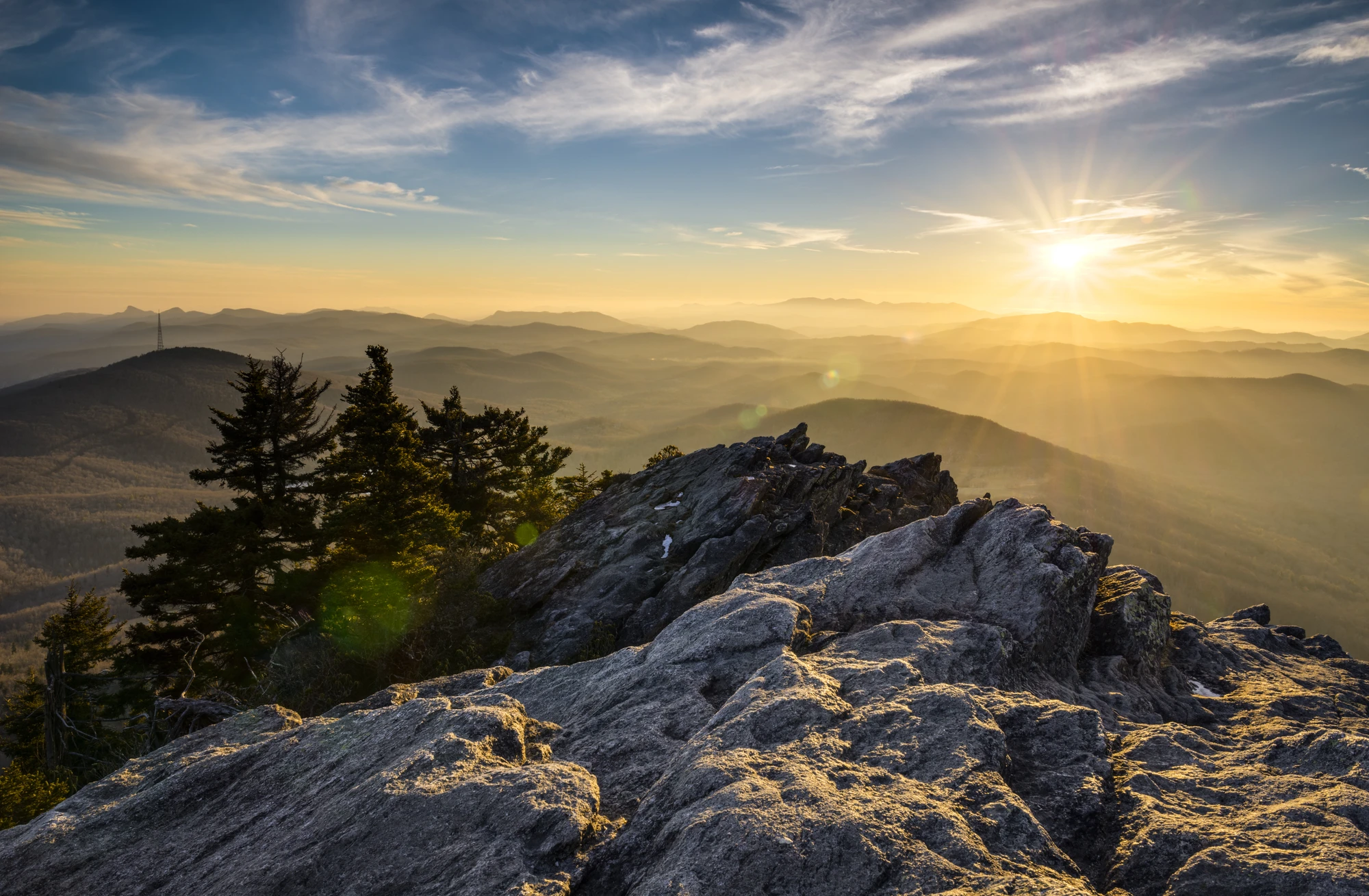
Standing on the Ridge: Sunset and Scramble at Grandfather Mountain

Standing on the Ridge: Sunset and Scramble at Grandfather Mountain

A high-country guide to scrambling, wildlife, and the Mile High Swinging Bridge—what to know before you climb.

Continue Reading

The sun doesn’t so much set behind Grandfather Mountain as it negotiates the ridge—slipping its colors into the folds of rock and forest, then pausing, as if to see whether the mountain will agree to put on another display. From the parking area and winding park road, you hear the landscape long before you see it: wind through spruce and rhododendron, the distant scrape of hikers’ boots on stone, and the faint, breathy call of a bird riding the thermals above Calloway Peak. When you top one last rocky ramp and step onto the Mile High Swinging Bridge, the valley opens like a sealed letter. The moment compresses into a single, sharp feeling—the vertiginous joy of being at the top of the Blue Ridge.

Grandfather Mountain is a place of contrasts: hewn, ancient rock next to soft moss and blanket bogs; exposed summits that demand respect from the wind; and pockets of deep forest where the air feels almost temperate despite being thousands of feet above the piedmont. It’s the sort of mountain that asks for effort. Trails here toss you across roots, force you onto narrow scrambles, and reward every uphill step with a view that folds away toward the horizon.

Geologically, Grandfather is part of the Blue Ridge segment of the Appalachian chain—one of the oldest mountain systems on earth. The ridges are composed primarily of ancient metamorphic rock that has been uplifted, folded, and weathered for hundreds of millions of years. That slow violence carved the notches, chimneys, and exposed slabs you’ll encounter, and it’s why the mountain’s profile has been a landmark for settlers and travelers for generations. The mountain’s anthropomorphic name—Grandfather—comes from a profile of rock that locals once said resembled an old man's face watching over the surrounding valleys.

Culturally the mountain sits at the edge of western North Carolina’s high-country communities—Boone, Blowing Rock, and Linville—places where Appalachian craft, trout fishing, and hardware-store pragmatism remain lively. The mountain itself is part working attraction, part conservation success story: the Grandfather Mountain Stewardship Foundation manages visitor access, runs the nature museum, and operates the animal habitats and educational programs that anchor the site’s conservation mission. The annual Grandfather Mountain Highland Games—one of the nation’s largest Scottish festivals—keeps a thread of Gaelic tradition alive each summer and adds a civic rhythm to the mountain’s seasons.

On the trail, the mountain claims a voice. The Profile Trail and the technical sections of the Grandfather Trail speak in stone and chain; you listen with your hands as much as your feet. The classic route to Calloway Peak is short but brusque—roughly 1.5 miles one-way from the nearby parking area with about 1,200 feet of elevation gain (approximate). Expect steep pitches, a few exposed sections that require scrambling, and fixed chains or ladders near the summit on certain approaches. If you’re looking for a longer day, loop options and connector trails extend into the highlands, turning a quick summit dash into a 6–8 mile ridge traverse that takes you through bogs, dwarf spruce, and panoramic ledges.

Wildlife here moves with the weather. Peregrine falcons overhead are the mountain’s aerialists; black bears and white-tailed deer live lower down. In spring the understory bursts with wildflowers and mountain laurel; in fall, the ridgeline becomes a corridor of flame. Because of the elevation, weather swings suddenly: a warm morning can flip into a wind-scoured, cloud-wrapped afternoon. Come prepared to be comfortable at altitude.

Practical matters: start early. The most reliable light and the quietest trails are yours before the midday crowds arrive and before the thermal winds pick up. Footwear matters—boots with sticky soles and ankle support make a real difference on exposed slabs and wet roots. Carry layers: a breathable base, an insulating midlayer, and a windproof shell. Bring water and snacks—there’s no reliable on-trail resupply—and a headlamp if you’re testing late-day light. Cell service is spotty; treat the mountain like a small expedition.

If you plan to stand on the Swinging Bridge at sunset, give yourself extra time for the climb and the photo line: it’s a draw for both sightseers and photographers. Consider a weekday or shoulder-season visit to avoid weekend crowds, and if you’re camping in the high-country elsewhere, allow extra time for acclimatization—the difference between the valley and the summit can be significant.

Sustainability is central to visiting Grandfather. Stick to established trails to protect fragile alpine vegetation, pack out all trash, and respect wildlife by observing from a distance. Supporting the Stewardship Foundation or other local conservation organizations helps keep the trails open and the habitat protected for future visitors.

Grandfather Mountain is not a passive postcard; it’s a conversation. The ridge challenges you, the ecology reminds you to slow down, and the view rewards the effort with a vastness that keeps returning to your mind on quiet mornings months later. Whether you come for a brisk scramble to the summit, a daylong ridge walk, or to stand on the bridge as the sun bleeds into the valleys, the mountain is direct and generous: it will not let you take it without giving you something in return.

For anyone planning a trip: be honest about your footing, watch the weather, and leave with the practical satisfaction of having met a genuine mountain on equal terms. The ridge waits, patient and vast—and the sunset will be there to meet you.

Duration2–6 hours (depending on route)
Plan your visit

Trail Wisdom

Start before dawn

Begin hikes early to avoid crowds and afternoon wind; summit sections are safer in calm morning conditions.

Footwear and traction

Wear sturdy hiking boots with good tread—expect wet slabs and exposed roots on steeper pitches.

Watch the weather

Carry a windproof shell and check forecasts; conditions at 5,900 ft can change rapidly compared with the valley.

Respect fragile habitat

Stay on designated trails—high-elevation bogs and dwarf spruce recover slowly from foot traffic.

Local Knowledge

Hidden Gems

  • The understory ledges south of the summit for quieter sunset views
  • Short detours to boggy dwarf spruce areas that host unique high-elevation plant communities

Wildlife

peregrine falcon, black bear

Conservation Note

Trail stewardship and visitation fees support habitat restoration and educational programs—stay on trails and consider donating or volunteering to help preserve the fragile high-country ecosystem.

Named for a rock profile early settlers thought resembled an old man, Grandfather Mountain has long been a landmark and now supports education and conservation through the Stewardship Foundation.

Seasonal Guide

spring

Best for:wildflower blooms, moderate temperatures, birdwatching
Challenges:muddy trails, late snow at high elevations

Spring brings fresh blooms and running streams, but lingering snow and muddy trail sections are common at higher elevations.

summer

Best for:long daylight, wildlife viewing, full access to facilities
Challenges:afternoon storms, higher visitation

Summer offers warm mornings and full facility hours but expect rapid afternoon thunderstorms and busy parking.

fall

Best for:peak foliage, crisp air, photography
Challenges:heavy weekend crowds, cooler nights

Fall is prime for color and clear air; plan for cold nights and book nearby lodging early on peak weekends.

winter

Best for:solitude, snowy panorama, off-season training
Challenges:road closures, ice on exposed sections

Winter delivers dramatic, quiet landscapes but can bring icy trails and limited access—check road and attraction closures before traveling.

Photographer's Notes

Shoot the ridge at golden hour for the best directional light; use a polarizer to deepen sky contrast and reduce glare on leaves; include foreground textures (lichen, twisted spruce) to convey scale; bracket exposures for high-contrast summit scenes and consider a short telephoto to compress the ridgeline layers.

What to Bring

Sturdy hiking boots

Essential

Provide traction and ankle support on rocky, rooty, and sometimes wet terrain.

Windproof shell

Essential

Protects against sudden high-elevation wind and light rain.

Hydration system (2 liters)

Essential

Keeps you hydrated during steep climbs where water sources are unreliable.

○

Lightweight headlamp

Useful if your hike runs later than planned or for pre-dawn starts.

Common Questions

How high is Grandfather Mountain’s summit?

Calloway Peak, the mountain’s highest point, reaches approximately 5,946 feet above sea level.

Is the Mile High Swinging Bridge actually a mile high?

The bridge’s name is historic—the walkway sits near 5,280 feet in some sections of the attraction, though the peak is higher; exact elevation at the bridge varies by location across the summit ridge.

Are dogs allowed on the trails or bridge?

Policies vary—service animals are generally permitted, but pets may be restricted in certain attraction areas; check the Grandfather Mountain visitor guidelines before bringing pets.

Do I need a permit to hike the trails?

No special permit is required for day hiking, but the managed attraction charges an admission fee for visitor access to facilities and some summit road access—confirm current fees on the official site.

What's the best time of day to visit the summit?

Early morning offers calmer winds, clearer light, and fewer people—late afternoon brings dramatic sunsets but can mean strong winds and crowds.

Can I camp on Grandfather Mountain?

Backcountry camping is restricted; nearby state parks and national forest areas offer designated campsites—plan and reserve camping off the mountain as appropriate.

What to Pack

Sturdy boots (traction on rock), layered jacket (wind/sun protection), 2L water (hydration on climbs), trail snacks (energy for steep sections)

Did You Know

Calloway Peak, Grandfather Mountain’s highest point, reaches approximately 5,946 feet—making it one of the highest summits in the Blue Ridge Mountains.

Quick Travel Tips

Buy attraction tickets online to skip lines; check summit road and bridge status before arrival; plan for 20–30°F temperature drop from valley to summit; park early to secure a spot on busy days.

Local Flavor

Local high-country fare focuses on trout, Appalachian biscuits and gravy, and craft breweries in Boone and Blowing Rock; time a visit with the Grandfather Mountain Highland Games in July for music, heavy athletics, and community flavor.

Logistics Snapshot

Elevation: ~5,946 ft; Top access: park road and trailheads; Difficulty: challenging for summit routes; Facilities: visitor center, restrooms, interpretive exhibits; Fees: day admission to attraction may apply; Cell: intermittent—download maps.

Sustainability Note

Support the Grandfather Mountain Stewardship Foundation, stay on marked trails to protect rare alpine plants, and pack out all trash—high-elevation ecosystems are slow to recover from disturbance.

Topics