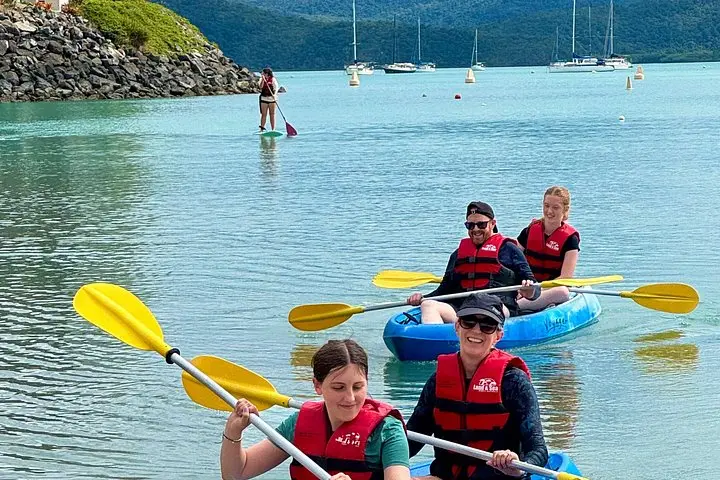
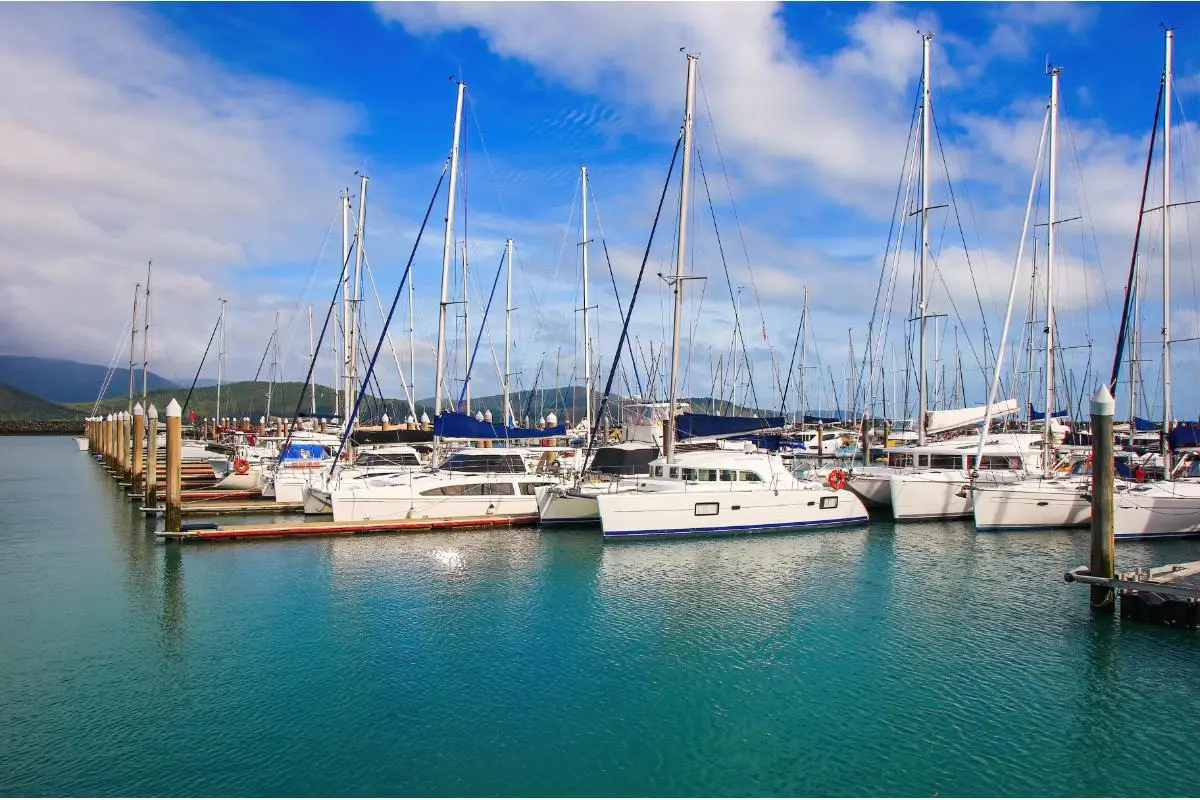
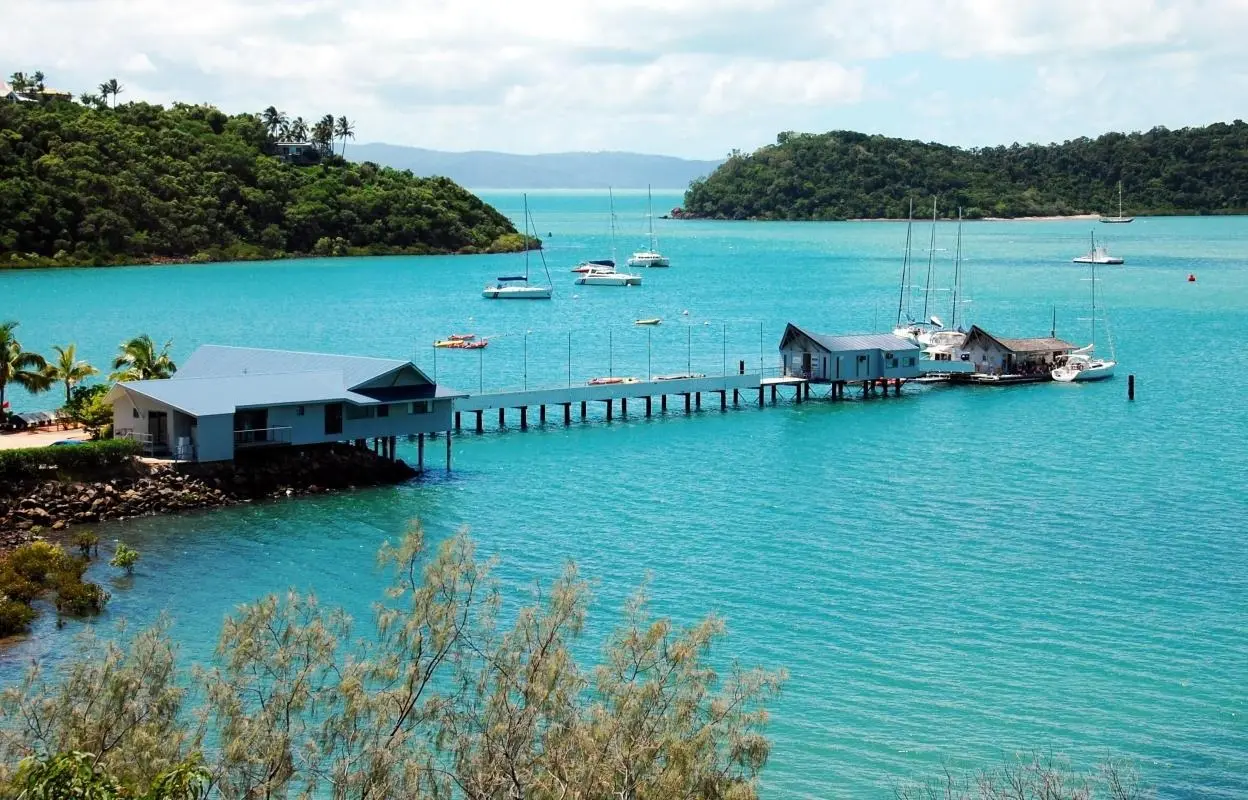
You step aboard as the late-afternoon light folds over Coral Sea ripples. The boat rocks once, a polite reminder that you’re moving away from Airlie Beach’s fluorescent shorelines and toward the wide, quiet blue. Below your feet, through sections of clear glass, patches of coral and the slow glide of fish trace the ocean’s pulse; above, the sky begins to warm, a watercolor that will bloom into a reef-side sunset. For 90 minutes this is the program: comfortable cruising, a friendly crew, a small bar keeping glasses full, and the kind of horizon that makes the rest of the world feel politely distant.
The 1.5-hour Airlie Beach Glass bottom boat Scenic Sunset Tour is compact by design—an easy, low-commitment way to sample the Whitsundays’ marine charisma without needing to commit to a full-day sail. It’s a family-friendly outing where infants and grandparents sit alongside photographers angling for that last light. What distinguishes this trip is the vantage: fixed viewing panes built into the hull give non-divers a front-row seat to reef life while the boat positions itself for sunset, so you get two acts in one—underwater discovery and a sky-ending performance.
The Whitsunday Islands are part of a larger geological story. These are continental islands—fragments of the Australian mainland left stranded when sea levels rose at the end of the last Ice Age—sitting within the Great Barrier Reef World Heritage Area. The coral gardens beneath the glass are part of that interconnected reef system, a living mosaic that supports sponges, angelfish, and hard corals. The traditional owners, including the Ngaro and other Aboriginal groups, have sung and fished these waters for thousands of years; their cultural connection is as much a layer of the place as sand and sea.
Historically the islands became a magnet for explorers, settlers, and later, tourists drawn by their luminous beaches and protected waters. Today, Airlie Beach is the staging town, a cheerfully compact base with marinas, cafes, and the inevitable souvenir stores. From here, the glass-bottom sunset cruise is a civilized half-step into the Whitsundays—no certificates required, no early-morning wake-ups, just a comfortable vessel, a scenic route, and a crew who know where to park for the best light.
Why go? It’s economical in time and cost (from about USD 68.74), ideal as a first taste of reef ecology, and useful for families or anyone who wants to experience coral and sunset together. Practically, arrive with a light jacket—the late sea breeze bites—and a camera or phone with a decent low-light function. If you’re prone to seasickness, consider ginger tablets or a patch; the water is usually benign, but the occasional chop shows up. The boat offers a bus pick-up from town, which is a convenience when you’d rather not hunt for parking or taxi drivers.
The tour is also a gentle ecological classroom. Crew members often point out species through the glass and speak to reef health and conservation measures. Visitors can learn to read reef colors and complexity—the denser the coral, the better the indicator of local biodiversity. If you want more immersion, the trip makes a good warm-up for a snorkel or full-day reef trip; otherwise, it’s a tidy, memorable evening that closes with a proper Australian sunset: a horizon set on fire, reflected in people’s cameras and the calm deck conversations.
Booking is straightforward and flexible: the tour is instant-confirm and often allows free cancellation, which suits changing itineraries. The vessel is licensed, so if you want a drink as you watch the sun sink, the bar is open for local beers and light refreshments. For photographers, that last half hour is valuable; find a rail spot, stabilize your camera, and watch as the light goes gold then cobalt. For families, the glass-bottom panels are an excellent screen for younger eyes—an introduction to reef species that’s safe and accessible.
This cruise is not a substitute for hands-on reef experiences, but it’s an excellent beginning. It gives context—how the islands sit in the reef system, how currents and wind shape the marine environment, and why responsible tourism matters here. If you leave with a renewed interest in the reef, consider booking a snorkel or diving trip on a subsequent day, or spend more time exploring Airlie Beach’s waterfront eateries and markets after you land back onshore.
Useful detail: the trip lasts 90 minutes, is suitable for all ages, and includes optional transport from town. Expect interpretive commentary, optional drinks, and intimate viewing of shallow reef sections through glass panels. If timing works, book a late-afternoon slot—light is why you’re here—and check weather notices in advance during the cyclone season. For a seamless booking and additional local insight, see the tour listing at Airlie Beach Glass-Bottom Boat Sunset Tour which includes pickup details, pricing, and availability.
At the end of the ride you’ll step back onto the wharf with sand on your shoes, a cooling breeze, and a memory that’s equal parts ocean and sky. It’s the kind of short expedition that leaves you planning the next one—another snorkel, a longer sail, or simply another sunset. Not every great adventure needs to be epic; sometimes the best introductions are the ones that let the place do the talking, and the Whitsundays speak very clearly indeed.