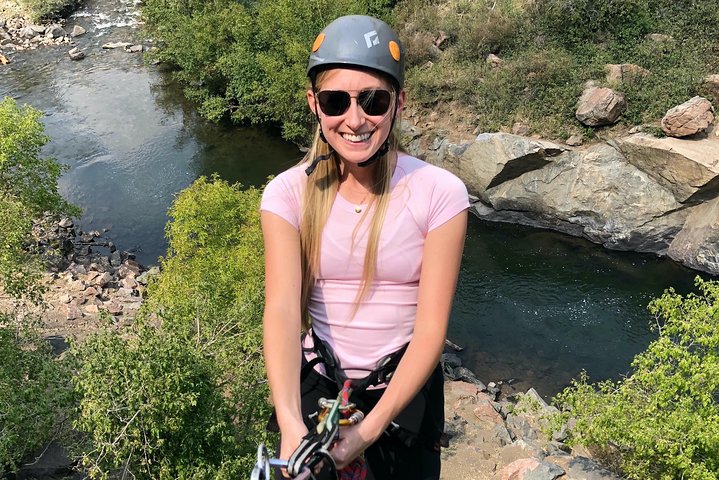
Thirty minutes out of downtown Denver the city’s hum thins and the air takes on a different weight—thinner, dryer, full of a kind of expectation. Granite and sandstone ribs rise from the plains like the ribs of an old animal; they catch light and hold it, offering faces, cracks and corners that have drawn climbers for generations. You meet your guide at a small lot, ankle joints creak into harnesses, ropes slide through belay devices, and the first piece of chalk hits hands like a punctuation mark: this is where your afternoon will pivot from ordinary to precise and deliberate.
This is Colorado’s Front Range—less a single cliff than a stitched landscape of canyons, towers and roadside crags that fall into your lap a short drive from the city. The rock here wears history in its grain. Indigenous peoples, including the Arapaho and Ute, traveled these foothills; later, miners and homesteaders pushed roads and rail, and climbers began to test the seams and faces in the mid-20th century. That mix—deep time, human movement, technical curiosity—shapes the feel of the routes: respectful, purposeful, with a touch of local humility.
Geologically the range is varied: older crystalline bedrock shoulders under younger sedimentary layers, producing both textured faces and solid, frictiony slabs. For guided programs marketed from Denver, routes are chosen for safety and accessibility—short approaches, reliable anchors, and a spread of grades so beginners and more advanced climbers can both have meaningful climbs within a roughly three-hour window. Expect a combination of top-rope and short multi-pitch practice, with anchors set by guides and a focus on movement fundamentals: footwork, weight transfer, and trusting the gear.
A guided session is more than ticking off a handful of routes. Guides translate the rock into a curriculum for your body: reading sequences, unclenching fingers at the right moment, coaxing efficient breaths. The wind in the couloir will feel like an accomplice, nudging you into a rhythm; the river at the canyon’s base will dare you to look down while your hands search for the next hold. Snacks and water are included, so there’s room to savor the breaks—hot sun on a shoulder, the metallic smell of chalk and harness webbing.
Despite the urban proximity, the climb feels remote in the best way—the city’s skyline peeking over distant ridgelines, not intrusive but a reminder that alpine moments are often an hour and a half of concentration away from your commuter life. Local climbing culture here is practical and communal: chalk bags exchanged, route beta traded in quick whispers, and a palpable respect for land managers and private access where it applies.
Practicalities matter. The advertised experience runs about three hours; it’s an intro-to-intermediate guided climb where all technical gear is provided—harnesses, ropes, helmets, and shoes in a range of sizes. Guides bring the expertise to anchor, belay and coach, leaving you to focus on movement. There is minimal approach walking but expect uneven, rocky footing, and a handful of short scrambling moves. The whole loop—pick up, drive out, park, gear up, climb, return—fits neatly into a half-day itinerary, which makes it ideal for travelers with limited time.
Who should book? If your idea of climbing includes keen curiosity and a willingness to learn, book it. Beginner climbers with average fitness will get a full introduction; intermediate climbers will find useful coaching and sharper beta; advanced climbers can use the session to practice techniques or work on short sport lines with a coach’s eye. The activity is also notable for accessibility—instant confirmation, included transport options in some variants, and small groups that keep things hands-on.
Timing is everything. Spring and fall offer the most comfortable temperatures; summer brings sun and quick afternoon thunderstorms that can close a route in minutes. Winter scheduled climbs move into lower-angle, sun-washed faces or are rescheduled—ice and snow change the game entirely. Hydration, sun protection and layers are basics here, along with shoes that fit (guides provide rentals but try them on for fit and friction before you step on rock).
If you leave with anything, take home the discipline you learn on the wall. Climbing asks you to simplify: one foot, one hand, one breath at a time. It’s a practice you can fold into the rest of your trip—better hikes, steadier stances by alpine lakes, clearer decisions on technical sections. And afterward, there’s a beer or a sandwich waiting somewhere back in the Boulder-Denver corridor, a communal capstone to an afternoon spent moving under gravity’s honest rules.
This guided climb is easy to pair with other Front Range offerings—trail runs, river floats in the summer, or a morning road trip up a ridge for sunrise. It’s short enough to be a single, memorable chunk of a longer Colorado trip, but technical enough to be transformative for a weekend warrior who wants a clear skill upgrade.
At three hours, the trip respects your schedule and your curiosity. It’s a compact education in how rock rewards patience and precision, and about 30 minutes from a city that can feel surprisingly far away once you’re on the wall.


