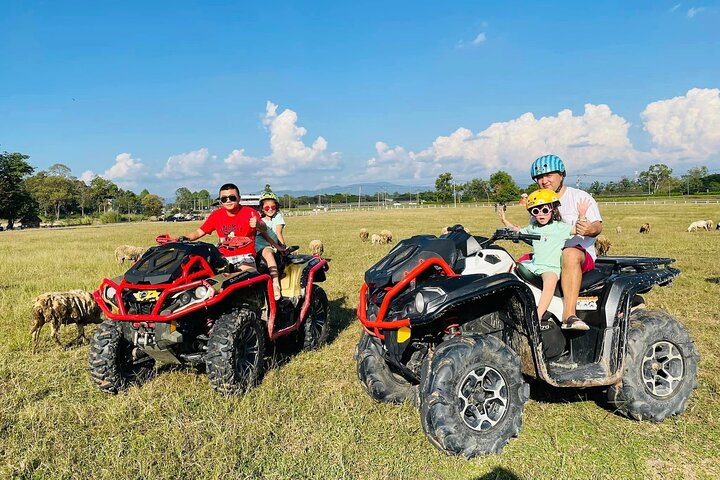
You feel the engine before you see the trail. It arrives as a low, insistent vibration through the seat and into your palms, a mechanical heartbeat that syncs with the rhythm of the hillside. The track opens ahead—rutted, sun-dappled, a ribbon of red earth that surges into a stand of teak and bamboo. A breeze slides through the trees, and for a moment the forest seems to be watching, leaves whispering encouragement as you pick a line and drive in.
Spartan Motorsport, tucked into the rural sprawl just outside Chiang Mai, packages that small, electric thrill—speed tuned for smiles rather than record-setting laps. The company runs Can-Am ATVs and UTVs on a mix of circuit, dirt track, and off-road forest routes. Families, couples, and solo travelers show up with the same appetite: two hours of spinning gravel, choreographed bumps, and a short, decisive break from the city’s temples and markets.
The setting matters. Northern Thailand’s topography is gentle compared with the limestone karsts of the south, but the Mae Rim area around Chiang Mai is a mashup of small ridgelines, seasonal streams, and stands of secondary forest. The soil here is forgiving—red, crumbly laterite—the kind that cakes tires and paints your boots in ochre. It’s a landscape of working farms, roadside fruit stalls, and pockets of jungle reclaiming abandoned fields. It’s also a place where motorized recreation fits into a long pattern of land use: tracks follow old logging and irrigation roads; circuits live on former rice-drying paddies.
History sits slightly offstage. Chiang Mai was founded in 1296 as the capital of the Lanna Kingdom, and while the city’s old walls and wats are the draw for most visitors, the surrounding hills have always been supply routes and seasonal grazing grounds. Today, those routes double as recreational trails—another way visitors and locals engage the land. There’s a pragmatic cultural note to this: Thai tourism tends to be communal and family-oriented. Spartan Motorsport reflects that: UTVs can carry two people, and kids from about 12 years old can self-drive under supervision.
Practicality is baked into the experience. Tours range from half-hour introductions to three-hour endurance-style rides; the Viator listing for this product features a 120-minute option, which hits a useful sweet spot—long enough to get comfortable with the vehicle and explore a variety of terrain, short enough to retain energy for a night in the city. Pickup and drop-off from Chiang Mai hotels are often included, making this a sensible half-day excursion between an early-morning temple run and an evening market crawl.
The ride itself is straightforward to describe and hard to forget. Start on the circuit to learn throttle control and braking. Move onto the dirt track for tighter technical turns. Finish with a section that threads shaded forest trails where sunlight hits the dust like stage lights. The trail tempts you—narrow sections dare you to tuck the throttle and hold your line; wider clearings reward a steady push. An instructor rides with you at first, and guides will cue you on lines, body position, and when to yank the handbrake for a quick, controlled slide.
Safety and comfort are not afterthoughts. Helmets, goggles, and a safety briefing are standard; footwear with ankle support and closed toes is required. Bring hydration—the dry season can be hot—and a light layer for the evening, because mountain air cools quickly after sundown. Expect noise and dust; earplugs and a buff to keep grit out of your face are small comforts that make a big difference.
Chiang Mai itself remains the reward once the mud’s washed out of your socks. The city delivers craft beer bars, bowls of khao soi that settle the stomach, and markets stuffed with local artisans. Combining a half-day on the track with a slow afternoon exploring Nimmanhaemin or the Sunday Night Market makes for a satisfying 24-hour adventure loop.
For travelers weighing this against other Northern Thailand activities: it’s a good option for people who want motion without altitude, who want a quick adrenaline hit that’s accessible even for families and casual adventurers. If you’re an experienced rider, this is not a remote backcountry expedition—expect groomed trails, a defined course, and the company’s safety protocols. If you want deep wilderness or extended overland solitude, pair this with a multiday trek or a river trip elsewhere in Thailand.
Logistics and tips in brief: the Viator-sourced price starts around USD 162 per vehicle, with instant confirmation and often flexible free-cancellation windows. Tours are available across multiple time slots—morning runs take advantage of cooler temps and better visibility for dust; late-afternoon slots benefit from softer light and fewer crowds. The morning light on the red earth is good for wide-angle shots, but if you’re hoping to take photos while driving, ask about a passenger seat or book a two-person UTV so one person can handle the camera.
Ultimately, the magnetism of an ATV day outside Chiang Mai is simple: it’s a physical punctuation mark in a travel itinerary dominated by temples and markets. For two hours you meet the landscape on its own terms—route choices are immediate, consequences tangible, and the laughter that follows every unexpected bump is honest. It’s not about testing limits; it’s about choosing a line and committing to it.
If you go: protect your knees, pack a sense of humor, and leave extra time to rinse off at your hotel before dinner. The dirt will come off. The memory won’t.


