The pedestrian light clicks green and you step from Canal Street into another city: narrow lanes threaded with red lanterns, whistles of delivery bikes weaving past herbal shops, and steamed dumplings hissing in windows. A woman balances a stack of bao on a tray while men play Chinese chess on a chipped table beneath fire escape shadows. This is Manhattan’s Chinatown — a dense, restless pocket of New York where old-country rhythms meet the urgent commerce of a global metropolis.
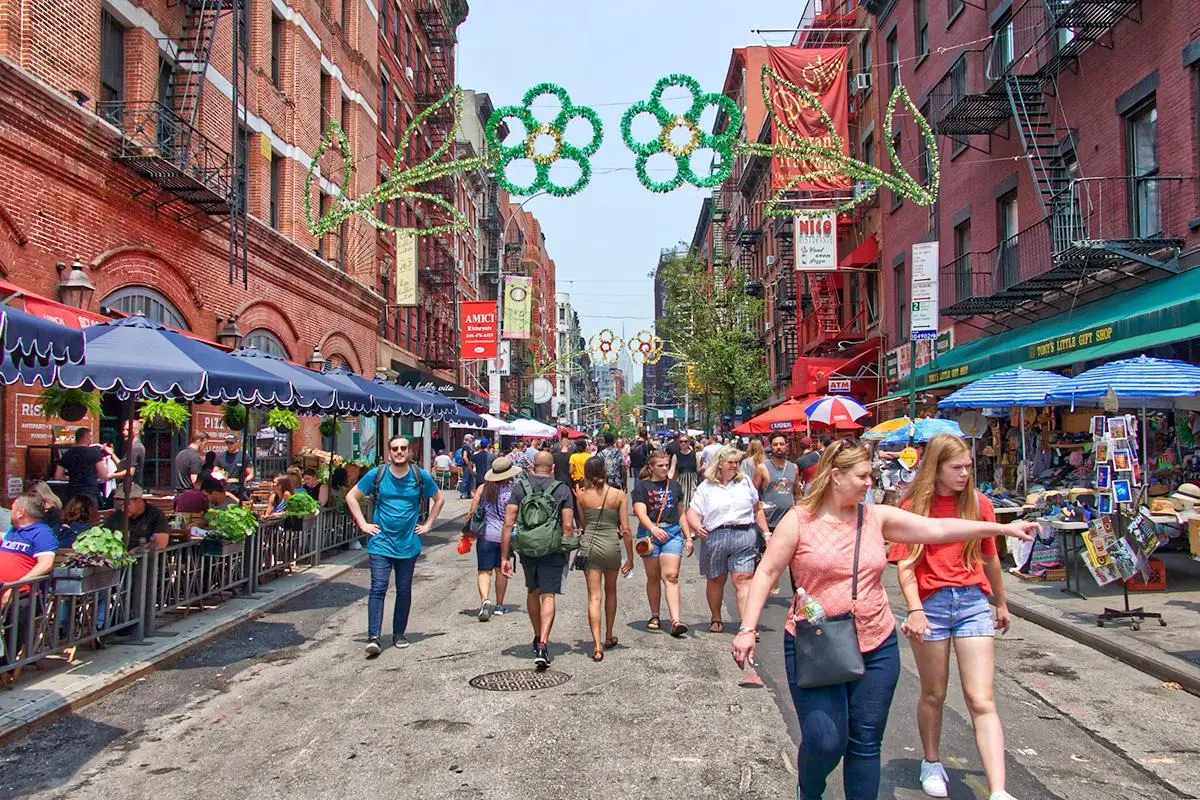
From the moment you set foot on Mott Street, the neighborhood asks you to slow down and look closer. Buildings crowd the sidewalks; vendors display everything from dried fish to neon signs in both English and Chinese. Walk a little further and the sound shifts: Cantonese, Mandarin, Fujianese, Spanish, the clipped syllables of younger bilinguals. Each language is a layer of the neighborhood’s living history.
Chinatown’s streets are geography and archive: Doyers Street, the curved sliver famed for tong history and shadowed alleys; the bustling avenues around Division and Grand where seafood markets still operate; and the eastern reaches into Little Fuzhou, where newer waves of immigrants unfurled their businesses and community networks. Several guided offerings make this accessible without flattening the texture — from food tours that trace a culinary timeline to walking tours that stitch the area to adjacent Little Italy and the erased streets of Five Points. The Chinatown and Little Italy Tour with a local expert is ideal for first-time visitors; Secret Food Tours and the Ultimate Chinatown & Little Italy Food Tour dig deeper into tastes and provenance, while the Sewage, Sex, and Sickness tour confronts the gritty urban history underfoot.
History and geology conspire to explain the neighborhood’s edges. Chinatown rose from the 19th-century migrations that concentrated around Five Points — a marshy, silted delta of Manhattan’s earlier shoreline that made for dense, low-lying tenements. The ground you tread now is landfill and street grid; the old creeks and ponds that carved the island’s original topography were filled as the city built itself outward. That compression of people and place fed Chinatown’s energy: cheap housing, clustered shops, and dense social networks meant immigrants could survive and thrive despite legal exclusions and economic precarity.
Culture here is public and tactile. Herbalists measure remedies with the same casual authority as fishmongers heft crabs onto scales. In temples, incense accomplishes both prayer and community memory. Food functions as social adhesive — dim sum is a weekend congregation; late-night noodle shops are the city’s answer to a second kitchen. Guides like those on private Soho, Little Italy, Chinatown tours and theatrical experiences such as The City Speaks bring these connections to life, translating dialects, dishes, and politics into an accessible narrative.
The practical stuff matters: Chinatown is compact but sensory-rich. Expect uneven sidewalks, occasional crowds, and the smell profiles of open kitchens and wet markets that many travelers love and some need to prepare for. Distances are short — a focused walk covers 1–3 miles — but the experience is about stops and repetitions: sample, ask, step inside, look up at the ironwork. If you want a broader itinerary that includes the boroughs, multi-day options like the 3 Day Experience New York City and Boroughs Explorer fold Chinatown into a wider Manhattan-Brooklyn-Bronx loop.
For planning: Go early for quieter market scenes and better seating at small restaurants; late morning through afternoon is peak food-tour time. Wear comfortable footwear — cobblestones and slick patchwork sidewalks are common. Bring a refillable water bottle and small bills for market purchases; many storefronts take cards, but many others are cash-first. If you’re photographing interiors or people, ask permission; small businesses are often working on slim margins and appreciate respectful encounters.
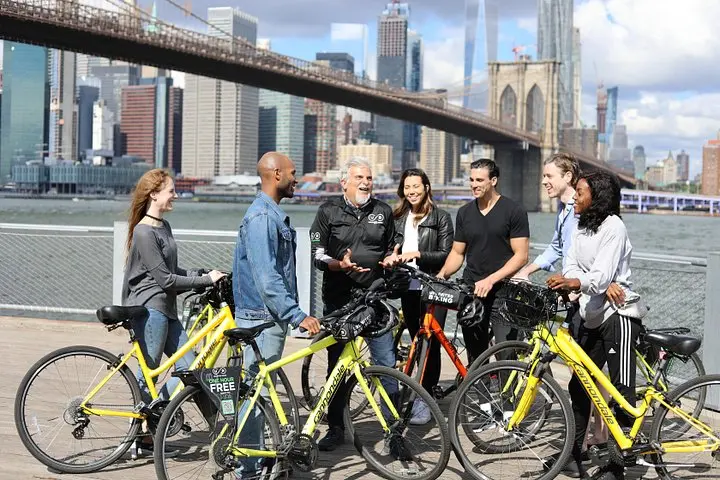
If you’re inclined to move faster, mix modes: a pedicab or private pedicab tour can thread Chinatown into SoHo and beyond without the strain of a full-day walk. Biking tours that cross the Brooklyn Bridge include Chinatown as a downtown stop, giving a different vantage — the neighborhood from the saddle of a bike feels kinetic and intimate in a way that a bus can’t replicate.
There’s an urgency under the lantern light: rising rents, redevelopment pressure, and cultural displacement are daily realities. Many tours and local organizations emphasize supporting family-owned businesses, visiting community markets, and asking about origins of dishes — small choices that direct spending to long-standing vendors instead of outside investors.
In short, Chinatown is not a museum you visit; it’s a neighborhood you move through. Whether you come to eat — and plan your tour around at least six flavor stops on a food walk — or to dig into history with an expert guide, the neighborhood rewards curiosity. You’ll leave with new vocabulary (literal and culinary), a sense of how immigrant communities shape cities, and possibly a bag of pastries and a plastic tub of soy-scented braised duck. Come with an appetite for detail as much as for dumplings; Chinatown will repay both.
Practical snapshot (what to expect on a typical 2–3 hour walking tour): flat urban terrain, frequent stops at food vendors and tiny shops, one or two temple visits depending on the guide, and dozens of photo ops. For a deeper historical frame, book a themed walk — Five Points history tours expose the uneasy foundations of Manhattan’s growth — or join a food-focused itinerary that travels from Cantonese to Fujianese enclaves.
Chinatown is a place to listen and sample: to learn where a dish comes from, who owns the bakery counter, what a tong salon used to mean, and how a neighborhood keeps itself alive amid the city’s roar. It’s not just about the food or the history; it’s about walking stories into being.
(Recommended experiences referenced: Chinatown and Little Italy Tour in New York City with Local Expert; NYC: Chinatown & Little Italy Food Tour with 6 Flavorful Dishes; Sewage, Sex, and Sickness in the Five Points; SoHo, Chinatown, Little Italy and Greenwich Private Walking Tour; Private Chinatown Little Italy Food Tour; Ultimate Chinatown & Little Italy Food Tour in New York City; Brookln Bridge, DUMBO and Downtown Manhattan Guided Bike Tour; Private Manhattan Pedicab Tour.)