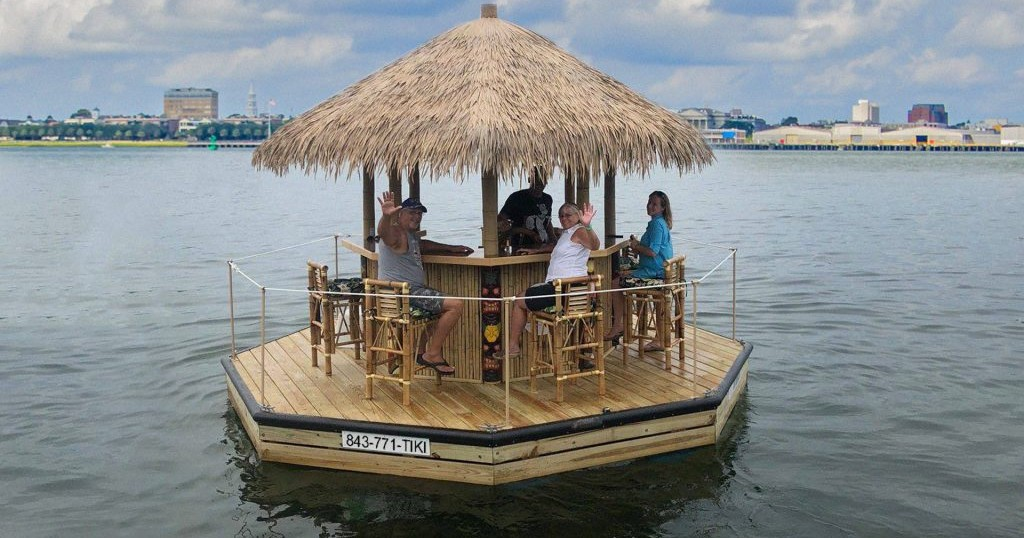
The harbor wakes before the city. Palmettos lean into a salt-bright breeze, gulls gossip overhead, and the water—restless and sure—tugs at the pilings as if inviting you aboard. You step onto a small tiki-style boat with five other passengers, the deck soft under bare feet, the cooler tucked in the shade. The captain smiles, unspools the lines, and Charleston slides into view—row houses and church steeples standing at attention as the tide carries you toward the great, tidal heart of the Lowcountry.
Two hours on the water sounds simple. It is. But this harbor has a way of turning minutes into stories. The Charleston Harbor Cruise traces a route that stitches together the city’s greatest hits with its quiet details: brackish creeks that smell faintly of life, sandbars that arrive with the tide like polite houseguests, and dolphins that surface just long enough to make you grin like a kid.
You idle past Waterfront Park, the famous Pineapple Fountain greeting you with its bright hospitality. The Battery appears next—stately antebellum homes pacing along the seawall, their porches open to the breeze as if eager to hear the day’s gossip. Over the bow, the Arthur Ravenel Jr. Bridge throws its white cables across the sky, a drawn bow ready to launch the city into the horizon. The captain points out the Spitz-like curve of the Cooper River to one side and the Ashley River to the other; together they pour into the harbor and insist on becoming the Atlantic. The harbor, it turns out, doesn’t just meet the ocean. It proposes it.
From here, the narrative deepens. The rust-and-brick silhouette of Castle Pinckney appears, a stubborn 1810 outpost on Shutes Folly that once held prisoners during the Civil War. Farther out, Fort Sumter sits low on its island like a heavyweight waiting for the bell. On April 12, 1861, the first shots of the war exploded here; it’s hard to reconcile that noise with today’s hush—the glug of wake beneath the hull, the distant clang of a halyard, the rhythmic bump of a channel buoy. A few miles upriver, the USS Yorktown, a World War II aircraft carrier, stretches along Patriots Point, its flight deck now a museum that remembers how the ocean can be a runway and a battlefield at once. The captain shares stories as the boat glides on: how the Yorktown served in the Pacific, how the Battery once braced for cannon fire, how this harbor is a living museum that refuses to stand still.
Geology here is as much a verb as a noun. Charleston’s harbor is a dynamic estuary, a place where freshwater and saltwater argue and compromise with every tide. The marshes inhale and exhale, sending spartina grass to sway like green metronomes. Currents nudge the boat; the captain steers with a practiced touch, and the water seems to approve, smoothing your wake. Dolphins play the edges of the channel, cruising along like locals who know the shortcuts. If conditions allow, your captain might even ease toward a safe, shallow patch for a quick swim—no promises, just the pleasing possibility of slipping into warm water and letting the tide carry your thoughts a few yards away.
But the magic of this tour isn’t only in the icons. It’s in the way the harbor gives you angles you can’t get on foot: the Battery’s mansions framed by a palette of sky; the Ravenel Bridge arching like a harp; the Yorktown looming with quiet dignity; Fort Sumter lying low and resolute. It’s in the breeze that edits out the day’s heat. It’s in the community you briefly create aboard—six passengers, one captain, and a small boat that moves like it knows where the good stories live.
For planners and pragmatists, this is an easy lift. The Charleston Harbor Cruise runs about two hours and launches from either Downtown Charleston or Shem Creek in Mount Pleasant. You bring sunscreen (lotion, not spray), polarized sunglasses, extra water, and a light layer—wind on the water can turn a warm forecast into a breezy chill. A small cooler with drinks and snacks is welcome. Capacity tops out at six, which keeps things intimate and nimble. Wear sandals or bare feet; leave the clunky bags at home and stash your phone in a waterproof pouch. The captain provides the narrative; you provide curiosity and a camera.
Timing matters. Morning departures offer calm water and soft light on the Battery; golden hour cruises paint the Ravenel Bridge in honey while dolphins shadow the hull like ushers guiding you toward sunset. Summer afternoons can brew pop-up storms—your captain reads weather like a book and will adjust accordingly. In shoulder seasons, the harbor trades humidity for clarity and the views go long.
If you want more than a float, fold the day into a broader Lowcountry circuit. Pair an afternoon on the water with a stroll through the French Quarter. Or plan a bridge-to-bridge afternoon: start near Shem Creek, slip under the Ravenel, sweep past Castle Pinckney and Fort Sumter, then circle by the Yorktown before aiming back toward the city. To turn this two-hour sail into a full day, cross-reference stops and stories with a museum visit at Patriots Point, and finish with she-crab soup as the harbor lights come on and the tide, as always, tells the city what hour it is.
When your boat turns for home, Charleston gives you one last panorama. The Battery faces you like a lineup of old friends, the Pineapple Fountain winks, and the bridge keeps time with the sky. It’s a tidy circle—history, nature, and the easy luxury of moving slowly over water. On land, the city tells its story one block at a time. On the water, it speaks in chapters. If you’re lucky, you’ll step off with salt on your skin, a few dolphin sightings stitched into your memory, and a practical plan to return—maybe for sunset next time, guided again by the tide and the steady hand at the helm of your Charleston harbor tour.


