The mangroves open like a quiet stage, their roots knitting the shoreline while the tide nudges you forward. Light pours through the hull of your see-through kayak, and the flats below read like a living map—seagrass meadows, shy crab tracks, a flash of mullet scattering as your bow whispers past. Robinson Preserve sits just minutes from Bradenton, yet it acts like it has a secret: here, the water asks for your attention and rewards it with texture, color, and a steady hush. On a private clear kayak ecotour, you don’t just paddle on the water—you ride the story that the bay is telling that hour, that tide, that wind.
It begins at the launch near 1704 99th Street NW, where your guide takes the measure of the morning: wind direction, tide height, and your group’s energy. There’s no rush and no crowd jostling for space. This is your tour—up to 10 people, your pace. The double kayaks have weight limits and a preference for balance, but once you slide off the shoreline, the craft feels like a magnifying glass. Sunlight paints the shallows. Ospreys trace the air, fishing with a precision that makes your paddle strokes seem loud. The mangroves breathe; their tunnels narrow and widen, daring you to find the line.
Robinson Preserve is restoration at work, and paddling through it is a lesson in how coastlines heal. Much of this 682-acre mosaic was once farmland. In the 2000s, Manatee County and partners peeled back berms and let saltwater reclaim old ditches and fields, knitting together tidal marsh, mangrove forest, and upland hammocks. The result is a living corridor at the edge of Tampa Bay where seagrass comes back, birds regroup, and kayakers can trace wildness within sight of neighborhoods. The preserve sits near the mouth of the Manatee River, a waterway that once supported the Tocobaga peoples and later lured Spanish explorers; look across the bay and you’ll see the arc of the Sunshine Skyway Bridge, a landmark that always seems to be listening on the horizon.
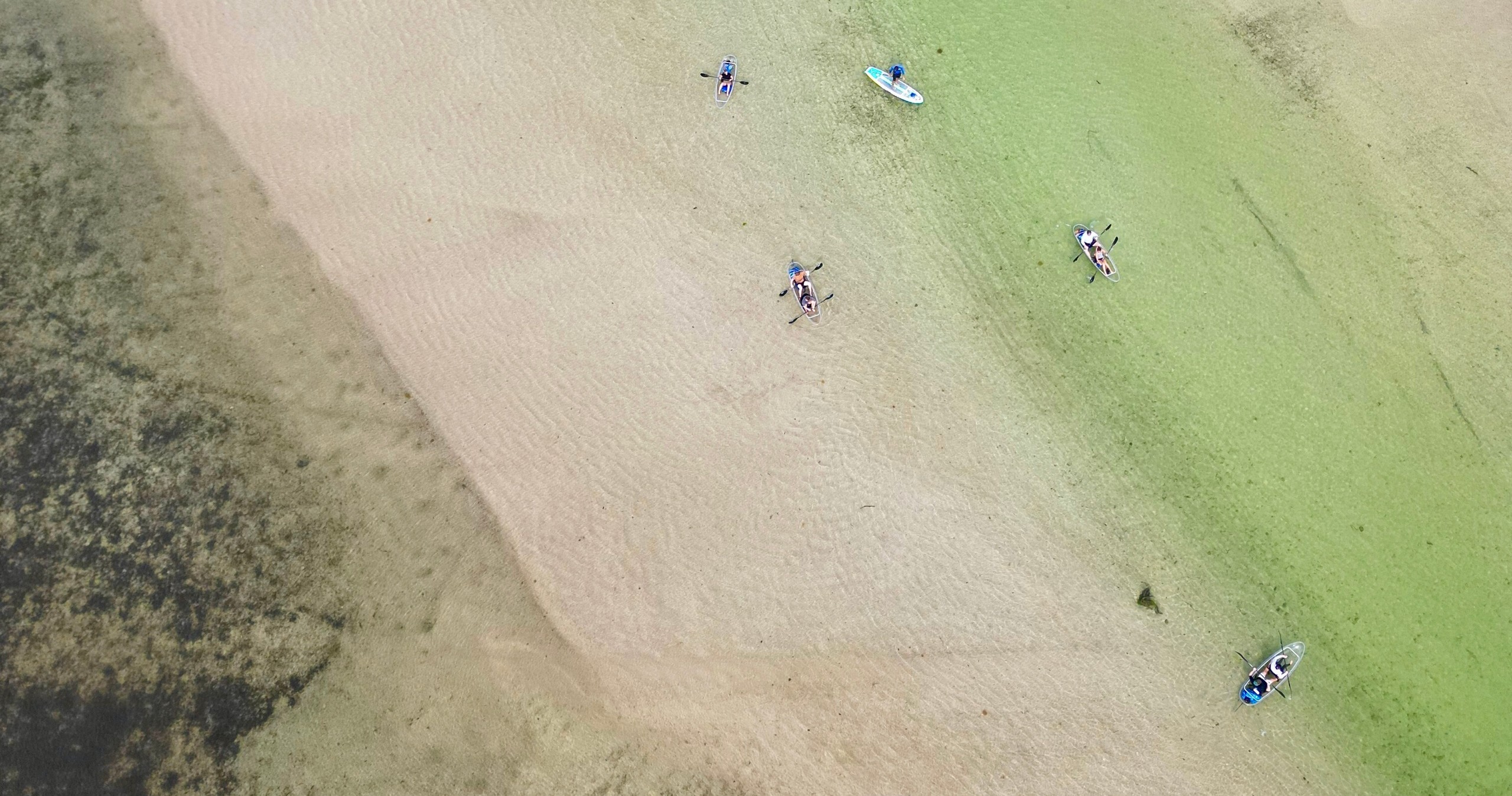
On a private outing, the route flexes with the day. Some tides invite you into hushed mangrove tunnels where your paddle has to soften to avoid scuffing roots; other times, the bay flats call you toward a sandbar south of the preserve for a drift and a wade. The water color shifts—from tea-stained near the tannin-fed mangroves to jade and cobalt in open shallows. Clarity is fickle: recent rain, wind, and boat traffic can turn a glassy lens into soft focus. Your guide reads the cues, aiming for the best visibility; if water clarity is make-or-break for you, consider calling ahead and booking a time that stacks the odds.
Wildlife plays by its own schedule. Manatees ghost by when the water warms. Dolphins carve gray arcs beyond the sandbar, chasing bait. Roseate spoonbills swing past like pink punctuation, while little blue herons stitch the shoreline with patient steps. Some tours brim with life; others speak in subtler tones—crab scuttle, fish flicker, the tide’s gentle push. That unpredictability is part of the draw. You’re visiting a neighborhood where nature sets the clock.
The paddling itself is welcoming. Expect two to two-and-a-half hours on the water with time to float, explore, or linger for photos. Beginners do well here—the boats are stable, and your guide will coach stroke rhythm, steering, and tandem teamwork. The biggest variables are wind and tide; a breezy afternoon can add effort to the return leg, and a strong flood or ebb will tug at your bow like a playful dog. Early mornings and late afternoons usually mean calmer conditions and gentler sun, plus better chances for wildlife sightings.
While the preserve feels far away, logistics are simple. The meeting spot is easy to find, parking is straightforward, and cell service is generally reliable outside the densest mangrove corridors. Reservations are required, and the outfitter keeps things clear: tandem kayaks only, a per-boat and per-person weight limit, and no alcohol or smoking. Want proof you did it? Opt for drone photos to capture your group skimming above seagrass like you’re flying.
Culturally, the area invites you to extend the day. The Cortez fishing village sits a quick drive away, with seafood shacks that still smell like salt. The De Soto National Memorial tells a more complicated story about the first European incursions into this estuary. Emerson Point Preserve, just across the water, offers trails and views where Tampa Bay tapers into the Manatee River—an easy spot to stretch legs post-paddle.
What makes this experience stand out is the combination of intimacy and freedom. On a group tour, you may match someone else’s pace. Here, you set the tempo. Have more kids than adults? Want your guide to give extra paddling help to one person? It’s built into the format. Want more mangroves and less sandbar? Or the reverse? Your guide tailors the route. If you’re curious, ask questions. Guides here are local naturalists and mariners; they can name birds by silhouette and read water like you read a trail map.
If you’re planning the trip, timing matters. Spring and fall typically deliver forgiving temperatures and clear mornings. Summer brings heat and pop-up storms—early starts are your friend. Winter can be bright and crisp with lower humidity, though north winds may ruffle the bay. Book your spot and learn more at the official Private Robinson Preserve Clear Kayak Ecotour page: https://app.advcollective.com/local-experts/private-robinson-preserve-clear-kayak-ecotour. It’s also the best place to check current conditions, availability, and any weather updates. For another take—or to share the link with your group—keep this handy: https://app.advcollective.com/local-experts/private-robinson-preserve-clear-kayak-ecotour.
In the end, the preserve chooses your soundtrack: osprey whistles, the hush of shallow water sliding under your hull, mangrove leaves clapping when a breeze walks through. The Skyway Bridge holds its pose on the horizon, and the sandbar glows like a quiet invitation. The bay doesn’t shout. It nudges—paddle here, pause there, look down. Transparent boat, transparent day. What you see is what the water wants to show you.