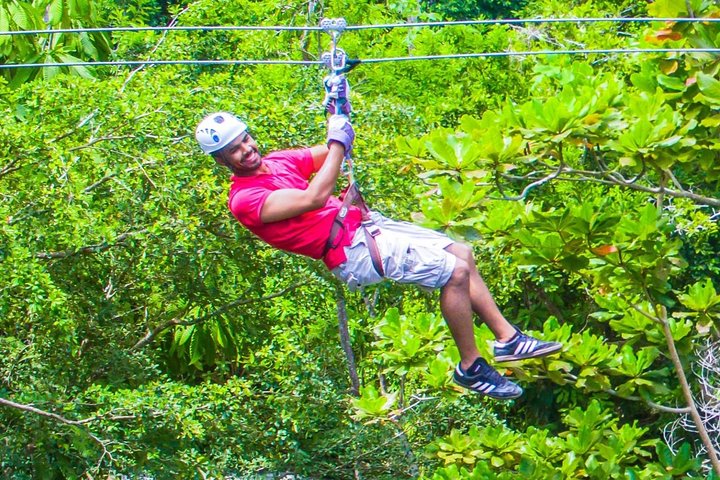
The morning opens with a ribbon of highway and a yawning expanse of Caribbean blue—the kind of blue that makes you forget the time it takes to travel. By midmorning the road orders the land into green: sugarcane, stray goats, and a tangle of buttonwood and fig. Then the trees lift and the canopy lets you in. You clip into the Falls Flyer zipline, step off a wooden platform, and for a moment gravity is the only language. The line sings; the wind writes your track through leaves. Below you, the river threads a bright silver ribbon toward the coast, and ahead, where limestone terraces tumble into surf, Dunn’s River Falls waits with a grinding, salt-scented applause.
This is a day that pairs two very different kinds of motion—horizontal flight through jungle air and vertical progress up a living staircase of travertine stone. Both ask for attention: the zipline requires a brave exhale and trust in harness and guide; Dunn’s River asks for careful footing and the willingness to let the current do some of the work. Together they make for a full day of adrenaline, wet shoes, and a sense of earned calm when your feet finally hit sand.
Dunn’s River Falls is geologic theater. Unlike many inland cascades, it’s a terraced limestone fall that actually spills into the Caribbean Sea—one of the few in the world to do so—its calcified surfaces forming natural steps that guides lead small, linked climbers up. The falls carve through Saint Ann parish, a region shaped by coral islands uplifted over millennia and then etched by fresh water. A short cultural sketch reminds visitors that this stretch of coast has been shaped by colonial histories and by contemporary island life: bustling craft markets, jerk stands perfuming the air, and guide families who have led guests up those falls for generations.
The ziplines here—marketed as the Falls Flyer—use the ridge above the river and a patchwork of cleared canopy to give you a series of runs that alternately accelerate and pardon your steady breathing. The operators emphasize safety: double lines, trained guides, and helmets. The real reward is the vantage point. From above you watch the river pick its way to the shore, fishermen nodding from pirogues, and the slope of the land folding into lagoon and reef.
Practical aside: the full tour runs seven to eight hours. Most days start with hotel pickup in Negril and a motor transfer east to Ocho Rios, so plan for a long day—this is one of those “leave early, come home satisfied” itineraries. The advertised price point reflects the private-transfer, zipline, and park entry combo, and the pace is deliberate: several zipline runs, a riverside lunch or snack break, then the guided climb of Dunn’s River Falls. Guides will often form a human chain for the climb—linking arms or hands—to help balance on the slick travertine.
If you’re wondering what to expect physically: the zipline demands no technical climbing skill—just the ability to stand and step off a platform and to follow simple harness instructions. The waterfall climb is the more steady physical challenge: plan to be on your feet for 30–90 minutes moving over wet, uneven rock, sometimes taking handholds in small cascades, sometimes trusting shallow pools to accept your step. The pace is manageable for anyone with reasonable balance and a sense of adventure.
Timing matters. Mornings are cooler and less crowded; after midday, cruise lines and coach tours can swell the visitor numbers at Dunn’s River. Choose biodegradable reef-safe sunscreen and a quick-dry shirt; the guides will insist on closed-toe shoes or secure water shoes for the falls—flip-flops and sandals are a risky choice.
Beyond the route and the adrenaline lies the small cultural rewards: a rum punch at a roadside shack, a casual market where a craftsman carves a small wooden fish, or a chat with a guide about how the river’s volume changes with the island rains. Locally run operations mean your fee supports families and economy in Saint Ann, but be mindful of the environmental footprint: keep plastics sealed, avoid lotions that wash into fresh water, and listen to guides who know the safest lines up the cascade.
For photographers, the day gives a tight window of opportunities: broad vistas from the zipline platforms, action shots of harnessed flyers against sky, and intimate, tactile images at the base of the falls—hands on stone, sun through spray, moss in extreme close-up. Go early for the softest light and take a waterproof bag for your camera or phone.
This is not a trip for people seeking solitude in the wilderness; it’s a curated, social adventure that puts you on engineered lines and historic limestone. If you want both a pulse and immediate access to coastal culture—jerk stands, local guides, and a shoreline that is unmistakably Caribbean—this combo delivers. You’ll come away with water in your hair, a calloused sense of accomplishment, and perhaps a small carved souvenir that will sit on your shelf and remind you of that long ribbon of highway, the wind in the trees, and the perfect, grinning collapse into sea-side sand when the day finally lets you rest.

