Dress in windproof layers
Wind off the bay steals heat quickly; an insulated wind shell over a fleece keeps you comfortable on deck.
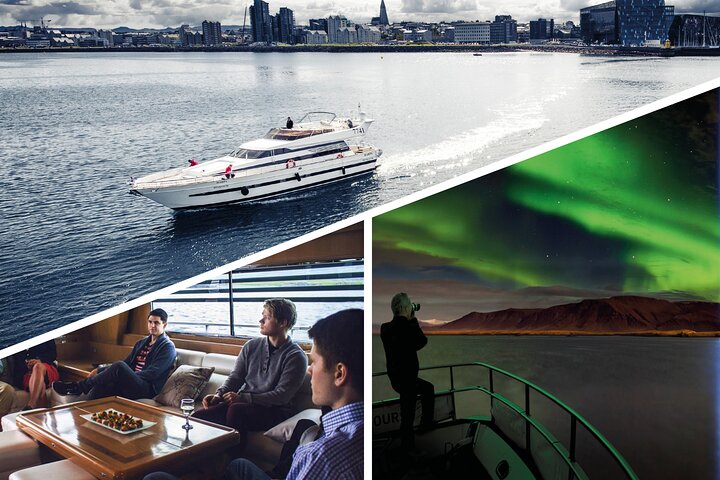
Small-boat comforts, wide horizons: chase the aurora from Reykjavik’s harbor
The city lights of Reykjavík fall away like a low burnt orange ribbon as the yacht slips from the Old Harbour. Inside, the cabin is warm, coffee breathes out of a steaming urn, and the crew moves with quiet purpose—checking instruments, scanning the black, and pointing out the low-cut of the horizon where ocean and aurora meet. On deck the air is bracing, each breath sharp enough to wake you. Then the sky shifts: a pale smear becomes a ribbon, the ribbon folds, and the aurora leans over the sea like a green curtain daring you to follow it. This is the small, intimate magic of a Northern Lights yacht cruise from Reykjavík, an experience that balances the hush of remoteness with the safety and comfort of a well-run vessel.
Wind off the bay steals heat quickly; an insulated wind shell over a fleece keeps you comfortable on deck.
A compact tripod makes long-exposure aurora shots steady and sharp—ask the crew where to set up safely.
Boarding early gives you first pick of rail space and easier access to the crew for photography help.
Small chemical warmers and a hot beverage extend your comfort window and keep fingers nimble for camera controls.
Harbour seals, Sea birds (Arctic terns, puffins in summer)
Operators encourage minimal light and noise when near wildlife; please follow the crew's guidance to reduce disturbance to seabirds and seals.
Early spring (March–April) can offer strong aurora activity with slightly milder temperatures, but weather can swing quickly.
Summer has extended daylight, making aurora cruises ineffective; focus on coastal daylight tours instead.
Autumn offers the start of aurora season with increasingly reliable darkness, though weather becomes more unsettled.
Winter is the prime aurora season; dress for cold and expect the possibility of itinerary changes due to weather.
Use a tripod and manual mode; start with ISO 800–1600 and 6–10 second exposures, adjust shutter speed downward if the aurora brightens. Use a wide-angle lens, focus to infinity before dark, and include a silhouetted foreground (like the yacht rail or the Imagine Peace tower) for scale.
Blocks cold sea wind and holds insulating layers close to your body.
Stabilizes long-exposure shots for aurora photography.
Keeps hands and head warm for extended viewing and camera control.
Hands-free light for boarding and moving around without spoiling night vision.