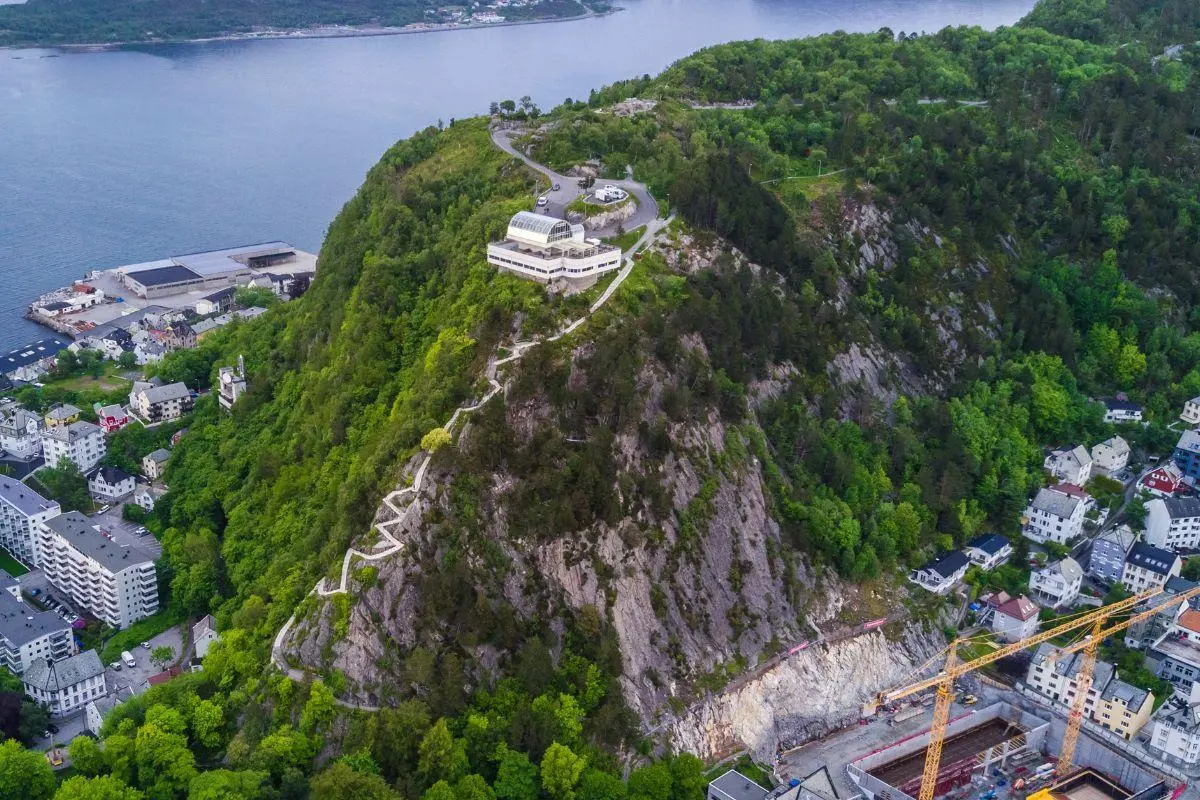
The first time you climb Mt. Aksla it feels like stepping through a postcard. Dawn lays a pale wash over the Art Nouveau rooftops of Ålesund and the harbor lights wink like spent stars. Below, the fjord pulls itself into fingers and channels, drawing the islands into a slow conspiracy. You find the staircase—clean, even, 418 steps carved into the hillside—and start up. With each step the city loosens its hold: church spires shrink, the harbor’s murmuring recedes, and the mountains on the far side of the water rise as if to answer you back.
Mt. Aksla (locally Aksla or Aksla viewpoint, sometimes called Fjellstua) is not an alpine summit, but a sharpened vantage carved from volcanic and glacial history. The walk is short—steep in places—and quick to reward. At the top, a low wooden café and a scattering of benches let you drink in a 360-degree panorama: Ålesund’s patterned rooftops, the ribbon of the Sunnmøre Alps, islands stacked like loose coins, and the fjord that keeps tugging at the edges of the town. The view is large, honest, and immediate—perfect for a sunrise ritual or an afternoon that demands perspective.
History and place are bound tightly here. Ålesund’s present-day elegance was forged in fire: an urban conflagration in 1904 destroyed much of the town, and the subsequent rebuild adopted the flowing lines of Art Nouveau. The church towers and carved façades you can see from Aksla are part of that early-20th-century reinvention. The surrounding geology is older: hard rock scoured by ice and then knifed by sea, giving the coastline its dramatic inlets and islands. The human footprint—harbors, lighthouses, wartime bunkers on nearby isles—tells a different story: a place that has long lived with, and by, the sea.
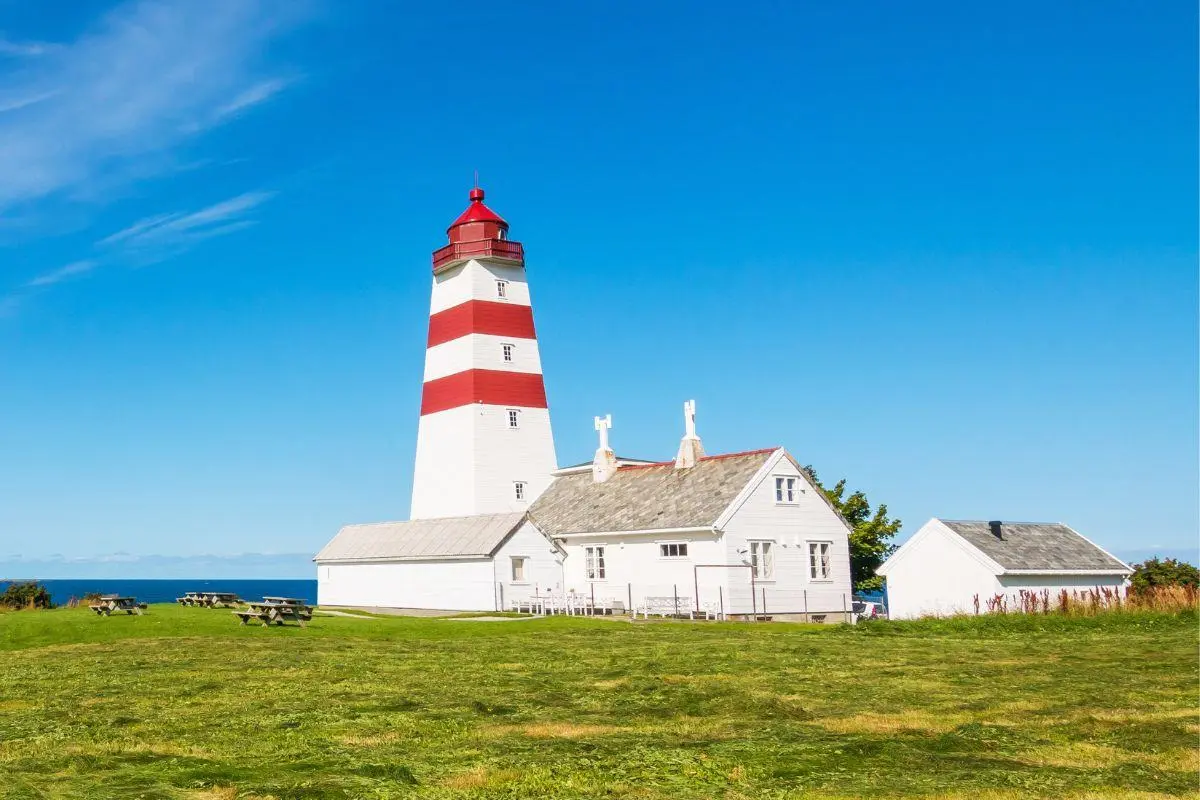
Mt. Aksla is the perfect hinge for an Ålesund day. Hike up in the morning, then wander down into the town’s Art Nouveau center with a guide on an “An amazing walking tour of Art Nouveau town Ålesund.” Combine the viewpoint with a half-day “Explore Ålesund and the Viking Islands” trip to Alnes and Giske for quiet farm lanes, marble churches, and coastal lighthouses. If your day needs widening, private drives to Trollstigen or the Atlantic Road turn the view from one moment into a week’s worth of dramatic scenery and Norwegian national routes.
Practicalities are refreshingly straightforward. The steps route gains roughly 130–150 meters (about 400–500 feet) in elevation and takes most walkers 20–40 minutes up at a steady pace; add another 20 for the descent. The path is well maintained but steep—if you prefer a gentler route, a narrow service road snakes up the hill for those who need it or for families with strollers. Terrain is compact rock and wooden stairs; footwear with good grip and ankle support is advised. The site is family friendly and accessible to reasonably fit travelers, but anyone with mobility issues will find the roadside approach easier.
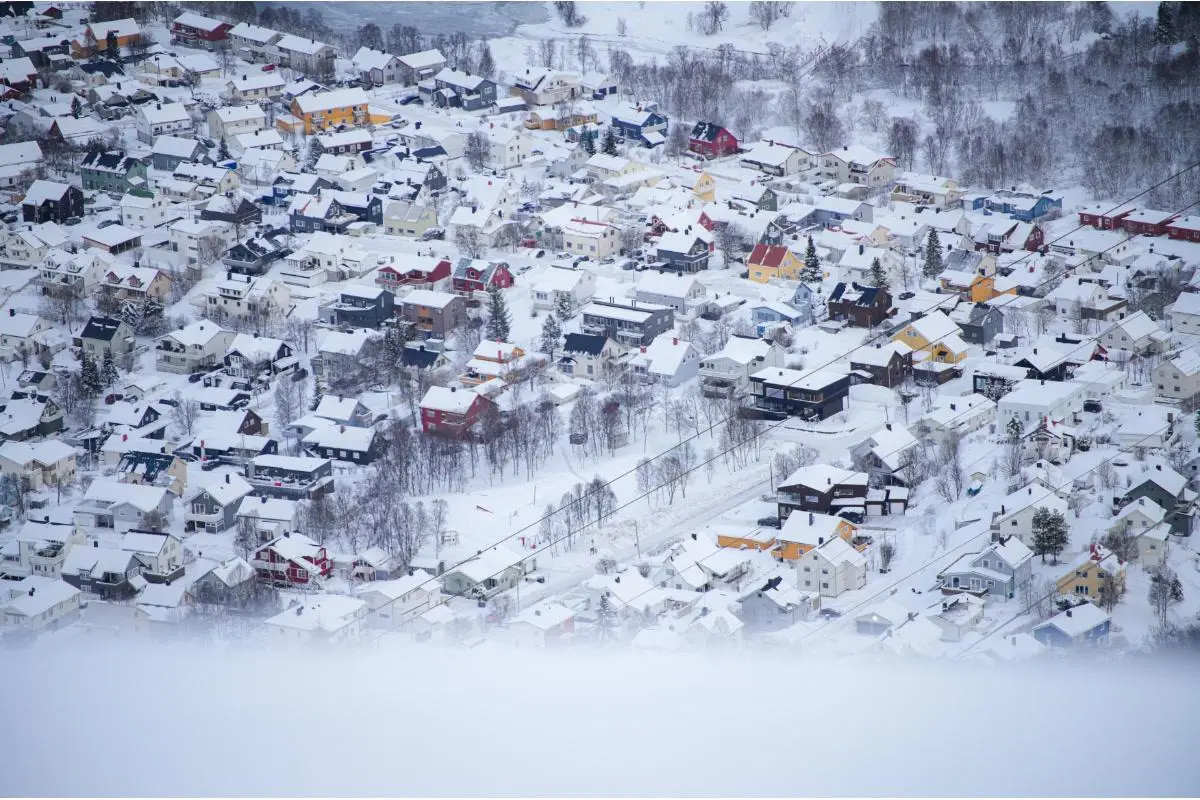
Timing matters more here than it does in bigger ranges. Early morning catches the light across the fjord and you’ll have the seats and the cafe mostly to yourself. Sunset is spectacular—but popular. Summer is the obvious window for mild temperatures and long daylight; winter offers blue-hour drama and, if you’re fortunate, snow-dusted rooftops beneath auroral skies.
Aksla’s proximity to town means it’s an efficient addition to any itinerary: pair the climb with a local Art Nouveau walking tour, then choose an afternoon option—sea-level wonders on an Atlantic Road private transfer, or a roller-coaster of viewpoints along Trollstigen. Local guides are more than narrators; they are keyholders to hidden histories—Viking-era sites on Giske, wartime bunkers on the outer islands, and farmsteads where strawberries in Valldal ripen under extended daylight. These trips complement Aksla’s compact ascent with deeper coastal context and easier ways to see Norway’s dramatic geology from both sea and road.
On the ground—pack a light windproof layer, bring water, and leave space in the pack for a camera and a good pair of gloves if dawn is on your agenda. If you’re photographing the view, a wide-angle lens will take in the layered islands and cityscape; a 50–85mm is perfect for compressed, intimate shots of the harbor and rooftops. Politely give space to other visitors at the viewpoint; it’s a communal stage where everyone is trying to hold a piece of the same perfect light.
The climb to Aksla is short enough to repeat: morning for the light and solitude; late afternoon for warm hues and wind-bent cloud. It’s also a mental reset—an easy, immediate summit that demands little planning yet delivers a full taste of Western Norway: the meeting of town and fjord, old stone and new architecture, oatmeal skies and clear, blue-water days.
If you only have an afternoon in Ålesund, walk the steps, let the fjord dare you to stay longer, then follow a guide into the town’s story. If you have more time, stitch Aksla into a loop of drives and island hops. Either way, the climb is a simple promise: reach up, breathe, and watch Norway unfold beneath you.